Rehearsal dinners have changed a lot.
They are no longer about formal three-course meals or strict traditions. Most couples now want something easy to organise, relaxed to attend, and enjoyable for a mixed group of guests.
The goal is simple. Feed everyone well, create a good atmosphere, and avoid adding stress the night before the wedding.
This guide focuses on rehearsal dinner menu ideas that are simple to execute and genuinely crowd-pleasing.
Nothing overly complicated, nothing that requires a full event production team, and nothing that competes with your wedding day.
What Makes a Good Rehearsal Dinner Menu Now
A good rehearsal dinner menu does a few key things well.
It is easy to eat and social. Guests should be able to chat, move around, and not feel stuck at a formal table all evening.
It works for different ages and preferences. You will likely have family, friends, and wedding party members all together.
It is simple to organise. Either easy catering, restaurant-led, or manageable if you are hosting.
It feels slightly different from the wedding. You do not want to duplicate the same experience two days in a row.
If your menu ticks those boxes, you are on the right track.
How to Choose Your Menu Style
Before picking actual food, decide the format. This makes everything easier.
Think about your guest count. A small group can handle more detail. Larger groups benefit from simpler, scalable options.
Consider your venue. At home, outdoors, or a casual space leans toward relaxed food. A restaurant may guide your menu automatically.
Look at timing. Brunch, afternoon, and evening all suit different styles.
Set a rough budget. This will often decide whether you go DIY, catering, or restaurant.
Once you have those decisions made, the menu becomes much easier to choose.
Family-Style Dinner (Relaxed but Elevated)
This is one of the easiest ways to create a “nice” dinner without going fully formal.
Food is served in the middle of the table and shared. It feels intentional but still relaxed.
Menu ideas:
- Bread, dips, or antipasti to start
- One or two large salads
- Simple mains like roast chicken, pasta, or grilled fish
- One dessert option such as brownies or cheesecake
Keep the menu focused. Too many dishes slow everything down and increase cost.
Choose foods that hold well and do not need perfect timing to serve.
Build-Your-Own Food Bars (Most Crowd-Pleasing Option)
This is one of the safest options if you have mixed guests or dietary needs.
It is interactive, flexible, and easy to scale.
Menu ideas:
- Taco or fajita bar
- Pasta bar with a few sauces
- Burger or slider station
- Baked potato bar
- Grain bowl or salad bar
Make it simple. You do not need endless toppings. A few good options are enough.
Label ingredients clearly so guests can easily choose what works for them.
Grazing Tables and Sharing Boards (Low Effort, High Impact)
If you want something visually appealing and very easy to manage, this works well.
It is ideal for more casual, social evenings where people are standing, chatting, and moving around.
Menu ideas:
- Charcuterie and cheese boards
- Mezze spreads with flatbreads and dips
- Bread, oils, and small bites
- Fruit and dessert boards
On its own, this can feel light. Add one or two hot dishes if you want it to feel more like a full meal.
This works especially well for welcome-party style evenings.
Backyard BBQ or Grill Night (Casual and Reliable)
A BBQ is one of the easiest ways to feed a group without overthinking it.
It is familiar, relaxed, and budget-friendly.
Menu ideas:
- Grilled meats and veggie skewers
- Burgers or pulled pork
- Sides like slaw, corn, or potato salad
- Simple desserts such as cookies or ice cream
If you want to reduce stress, consider hiring someone to handle the grill.
This option works particularly well for summer weddings or outdoor venues.
Pizza, Pasta or Comfort Food Night (Effortless Option)
This is one of the most practical choices, especially if you want something quick to organise.
Almost everyone will eat it, and it is easy to order or cater.
Menu ideas:
- Pizza selection or wood-fired pizza
- Large tray pasta dishes
- Garlic bread and salads
- Desserts like tiramisu or cookies
This works well if your rehearsal dinner blends into a welcome party.
It is also a good option if guests are arriving at different times.
Restaurant Private Dining (No Planning Stress)
If you do not want to manage food at all, a restaurant is the simplest route.
Most places will offer a set menu or simplified options for groups.
Menu ideas:
- Two or three course set menu
- Family-style restaurant service
- Small plates or tapas
Keep the menu straightforward. Too many choices slow down service for larger groups.
Choose a cuisine that most guests will be comfortable with.
Brunch or Daytime Rehearsal Menu (Modern Alternative)
Not all rehearsal dinners need to be in the evening.
A brunch or daytime event can be more relaxed and often more affordable.
Menu ideas:
- Pastries, fruit, yoghurt
- Eggs, waffles, pancakes
- Breakfast sandwiches
- Coffee, juices, light cocktails
This works well for destination weddings or when you want a quieter evening before the wedding day.
Cultural or Personal Menus (Keep It Meaningful but Simple)
Adding personal touches can make the dinner feel more special without making it complicated.
Menu ideas:
- Family recipes
- Cultural dishes
- Food inspired by where you met
- Favourite takeaway-style meals done well
The key is to keep execution simple, even if the idea is personal.
Simple Menu Combinations That Always Work
If you want something quick and proven, these combinations are reliable:
- Taco bar with margaritas and churros
- BBQ with sides and ice cream
- Pizza with salad and cannoli
- Pasta with garlic bread and tiramisu
- Grazing table with a couple of hot dishes and a dessert board
These are easy to organise and work for most groups.
How Much Food You Actually Need
This is where people often overdo it.
Decide whether you are serving a full dinner or something lighter. You do not need both.
For most rehearsal dinners:
- One main format is enough
- Add one or two sides
- Include a simple dessert
You do not need multiple courses unless you are doing a formal dinner.
Keeping it focused reduces cost, waste, and stress.
Handling Dietary Requirements Without Overcomplicating Things
You do not need separate full menus.
Instead:
- Choose formats that allow flexibility, like food bars or shared dishes
- Include at least one solid vegetarian option
- Use simple labels so guests can identify what works for them
This approach keeps things inclusive without making planning difficult.
Rehearsal Dinner Drinks (Keep It Simple)
Drinks do not need to be complicated.
A simple setup works best:
- Beer and wine
- One signature drink if you want something fun
- A non-alcoholic option that feels intentional
You do not need a full open bar unless you specifically want one.
Common Menu Mistakes to Avoid
Overcomplicating the menu is the most common issue. Keep it simple.
Trying to match your wedding meal creates unnecessary pressure.
Offering too many choices slows down service and increases cost.
Ignoring dietary needs can make guests feel overlooked.
Choosing messy or difficult-to-eat foods makes the evening less enjoyable.
Make It Even Easier
If you want something you can follow without second guessing:
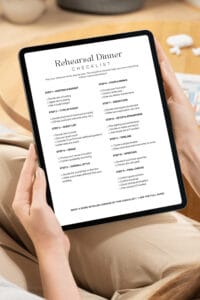
→ Use a simple rehearsal dinner checklist and menu plan you can edit quickly
A good setup should let you:
- Choose your menu format in minutes
- Map out food and drinks without overthinking
- Keep everything organised in one place
The goal is not to create the perfect dinner. It is to create an easy, enjoyable start to your wedding weekend without adding more to your plate.
More blogs you will love!
- Fall Rehearsal Dinner & Wedding Welcome Party Ideas

- What to Wear to a Rehearsal Dinner as a Guest (2026 Guide)

- A Mother’s Guide to Rehearsal Dinner Attire (Modern, Stylish + Actually Helpful)

- Rehearsal Dinner Menu Ideas That Keep Things Simple but Stylish
- Who Hosts the Rehearsal Dinner? (Modern Guide for 2026 Weddings)

- The Ultimate Rehearsal Dinner Checklist (with free checklist)
- Rehearsal Dinner on the day Timeline With Examples & FREE TEMPLATE
- Rehearsal Dinner for Moms: Hosting, Toasts & Outfit Ideas