
If you look up mother of the bride or mother of the groom duties, you will still find plenty of lists based on a very traditional wedding: one bride, one groom, the bride’s parents paying and each family following a set role.
That may suit some families perfectly. For many others, it bears little resemblance to how the wedding is actually being planned.
Modern couples may pay for the wedding themselves, share costs between several parents or divide jobs according to who has the time and skills to help.
There may be two brides, two grooms, no bride or groom, stepparents, adoptive parents or several important parental figures involved.
So, what is actually expected of you?
Your role is not created by your title alone. It comes from your relationship with the couple, the support they want and the responsibilities you agree to take on.
This guide is about navigating that role. If the engagement has only just happened, start with my guide to what mothers should do after their son or daughter gets engaged.
For the more traditional and practical duties associated with each title, I also have separate mother of the bride duties and mother of the groom duties guides.
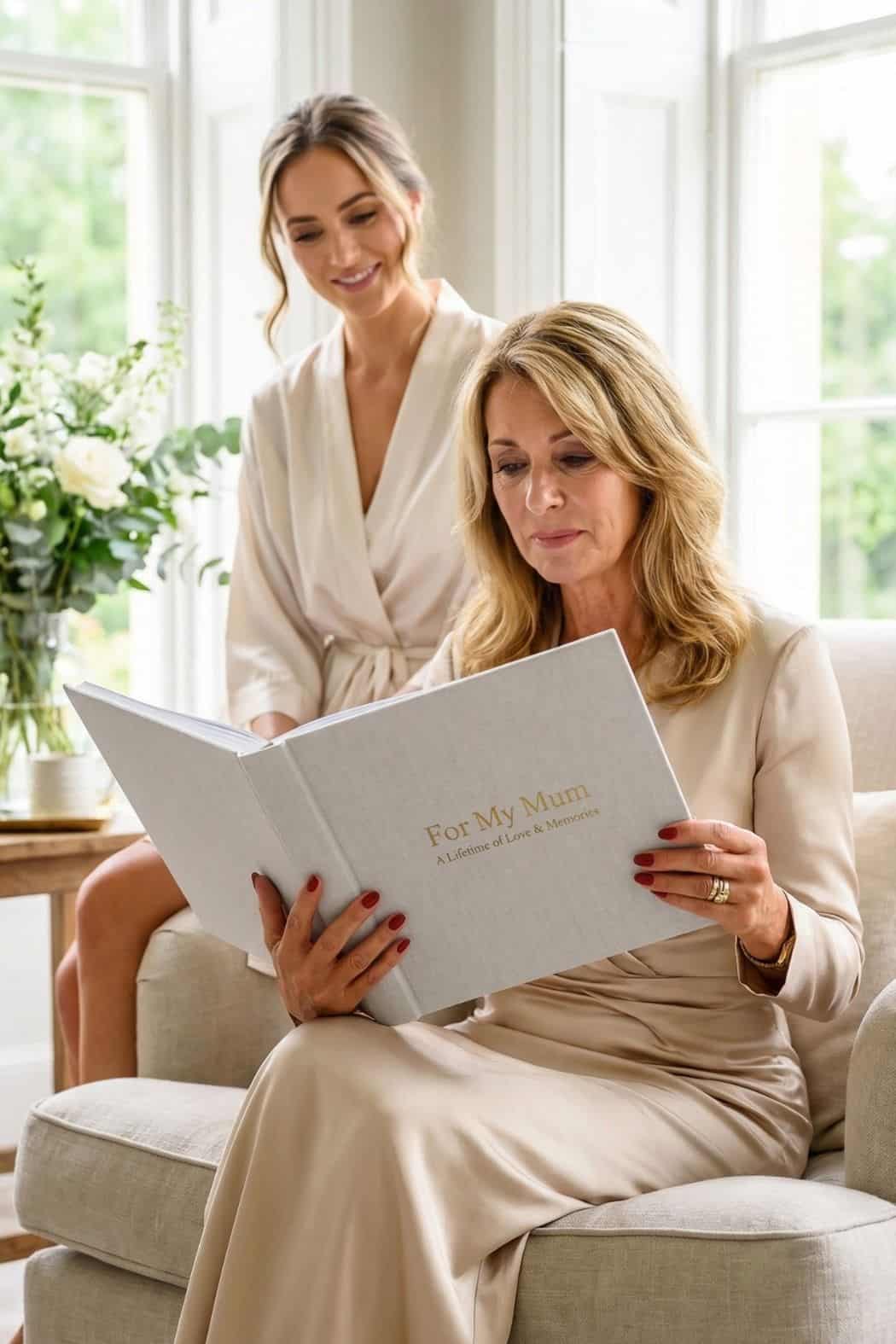
What Does a Modern Mother’s Role Actually Mean?
A modern mother’s role is less about completing a standard list of jobs and more about being a supportive, reliable part of the couple’s wider team.
In practice, that normally means:
- Supporting both people getting married
- Understanding how involved the couple wants you to be
- Being honest about the time, money and help you can offer
- Taking responsibility for clearly agreed tasks
- Respecting decisions that belong to the couple
- Managing your own family relationships when appropriate
- Being dependable during the final weeks and wedding itself
That does not mean remaining silent, agreeing with every choice or waiting in the background until someone needs you. You can be interested, involved and honest without assuming that every part of the wedding is yours to influence.
The key is clarity. You should know what the couple wants from you, and they should know what they can genuinely expect from you.
Why the Traditional Roles No Longer Always Work
Traditionally, the bride’s family hosted and paid for the wedding, the mother of the bride helped with much of the planning and the groom’s family hosted the rehearsal dinner. The mother of the groom was often given a smaller, more reactive role.
Those traditions are still available to couples who want them, but they are no longer a useful default for every family.
They may not work because:
- The couple is paying for the wedding themselves.
- Several parents or relatives are contributing.
- One family lives much farther away.
- A parent has health, work or caring commitments.
- One mother enjoys organising while another does not.
- The couple wants to handle most decisions privately.
- There are two brides, two grooms or no gendered roles.
- Stepparents and other parental figures are involved.
- Cultural or religious traditions create a different family structure.
Trying to force these families into an old bride’s-side and groom’s-side division usually makes things more confusing, not less.
A better approach is to allocate responsibilities according to relationships, ability, availability and preference. The person who is excellent with logistics might organise transport. The person who knows the extended family best might gather guest information. Someone who lives abroad may have fewer practical jobs but still hold an important emotional or ceremonial role.
Fair does not always mean identical.
What Is Reasonably Expected of Every Mother?
There may be no universal job list, but there are some reasonable expectations that apply to any mother or parental figure involved in the wedding.
1. Support Both Members of the Couple
The wedding is not only about your own son or daughter. Make an effort to include and communicate with their partner too.
That does not mean every conversation needs to happen in a group chat. It means avoiding private agreements that affect them both, checking that both people are comfortable with a plan and not treating one person as the family representative while their partner remains an outsider.
2. Be Clear About What You Can Offer
Be honest about your budget, availability, health, location and confidence. A smaller offer you can fulfil is more useful than agreeing to something that later becomes stressful or unaffordable.
If you are contributing financially, the amount and any conditions should be clear. Paying towards the wedding does not automatically give you a larger role or a vote on every decision.
3. Respect Privacy and Boundaries
Do not share dates, venues, photographs, outfit details or family news unless the couple is happy for them to be public.
The same applies to planning boundaries. If they want to choose the venue alone or keep an outfit appointment small, that is a decision about the experience they want, not necessarily a statement about your relationship.
4. Follow Through on Agreed Responsibilities
If you agree to collect addresses, book transport or bring something to the venue, the couple should not need to keep checking whether it has been done.
Ask questions at the start, note the deadline and tell them early if a problem arises. Reliability is far more valuable than taking on a long list of impressive-sounding duties.
5. Help With Your Own Side of the Family
You may be the best person to explain a family relationship, gather missing information or answer routine questions from relatives.
You are not expected to solve every family problem, but you can avoid passing every complaint about invitations, children, travel or traditions straight to the couple. Bring them the issues that genuinely require their decision, not every opinion that reaches you.
6. Allow the Couple to Make the Final Decisions
You are allowed to give honest advice, especially if you notice a genuine issue involving cost, accessibility, timing or guest welfare.
Say it clearly, explain why it matters and then allow the couple to decide. Repeating the same point in different ways does not make it more helpful.
Your Title Does Not Decide Your Importance
The mother of the bride is not automatically the lead mother, and the mother of the groom is not a secondary guest.
Involvement often depends on practical circumstances and existing relationships rather than titles. One mother may live nearby, work flexible hours and have experience organising events. Another may live overseas or be caring for a relative. It makes sense for their practical roles to look different.
The couple may also be naturally closer to one parent, ask one mother for fashion advice and another for financial or logistical help. That can feel uneven from the outside, but trying to create identical roles rarely improves the experience.
Your importance as a parent is not measured by:
- How many planning jobs you receive
- Whether you attend every appointment
- How much money you contribute
- Which event you host
- How often the couple asks for advice
- How visible your role is on the wedding day
Some mothers will be heavily involved in planning. Others will have a quieter role and be most needed during the final week. Both can be meaningful.
Modern Mother Roles in Same-Sex Weddings
Same-sex weddings make it especially clear why traditional titles cannot be treated as job descriptions.
A wedding with two brides may have two mothers of the bride. A wedding with two grooms may have two mothers of the groom. One or both people may not use either title. There may also be several mothers, stepmothers or parental figures across the two families.
There is no need to decide that one partner or family will take the “bride’s role” and the other will take the “groom’s role”. That often relies on assumptions about personality, appearance or gender expression that have nothing to do with what the couple actually wants.
Instead:
- Use the names and wedding language the couple uses.
- Ask how they refer to each person and each side of the family.
- Divide jobs according to preference and ability, not gender.
- Treat both families as equally connected to the wedding.
- Ask who, if anyone, wants traditional moments adapted or retained.
- Confirm processional, speech, dance and seating roles directly.
- Coordinate showers, pre-wedding gatherings and hosted events rather than assigning them to a traditional side.
Some couples will want to keep familiar traditions and adapt them. Two mothers might both be escorted into the ceremony, both join an outfit appointment or each host a gathering for their own family. Other couples will remove those traditions completely.
The modern approach is not to avoid tradition. It is to use it intentionally rather than assuming it applies.
Mothers, Stepmothers and Other Parental Figures
Many weddings include biological mothers, stepmothers, adoptive mothers, mothers-in-law and other people who have held a parental role. The title alone does not decide who should be most involved.
This can become sensitive around moments that feel personal or visible, including:
- Outfit shopping
- Getting ready with the couple
- Formal family photographs
- The ceremony processional
- Front-row seating
- Speeches and readings
- Parent dances
- Invitations and printed wording
The couple should decide who is included and how. They may want several people involved in different ways, or they may keep certain moments limited.
If you are unsure, ask about the specific moment rather than arguing from your title. “Who would you like with you while you get ready?” is much more useful than “Isn’t that normally the mother’s job?”
It is also worth confirming how everyone would like to be introduced and named. Families use different titles, and a stepparent may have played a central role for many years. Getting the wording right is a small detail that can prevent unnecessary hurt.
Where relationships are difficult, discuss them privately and early. The wedding day is not the time to negotiate seating, photographs or who walks into the ceremony with whom.
How to Establish Your Particular Role
Instead of asking for a general list of duties, agree on your role one responsibility at a time.
For anything substantial, clarify:
- What result does the couple need?
- Are you being asked for ideas, advice or practical action?
- Who makes the final decision?
- What is the budget?
- What is the deadline?
- Who else is involved?
- Can you contact relatives or suppliers directly?
- Which details need the couple’s approval?
There is an important difference between being asked to research, recommend and decide.
If the couple asks you to research accommodation, they may want a shortlist rather than a block booking. If they ask you to help with a shower, they may want you to contribute ideas rather than host the entire event. If they ask you to manage transport, they may be giving you authority to book it within an agreed budget.
Do not be afraid to ask which of those they mean. Clear instructions are not overly formal. They stop everyone making different assumptions.
For a larger responsibility, agree on a simple plan:
- What you are handling
- What you are allowed to decide
- What needs approval
- How much can be spent
- When it needs to be finished
That gives you room to get on with the job without repeatedly checking every minor detail.
Emotional Support and Practical Help Are Not the Same Thing
Sometimes the couple wants help completing a task. Sometimes they want company, reassurance or someone who will listen without trying to fix the situation.
It helps to recognise the difference between:
- Listening and solving
- Accompanying and directing
- Advising and deciding
- Helping and managing
If your daughter asks you to attend an appointment, she may want a calm second opinion rather than someone to lead the conversation. If your son talks about a disagreement over the guest list, he may want to let off steam rather than have you contact a relative or step into the discussion.
When it is unclear, simply ask: “Do you want my opinion, or do you just need me to listen?”
That one question can prevent a lot of unnecessary tension.
Navigating Different Levels of Family Involvement
It is common for one family to be more involved than the other. Distance, work, money, health, cultural expectations and the couple’s relationships can all affect how much each person does.
The aim is not to make both sides look identical on paper. It is to create an arrangement that works for the people involved.
Avoid keeping score of:
- Financial contributions
- Planning responsibilities
- Appointment invitations
- Time spent with the couple
- Events hosted
- Number of guests from each family
- Wedding-day roles
If there is a practical imbalance that is creating too much work for one person, raise that specific issue. “I need someone else to take over the hotel bookings” is useful. “Their family is not doing as much as ours” is unlikely to solve anything.
Unequal involvement is not automatically unfair. It becomes a problem when expectations are unclear, one person is overwhelmed or contributions are being used to compete for influence.
Working With the Other Mothers and Parental Figures
You do not need to become close friends with every parent involved in the wedding. You do need to communicate politely when your responsibilities overlap.
Useful things to coordinate may include:
- Who is responsible for each family task
- Dates and guest lists for hosted events
- Family accommodation and transport information
- Wedding-week timings
- Outfit colours, if you both want to coordinate
- Gifts, photographs or family traditions
Keep the conversation practical. The other mother does not need your permission to choose an outfit, and you do not need to match. Sharing colours can simply help both of you avoid an accidental clash or duplication if that matters to you.
Do not compare access, money or closeness to the couple. If the other mother is attending an appointment you were not invited to, take that up calmly with the couple only if you genuinely need clarification. Making her responsible for the couple’s choice puts everyone in an awkward position.
Where Traditional Responsibilities Still Fit
Modern does not mean removing every tradition. It means treating traditions as options rather than obligations.
You may still be asked to:
- Attend outfit appointments
- Help with the family guest list
- Host or co-host a shower
- Plan a rehearsal dinner or welcome party
- Take part in the ceremony processional
- Give a speech or reading
- Help the couple get ready
- Include a cultural or family tradition
If these roles suit your family, keep them. If they do not, adapt them or leave them out.
For a more detailed breakdown of the jobs traditionally associated with each mother, see my complete mother of the bride duties and mother of the groom duties guides. Use those lists for ideas, not as rules the couple has failed to follow.
Your Role in the Ceremony and on the Wedding Day
The wedding day is where vague expectations tend to cause the most confusion. Do not rely on what normally happens. Ask what is happening at this wedding.
Before the week begins, confirm:
- Where and when you need to arrive
- Whether you are getting ready with either partner
- What you should bring with you
- Whether you are part of the processional
- Where you will sit during the ceremony and meal
- Which formal photographs include you
- Whether you are giving a speech, reading or toast
- Whether you have a parent dance or other ceremonial moment
- Whether you are responsible for any items, guests or practical jobs
- Who should deal with family questions or unexpected problems
If you have a practical responsibility, make sure you have the information and contact details needed to handle it without going through the couple on the day.
You can also be helpful by being ready on time, staying available for photographs and keeping routine family questions away from the people getting married. Unless something genuinely requires their decision, the wedding morning is not the time to report every late guest or minor change of plan.
Your main role may simply be to be present, calm and ready to enjoy the day. That is still a role.
If You Feel Excluded or Underused
Undefined modern roles can be difficult when you expected to be more involved. It is reasonable to feel disappointed if the wedding experience looks different from what you imagined.
Try to separate the feeling from the action you take next.
Ask once whether the couple would find any specific help useful. You could offer two or three realistic options, such as gathering family information, researching accommodation or helping with a pre-wedding event.
If they say no, accept the answer. Repeatedly asking for a job can make the couple feel responsible for managing your feelings as well as the wedding.
You can also ask directly about personal moments that matter to you. For example, it is better to say, “I would love to spend a little time with you while you get ready, if that works with your plans,” than to wait, feel overlooked and raise it much later.
The couple may not realise which parts feel meaningful to you. You can express that without presenting it as an entitlement.
Most importantly, access to planning is not the same as emotional importance. Some people love collaborative planning; others find it easier to make decisions alone. A limited planning role does not automatically mean a limited relationship.
If Too Much Is Expected of You
The lack of fixed roles can create the opposite problem too. You may find yourself expected to organise events, manage relatives, contribute money and remain available whenever something needs doing.
Being a mother does not mean you must accept every request.
Be clear about:
- How much time you have
- What you can comfortably afford
- Which jobs you are confident handling
- What support you would need
- What you cannot take on
If a responsibility is too large, say so early and offer a smaller alternative if you can.
For example: “I cannot organise the full welcome party, but I can research three venues and help with the guest responses.”
Do not agree out of guilt and hope the details will somehow work themselves out. A clear no or a smaller offer is kinder than a late cancellation.
The Modern Mother’s Role in One Sentence
Your role is not determined by whether you are the mother of the bride or the mother of the groom. It is shaped by your relationship with the couple, the support they want and the responsibilities you genuinely agree to take on.
That may include some very traditional duties, or none at all. What matters is that the role is clear, respectful and right for the actual people involved in the wedding.
More blogs you will love!
- What the Mother of the Groom Should Never Do on the Wedding Day

- Mother of the Groom Wedding Morning: What to Do and Where to Be

- Mother of the Bride Wedding Morning: What to Expect and How to Help

- The Mother’s Wedding Week Checklist: What to Do in the Final 7 Days

- Wedding Hair & Makeup for Mothers: The Complete Planning Guide
- A Mother’s Complete Wedding Weekend Guide: Rehearsal to Post-Wedding Brunch

- Mother-Daughter Things to Do Before the Wedding

- The Mother’s Guide to the Bachelorette or Hen Party

- Mother of the Groom Bridal Shower Etiquette: What Are You Actually Expected to Do?