
The mother of the bride and groom are often told they should coordinate, but rarely told what that actually means.
Do you need to contact each other? Who chooses her outfit first? Should you attend the same events, discuss money or become friends before the wedding?
Modern etiquette is straightforward: neither title places one mother above the other. You may become friends, but a warm and cooperative relationship is enough.
The most useful approach is to:
- Communicate when there is something practical to coordinate
- Respect the couple’s decisions and family relationships
- Avoid comparing outfits, spending or levels of involvement
- Accept that your roles may be different without treating either as less important
- Be warm and courteous without forcing closeness

Who Should Make Contact First?
Traditionally, the mother of the bride was expected to contact the mother of the groom. There is no need to wait for that formality now. Either mother can get in touch first, or the couple can introduce you through a group message, phone call or informal meeting.
If you have not met, a short message is enough:
Hi [Name], it is lovely that the wedding is bringing our families together. I thought I would introduce myself and share my number in case we need to coordinate anything as the plans develop.
This opens the door without creating an expectation that you must start planning together.
What If the Other Mother Has Not Contacted You?
Do not automatically read anything into it. She may be waiting for the couple to introduce you, unsure whether direct contact is wanted or simply have nothing to discuss yet.
If you would like to make contact, send the message yourself. If she replies politely but does not continue the conversation, allow the relationship to remain friendly and practical. You do not need to keep trying to create a closer connection.
Do the Families Need to Meet Before the Wedding?
It is helpful for the immediate families to meet before the wedding, but it is not a requirement. Distance, work, health, family structure and strained relationships can all make one large gathering impractical.
The first meeting can be as simple as:
- A relaxed meal or drinks
- An engagement celebration
- Coffee at the couple’s home
- A video call for families who live far apart
- Meeting during a venue visit or another planned wedding activity
The couple will usually be the best people to suggest or arrange the introduction. Keep the first meeting social. It is not the ideal time to surprise everyone with questions about financial contributions, guest allocations or who is hosting which event.
Divorced, separated or estranged parents do not all have to meet at once. Separate introductions may be far more comfortable and still give everyone the opportunity to connect before the day.
Mother of the Bride and Mother of the Groom Outfit Etiquette
Outfits are the area where old etiquette causes the most unnecessary worry. The two mothers should both dress for the same wedding, but they do not need to dress as a pair.
Who Chooses Her Outfit First?
The traditional rule was that the mother of the bride selected her outfit first and then informed the mother of the groom. Modern mothers can shop whenever it suits them. There is no reason for one mother to delay buying a suitable outfit while waiting for the other.
It is considerate to share your chosen color and general style once you have decided, particularly if both mothers will appear in formal family photographs. This is useful coordination, not a request for permission.
If the other mother has already bought her outfit, ask what color and level of formality she has chosen. You can then decide whether you are happy to choose something different. Unless the outfits are extremely similar, there is normally no need for either person to start again.
Do the Outfits Need to Coordinate?
No. Both outfits should suit the dress code, season and formality of the wedding, but they do not need to match each other or the wedding party.
It may be useful to compare:
- Color or color family
- Dress or outfit length
- Overall level of formality
- Whether hats or fascinators are being worn
- Seasonal fabrics and outerwear
- Any guidance given by the couple
Coordination might mean that both mothers wear polished formal outfits rather than one arriving in a full-length gown and the other in a relaxed daytime dress. It does not mean choosing the same designer, fabric or silhouette.
Can Both Mothers Wear the Same Color?
Usually, yes. Two navy, green or blue outfits can look completely different because of the shade, shape, fabric and accessories. A shared color can even look cohesive in photographs without appearing deliberately matched.
If the outfits are almost identical, speak calmly and look at the practical options. Different accessories, a jacket or a change to the styling may be enough. If one outfit has not been altered or cannot be returned, that should be part of the conversation. There is no automatic rule that the mother of the groom must change hers.
Which Colors Should You Check With the Couple?
Ask before choosing:
- White, ivory or a very bridal-looking pale neutral
- The exact shade worn by the bridesmaids or wedding party
- A color the couple has specifically asked close family to avoid
- A color with an important cultural or ceremonial meaning
You do not need the other mother’s approval. The couple’s dress code and preferences are what matter.
Invitations to Wedding Events and Planning Appointments
Neither mother is automatically entitled to attend every appointment or celebration. Invitations will depend on the couple’s relationships, who is hosting, where people live and how much company the couple wants during planning.
This can apply to:
- Engagement parties and family celebrations
- Wedding or bridal showers
- Wedding outfit shopping
- Venue visits and menu tastings
- Rehearsal dinners and welcome events
- Wedding-morning preparations
One mother being invited does not automatically mean the other has been excluded to make a point. For example, a mother who lives nearby may attend a midweek appointment simply because she is available, while the other is included in a different part of the planning.
If you want to host an event, speak to the couple before contacting guests or making bookings. Agree on the purpose, budget, guest list and involvement of the other family. Avoid organizing competing showers or celebrations unless separate events genuinely make sense because of distance, culture or the couple’s wishes.
The groom’s family is traditionally associated with the rehearsal dinner in the US, but it must be offered rather than assigned. If you host, the couple should still be involved in decisions that affect their schedule and guests.
When One Mother Is More Involved
It is very common for one mother to be more involved. She may live closer, have more free time, work in a useful field or simply have a relationship with the couple that naturally includes more day-to-day planning.
Different levels of involvement do not necessarily reflect different levels of love or importance. Counting appointments, messages and tasks will usually create resentment without giving you a more meaningful role.
If you would like to help more, ask the couple a direct and useful question:
I know you have plenty to organize. Is there one area you would genuinely like me to take care of?
Accept the answer, even if the task is different from the one you imagined. A defined role that the couple wants is more valuable than trying to share every responsibility equally.
If you repeatedly feel excluded from events you reasonably expected to attend, speak privately to your own child. Describe the specific situation rather than comparing yourself with the other mother. The more involved mother should also avoid speaking for both families unless everyone has explicitly agreed that she will.
Money, Hosting and Different Budgets
The two families do not need to contribute the same amount, and the mothers do not have to exchange details of their finances. Each household should decide what it can afford and make its offer directly to the couple.
One family paying more does not give that mother authority over the other family, nor does a smaller contribution make the other mother less supportive. Avoid asking what the other side is giving in order to decide what you should give.
If you offer to host a shower, rehearsal dinner or another event, confirm:
- Your maximum budget
- What the budget needs to cover
- Who approves the guest list
- Who makes the final decisions
- Whether the event is part of your overall wedding contribution or separate from it
Any conditions attached to money should be explained before the couple accepts it. It is unfair to offer a contribution and later use it to demand invitations, change the wedding or overrule the other family.
Different lifestyles can also affect what feels affordable. There is no need to apologize for choosing a lower-cost outfit, accommodation or event. Be clear about your own limits and allow the other family to make different choices without treating them as criticism or competition.
What Should the Mothers Discuss Directly?
Direct communication is useful when it prevents the couple from acting as a messenger for simple practical details.
You might speak to each other about:
- Outfit colors and formality
- Arranging a family introduction
- Travel or accommodation information
- A shared event you are both helping to host
- Getting-ready plans
- Wedding-day arrival times
- Contact details for relatives
Decisions about invitations, financial contributions, ceremony roles, timings and changes to the wedding plan should come from the couple or the person they have placed in charge. Do not tell the other mother that a plan has changed unless you know the couple has approved the change.
If a disagreement affects the wedding itself, take it back to the couple once, clearly and privately. Do not ask your child to carry repeated complaints between the two families or suggest that the other mother is responsible for a decision the couple has made.
Wedding-Day Arrangements to Confirm
Many wedding-day tensions come from assumptions rather than genuine disagreements. Both mothers should receive clear information about their own role before the day.
Confirm with the couple:
- Where and when you are getting ready
- What time you should arrive at the ceremony
- Where you will sit
- Whether you are part of the processional
- When immediate-family photographs will take place
- Whether you have a speech, reading or formal role
- Whether you have been asked to bring or manage anything
- Who to contact if there is a problem on the day
Do not assume the two mothers will get ready together, travel together or have identical ceremony roles. Equally, neither mother should assign the other tasks or alter agreed arrangements without checking.
If You Are Not Close or Do Not Get Along
The wedding does not require you to build a friendship. A perfectly acceptable relationship may consist of being pleasant when you meet, responding to necessary messages and cooperating over shared plans.
If the relationship is difficult:
- Keep communication polite, brief and practical.
- Confirm important arrangements in writing.
- Avoid comparing outfits, spending or access to the couple.
- Do not involve extended relatives or encourage people to take sides.
- Let the couple make decisions about its wedding.
- Communicate separately through the couple if direct contact consistently creates conflict.
You do not have to tolerate insulting, intrusive or aggressive behavior in the name of wedding harmony. If necessary, set a clear boundary and limit contact to essential arrangements. The aim is not to resolve every personal difference before the wedding. It is to prevent those differences from becoming the couple’s problem.
Stepmothers, Multiple Mothers and Different Family Structures
Not every wedding has one mother of the bride and one mother of the groom. There may be two brides or two grooms, stepmothers, adoptive mothers, guardians, chosen family or several important maternal figures.
Traditional labels should not be used to invent a hierarchy. The couple can decide who is included in planning, photographs, ceremonies and wedding-day preparations according to their real relationships.
Where several mothers or maternal figures are involved, outfit information and practical plans can be shared with everyone who needs them. That does not mean every role must be duplicated or divided equally.
Do the Mothers Need to Exchange Gifts?
No. There is no etiquette rule requiring the mother of the bride and mother of the groom to buy gifts for each other.
A small personal gesture can be lovely if you have developed a warm relationship, but it should be freely chosen rather than treated as another wedding expense. A thoughtful message after the wedding is also more than enough.
The Etiquette That Actually Matters
Be considerate, share the practical information each of you needs and respect the couple’s choices. If you can do that without comparing your roles or putting the couple between you, you are already handling the wedding well together.
More blogs you will love!
- What the Mother of the Groom Should Never Do on the Wedding Day

- Mother of the Groom Wedding Morning: What to Do and Where to Be

- Mother of the Bride Wedding Morning: What to Expect and How to Help

- The Mother’s Wedding Week Checklist: What to Do in the Final 7 Days

- Wedding Hair & Makeup for Mothers: The Complete Planning Guide
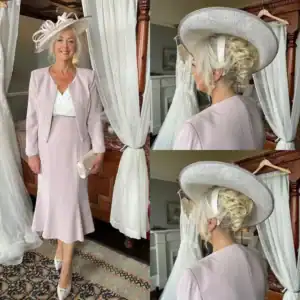
- A Mother’s Complete Wedding Weekend Guide: Rehearsal to Post-Wedding Brunch

- Mother-Daughter Things to Do Before the Wedding

- The Mother’s Guide to the Bachelorette or Hen Party

- Mother of the Groom Bridal Shower Etiquette: What Are You Actually Expected to Do?