The rehearsal dinner isn’t what it used to be. It’s no longer just a quiet meal after the ceremony run-through.
It’s often a styled, social event that sets the tone for the entire wedding weekend.
For mothers of the bride or groom, that makes choosing an outfit a little trickier. You want to look polished and appropriate, but not overdone.
Stylish, but still comfortable enough to host, chat, and actually enjoy the evening.
This guide breaks it down properly so you know exactly what to wear, with real outfit ideas and where to find them.
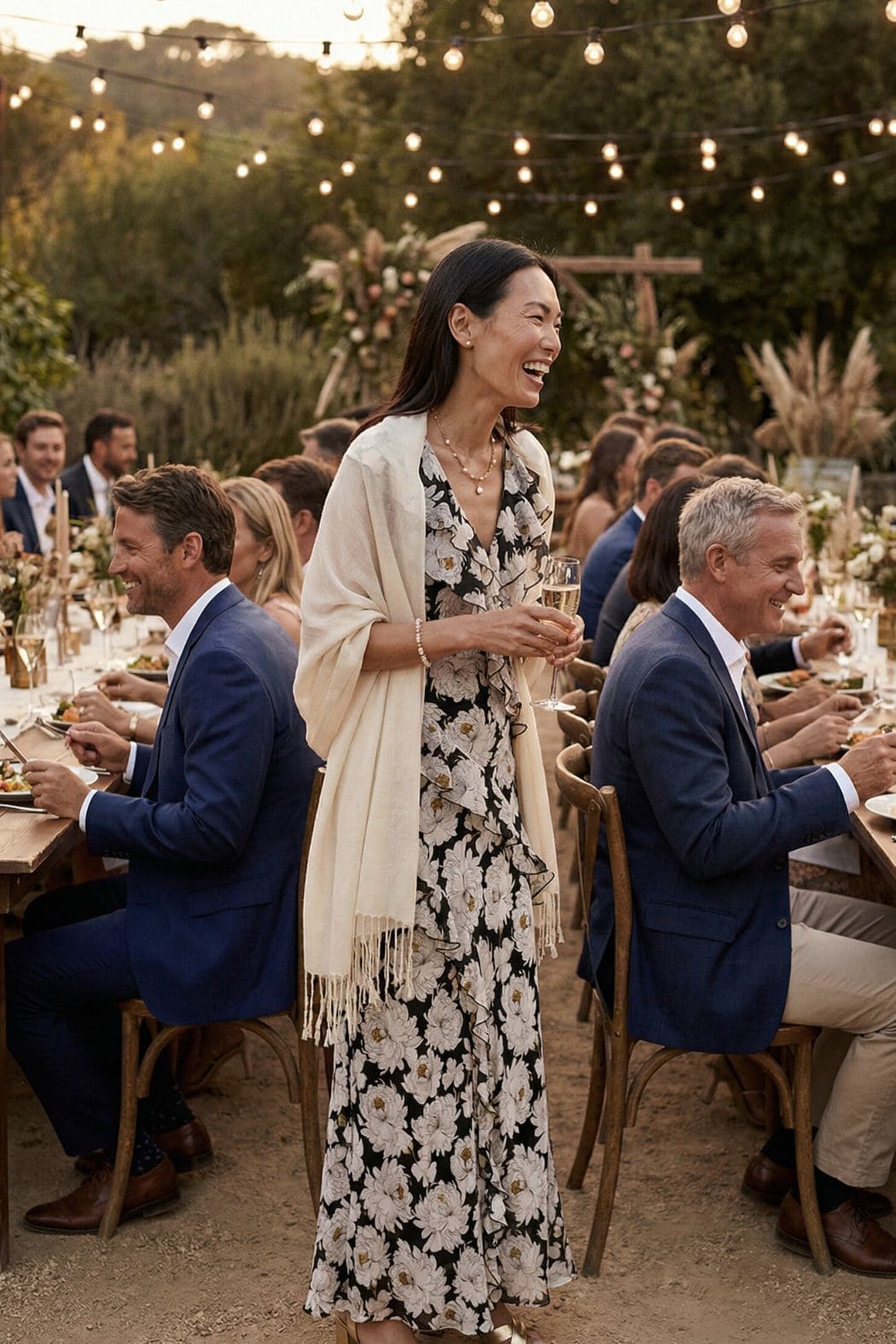
What You’re Actually Dressing For
This is the key shift most people miss.
A rehearsal dinner sits somewhere between:
- a hosted dinner party
- and a pre-wedding event
Most fall into cocktail or elevated smart casual, not full wedding formal.
That means your outfit should be:
- slightly elevated
- comfortable to move in
- appropriate for the setting
If you can sit, stand, greet guests, and walk around easily, you’re on the right track.
Start Here: Match the Vibe (Not Old Rules)
Before you even look at outfits, check:
1. Dress Code
- Casual → polished but relaxed
- Cocktail → midi dress, jumpsuit, tailored set
- Formal → long dress or elevated evening look
2. Venue
- Restaurant → more polished
- Backyard → more relaxed
- Beach → lightweight and practical
- City venue → slightly trend-forward
3. Time + Weather
- Evening = dressier
- Daytime = lighter fabrics, softer styling
👉 There is no single “correct” outfit. The setting decides everything.
The Best Outfit Options (With Real Examples)
This is where most guides stay vague. The reality is there isn’t one “right” outfit. The best choice depends on the setting, but there are a few styles that consistently work because they balance polish, comfort, and modern expectations.
Below are the options that actually make sense right now, based on how rehearsal dinners are styled today.
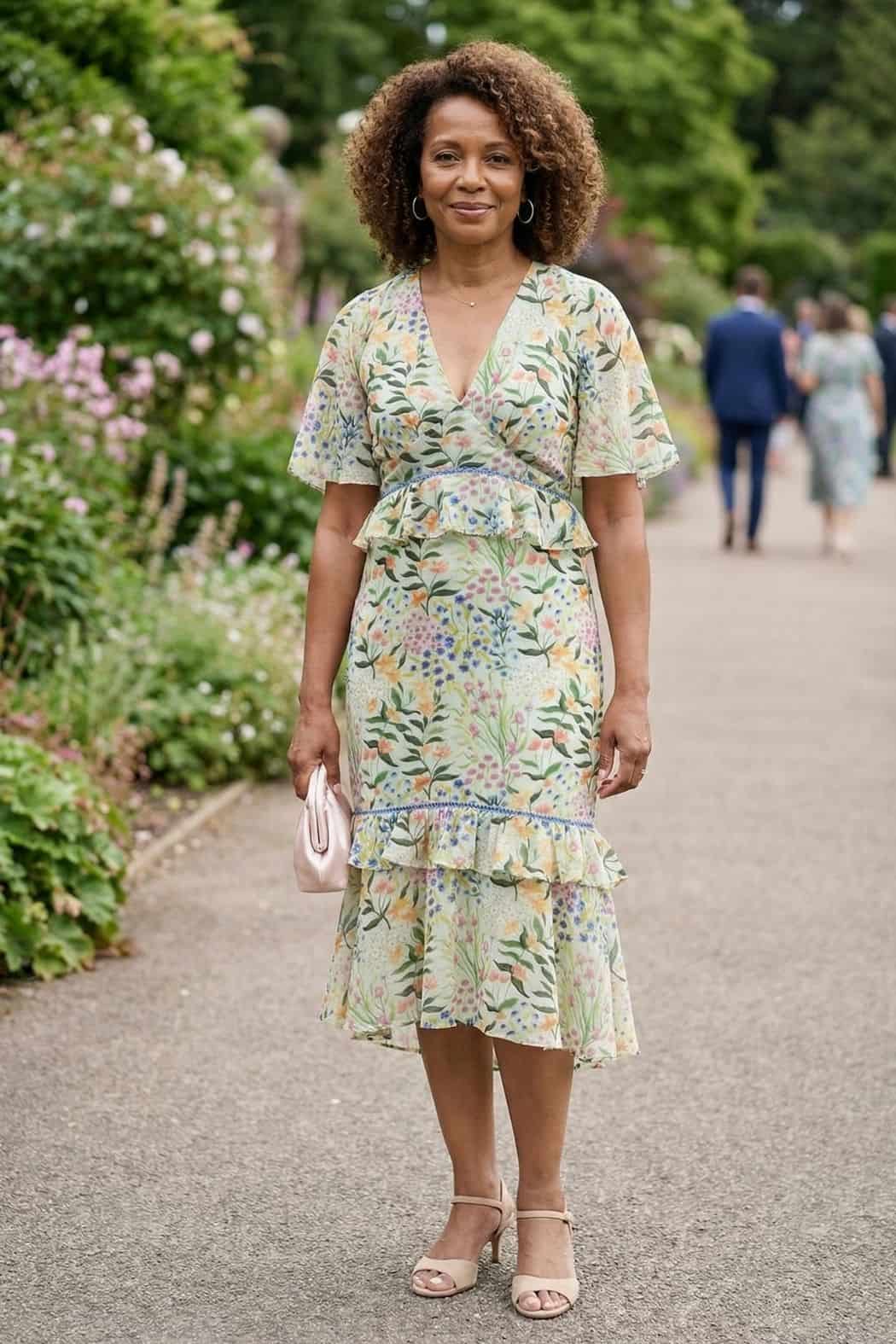
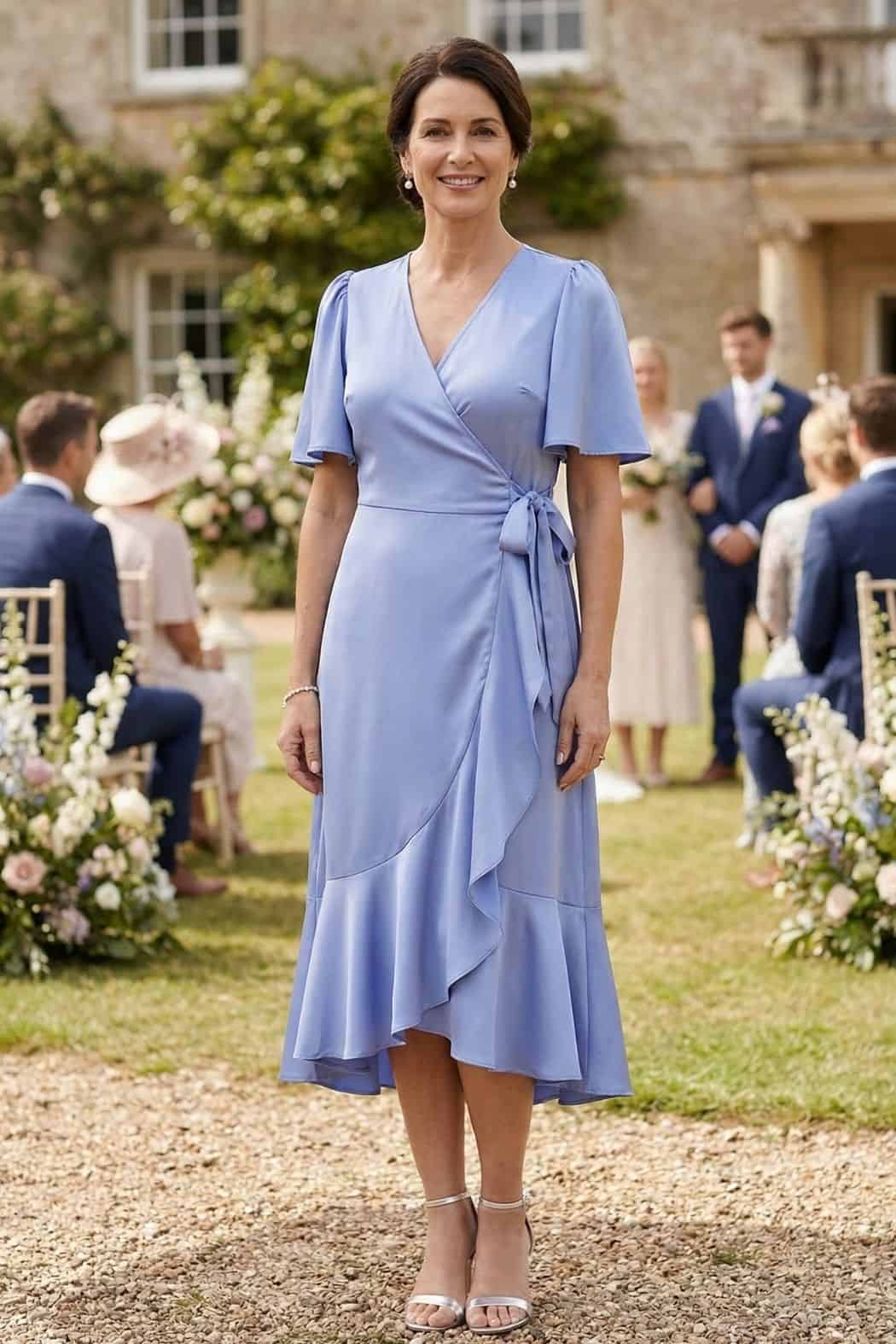
1. The Modern Midi Dress (The Most Reliable Option)
If you want something that works across almost every type of rehearsal dinner, this is it.
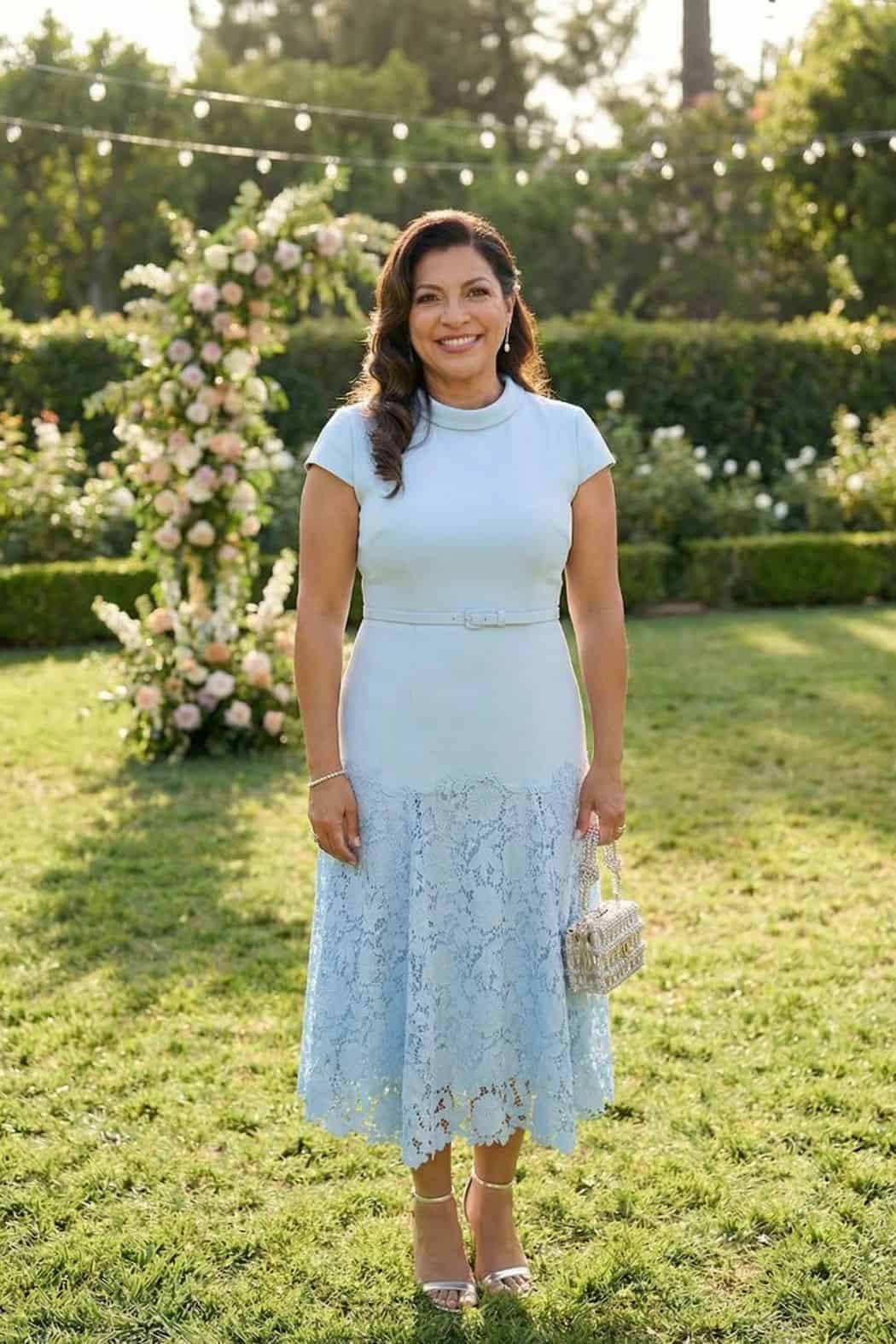
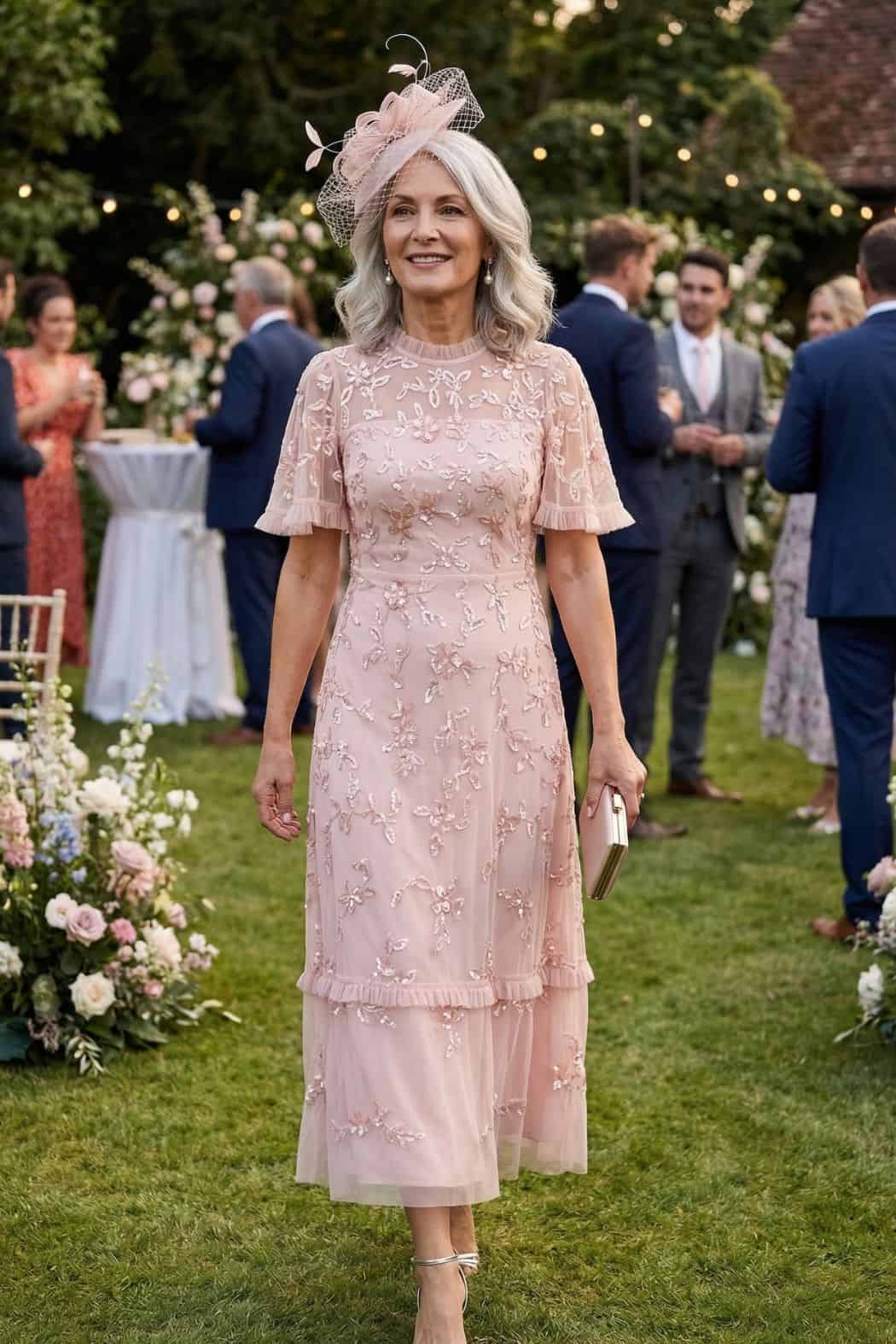
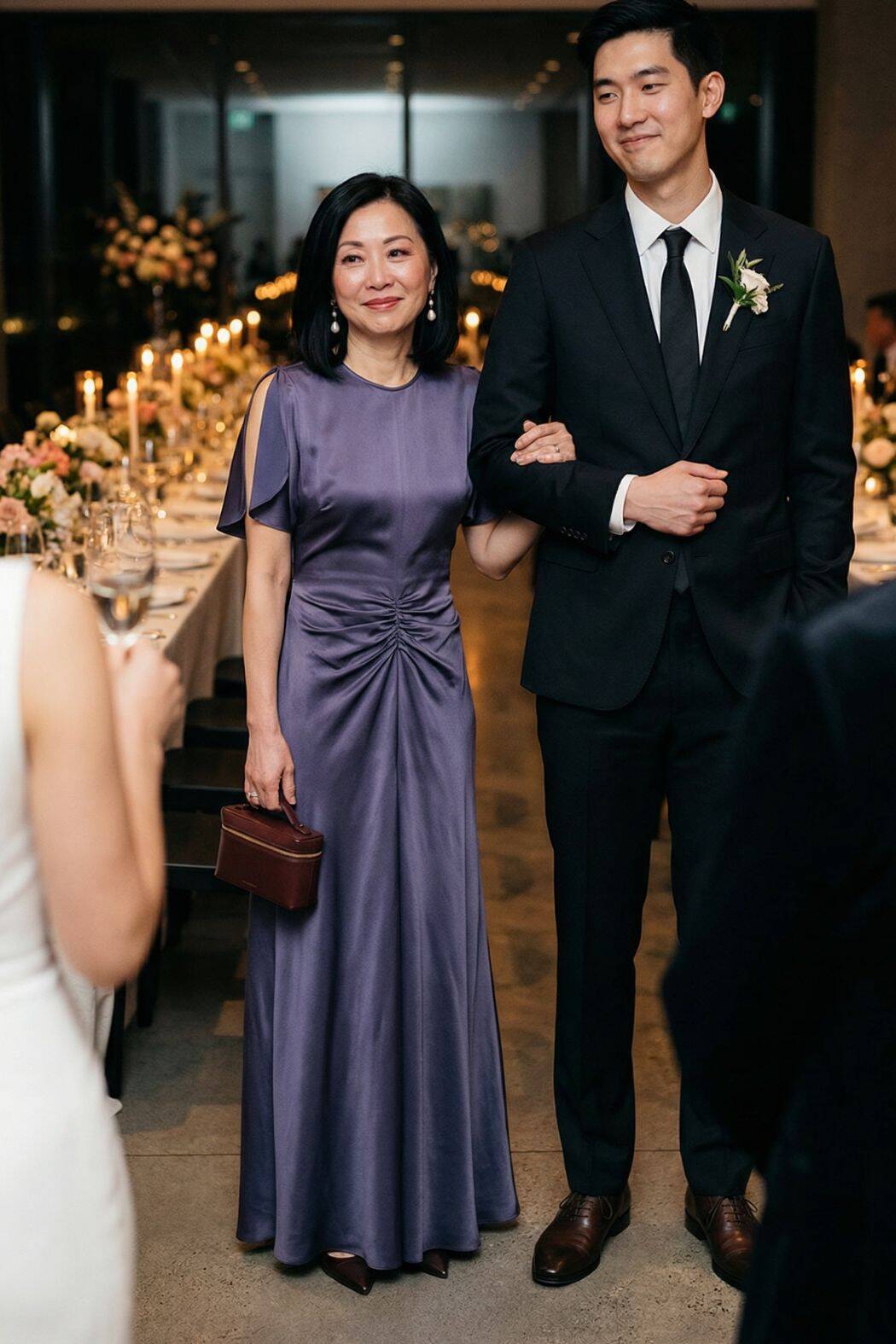
A midi or tea-length dress hits the sweet spot between casual and formal. It’s elevated enough for a restaurant or evening dinner, but not as heavy or “occasion-only” as a full-length gown.
What makes this a strong choice is how adaptable it is. A satin midi can feel dressy for a hotel dinner, while a floral or softer fabric works just as well for a garden or daytime setting.
From the research, this is also where most brands are focusing for mothers now. Structured tea-length dresses from Adrianna Papell, metallic or pleated midis from Dress the Population, and floral or statement styles from Sachin & Babi are all designed specifically for these in-between events.
What to prioritise:
- Fabrics that move well like satin, chiffon, or crepe
- A shape that allows you to sit and move comfortably
- Light structure or draping rather than stiff tailoring
This works best for:
- Restaurants
- Private dining rooms
- Cocktail-style rehearsal dinners
If you’re unsure, this is the safest and most modern choice.
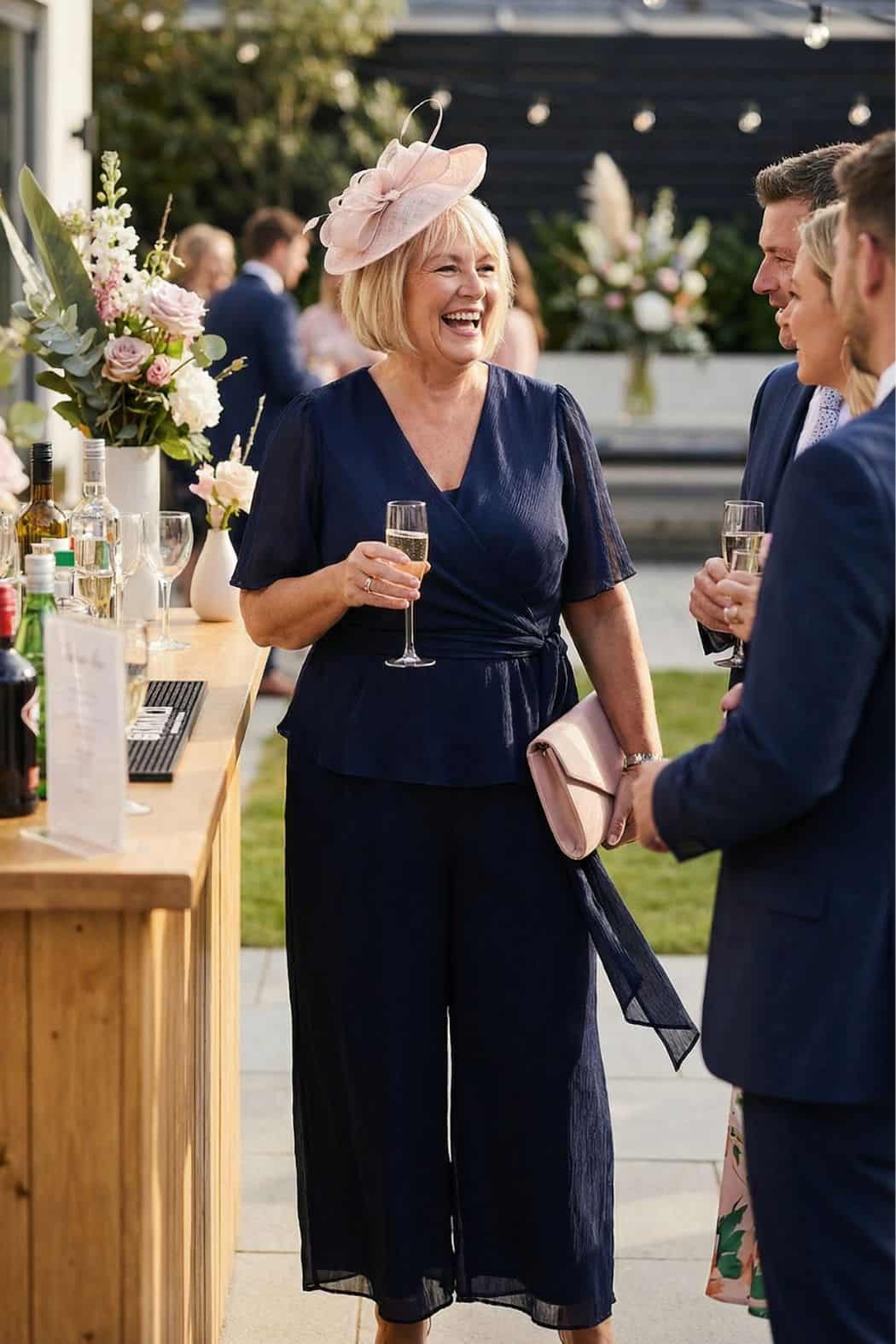
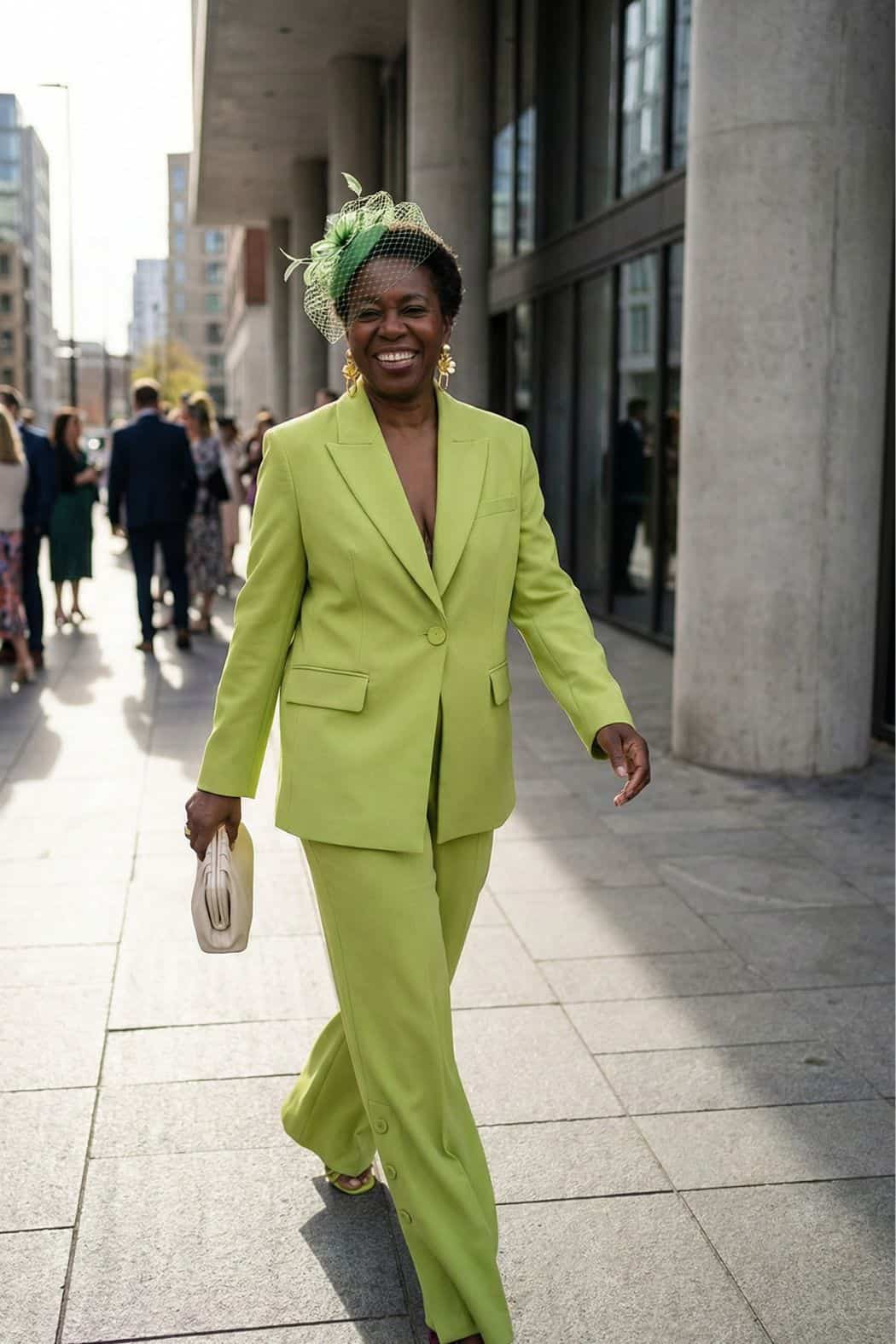
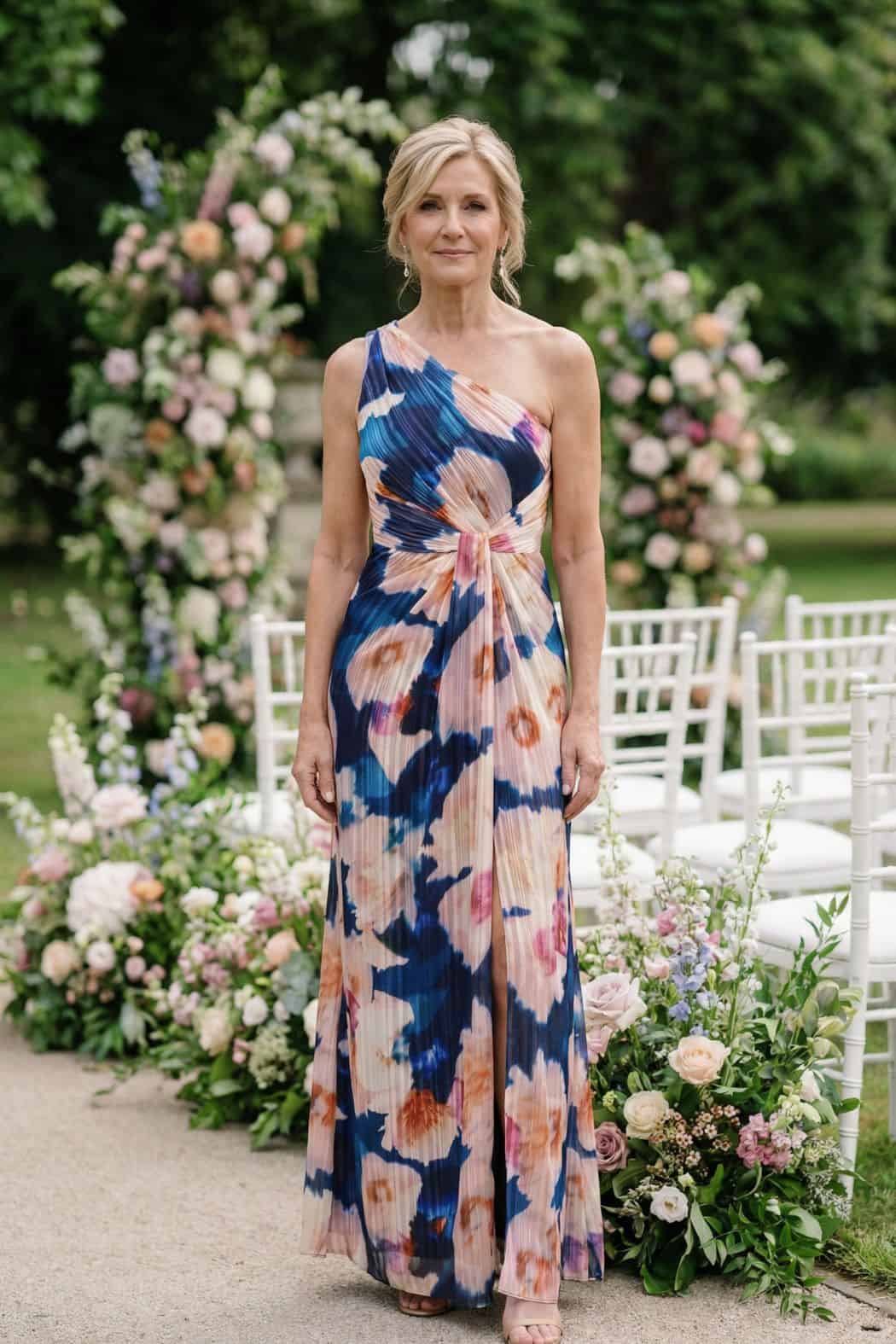
2. The Elevated Jumpsuit or Trouser Look
This is one of the biggest shifts in recent years, and it’s worth leaning into.
You do not have to wear a dress.
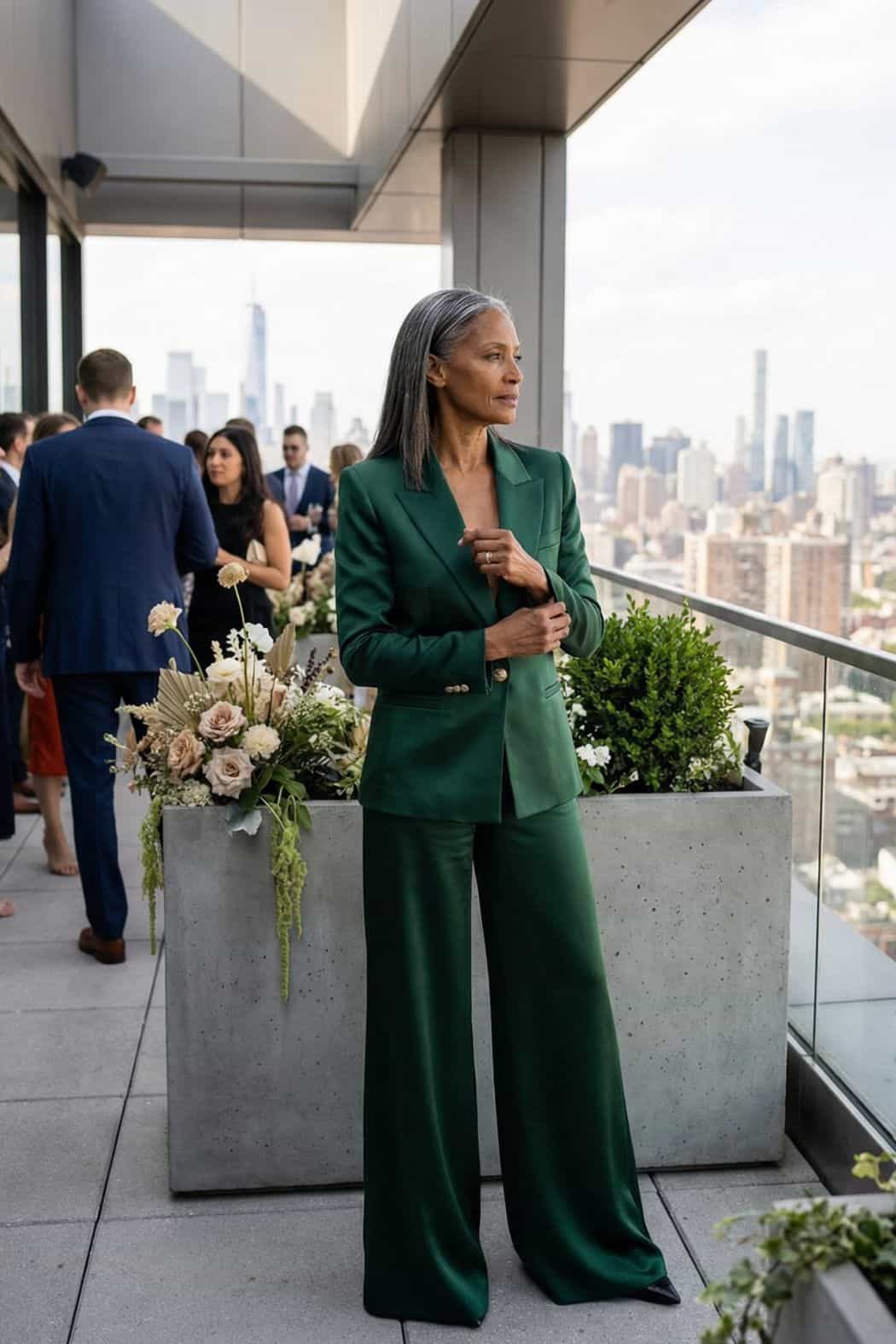
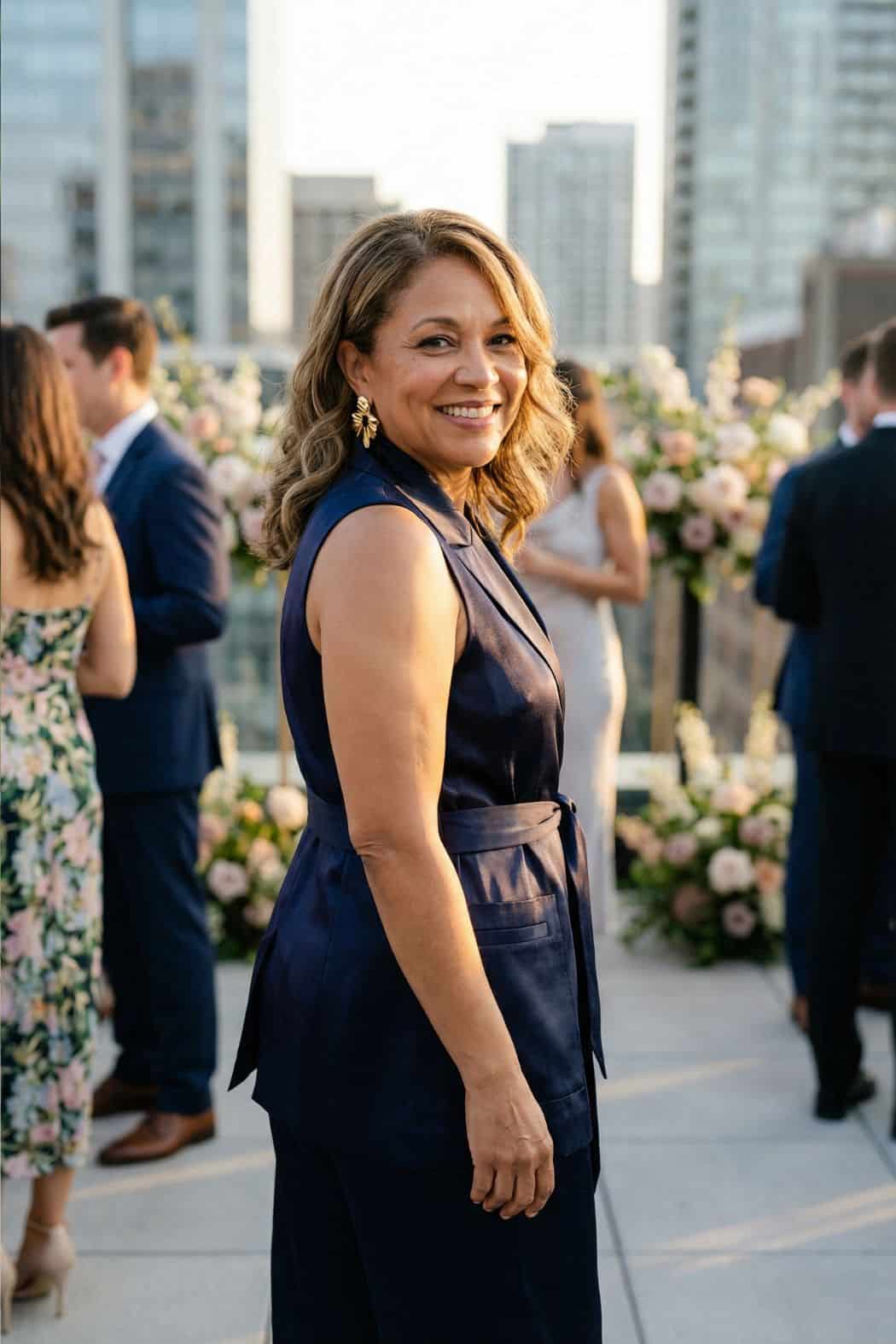
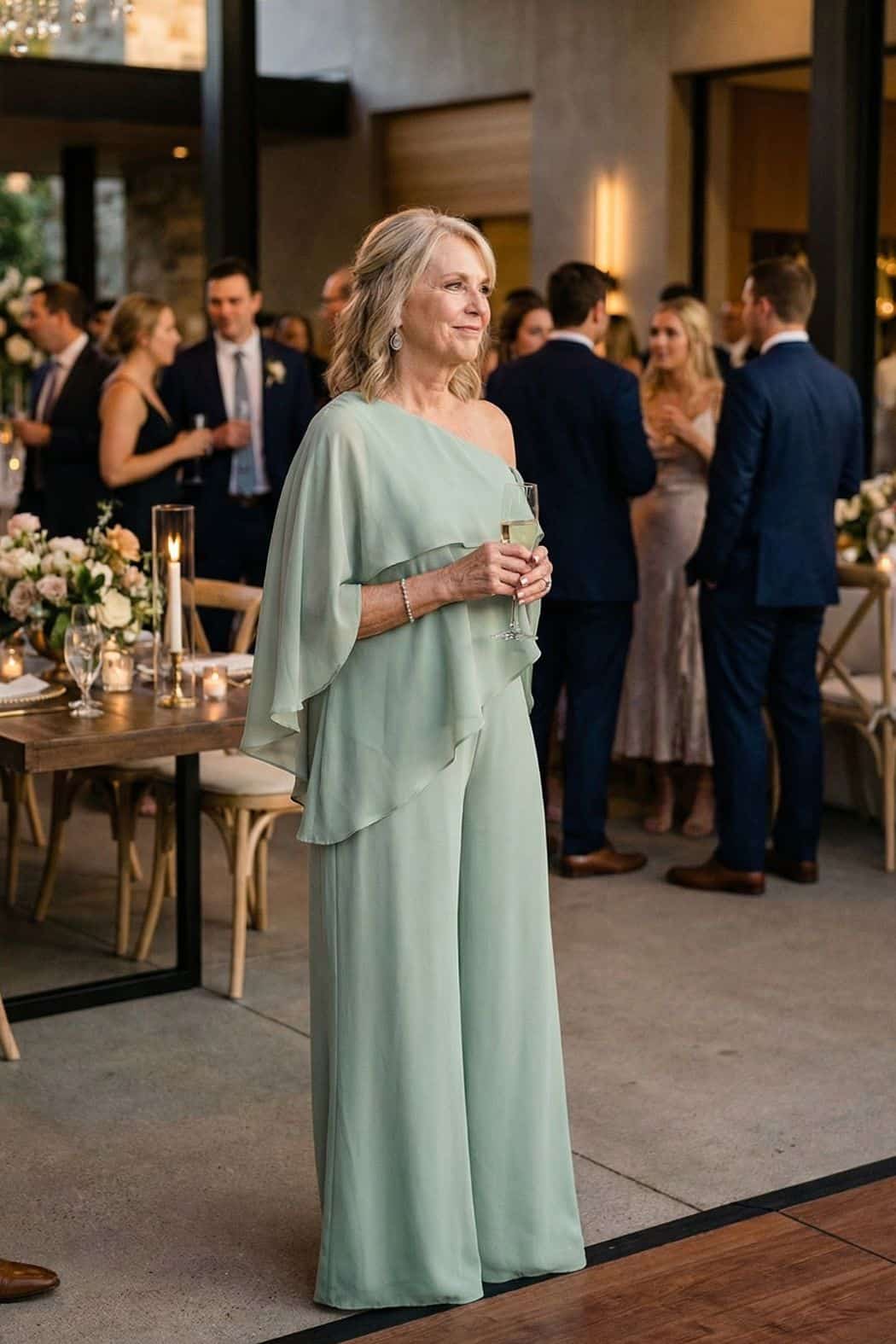
Tailored trousers, silk tops, and full-length jumpsuits are now completely normal for mothers and often feel more current than traditional dresses. They also tend to be more comfortable, which matters for an event where you’ll be moving around, greeting people, and sitting for long periods.
The key is making sure it feels intentional, not like everyday wear.
From the research, the most successful versions of this look include:
- Wide-leg jumpsuits with clean lines
- Silk or satin blouses paired with tailored trousers
- Subtle detailing like draping, pleats, or light embellishment
Adrianna Papell is a strong option for evening jumpsuits with small details that elevate the look, while Sachin & Babi offers more fashion-forward separates and wide-leg styles.
What to avoid:
- Anything too casual or jersey-based that reads as loungewear
- Overly tight or restrictive fits
This works best for:
- City venues
- Modern or design-led weddings
- Cocktail or evening dinners
If you want something that feels current and comfortable, this is one of the best options.
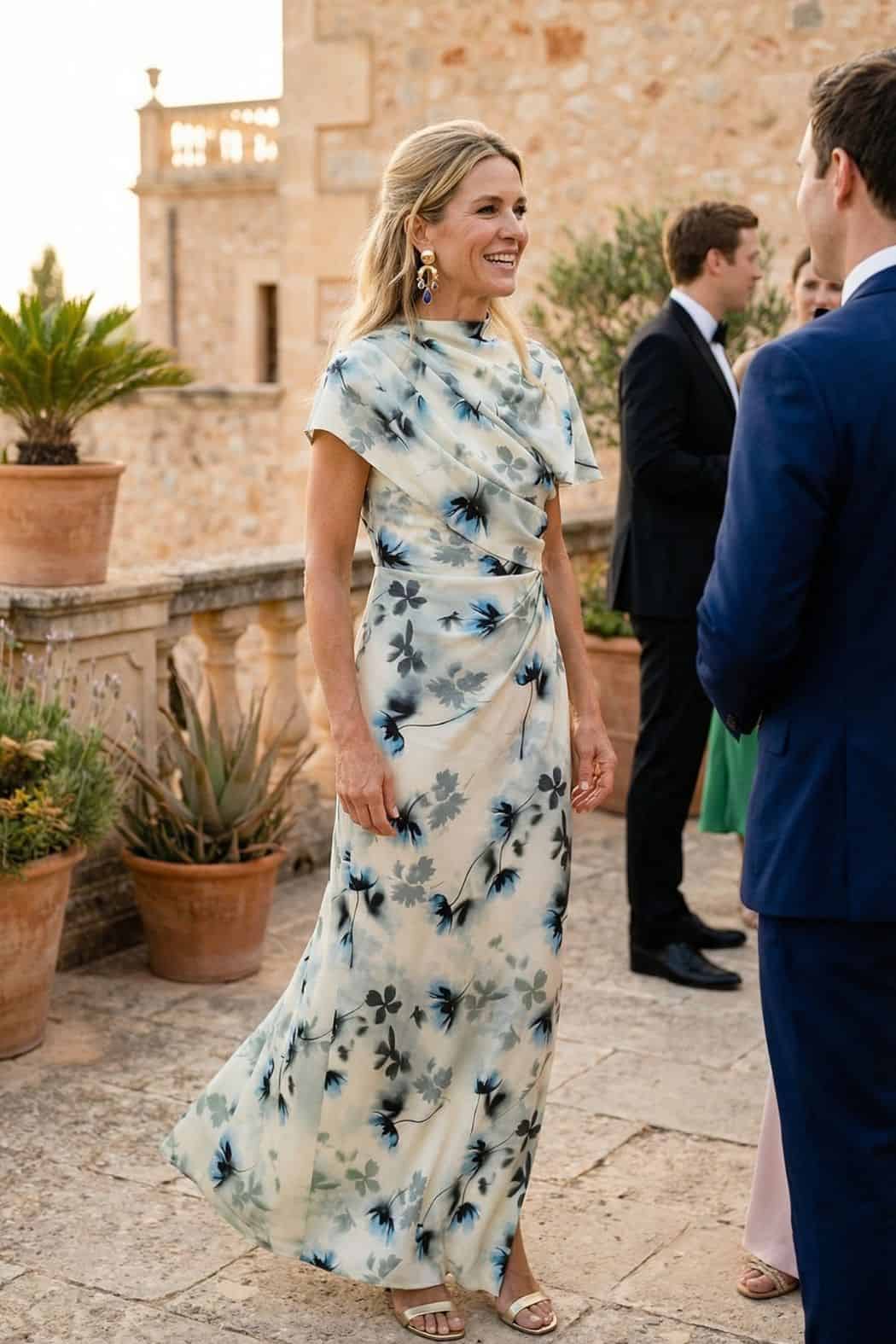
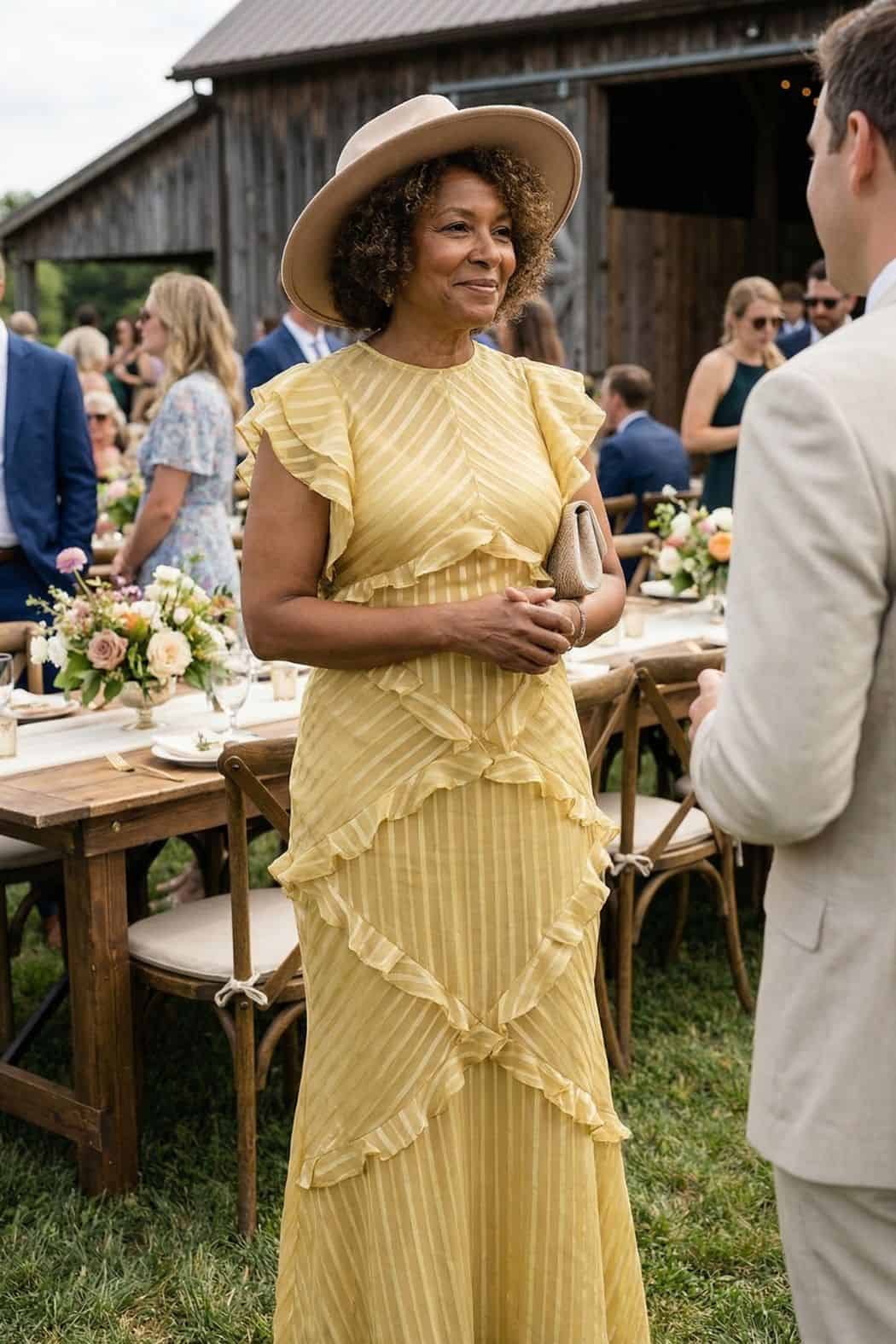
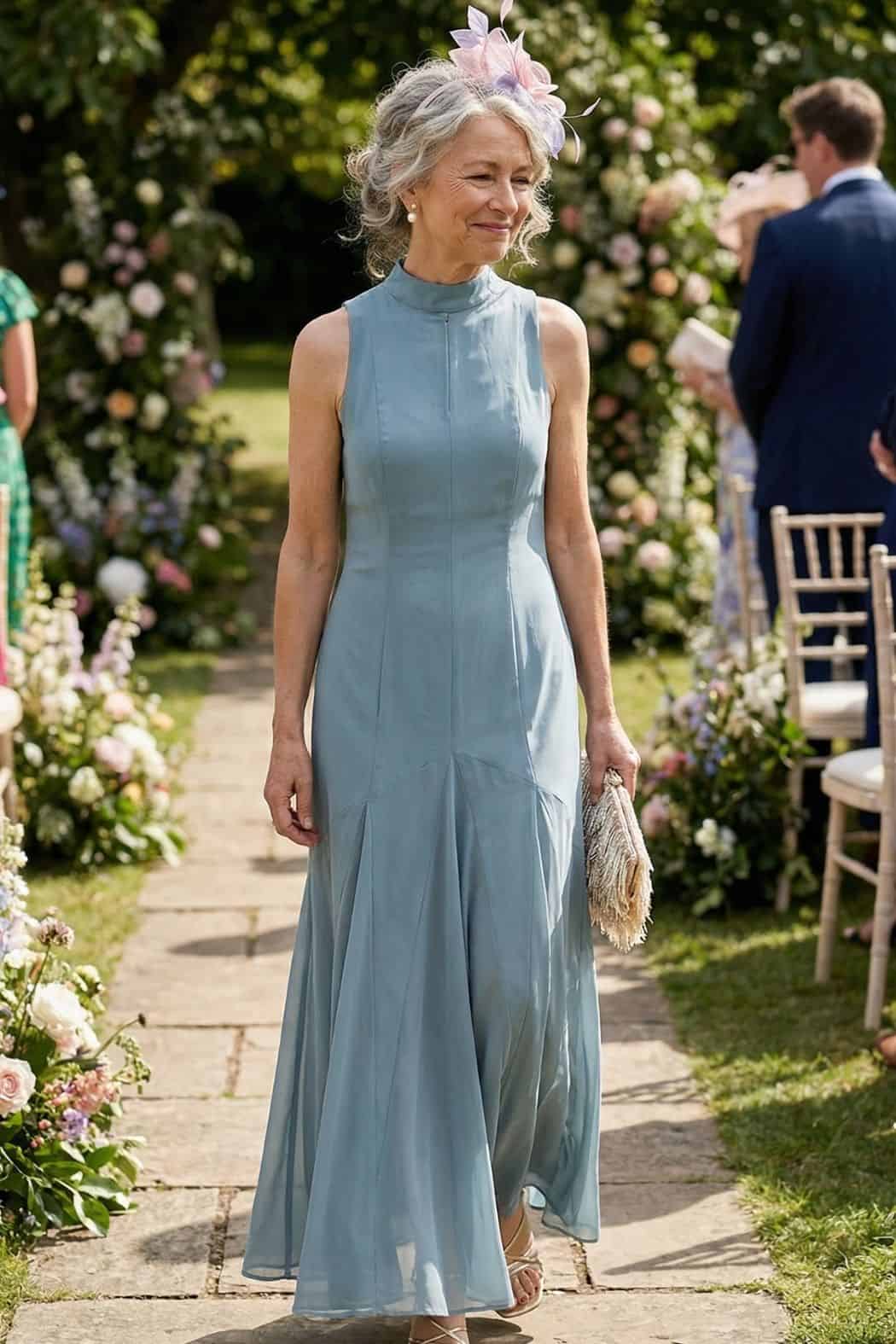
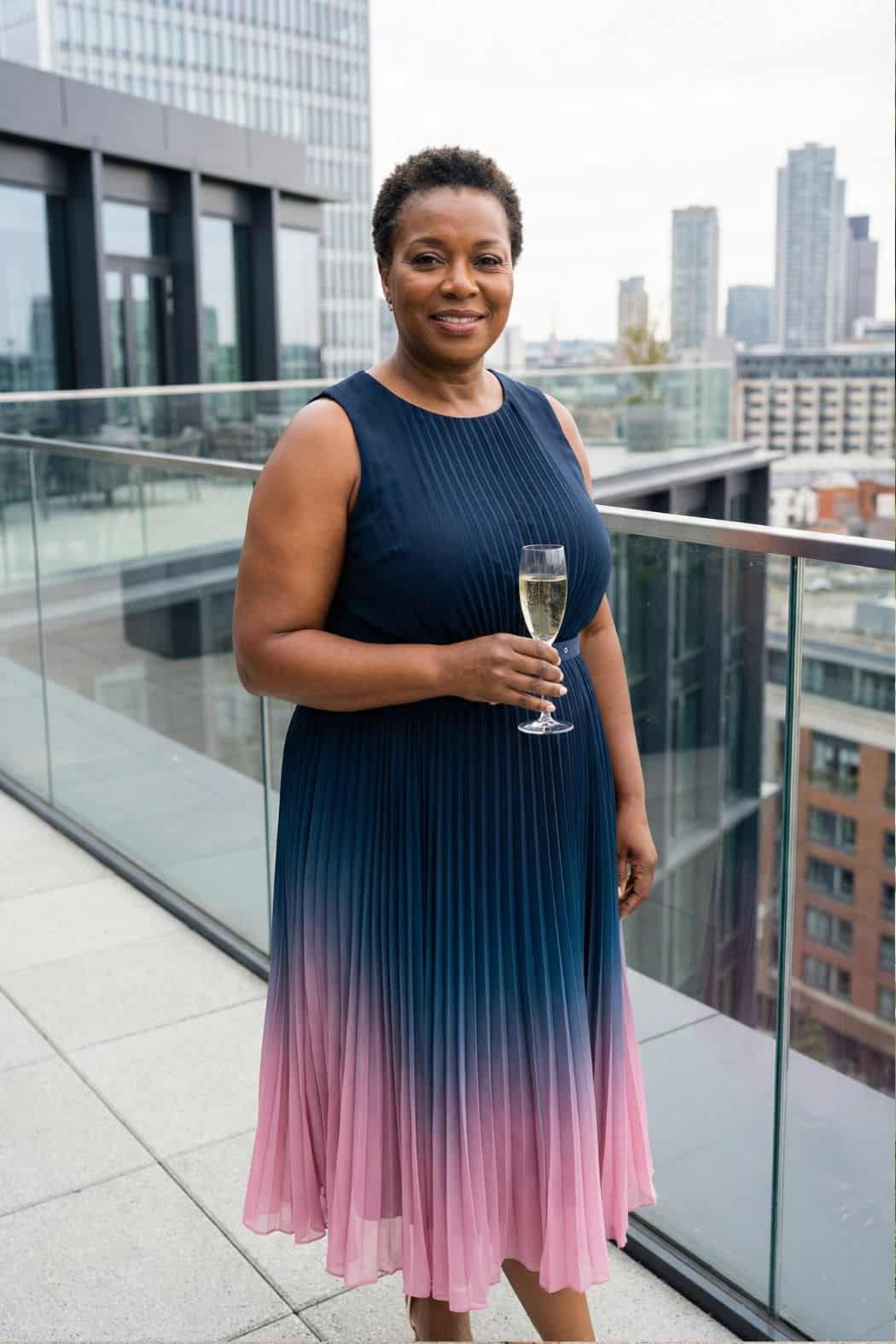
3. The Relaxed but Polished Dress
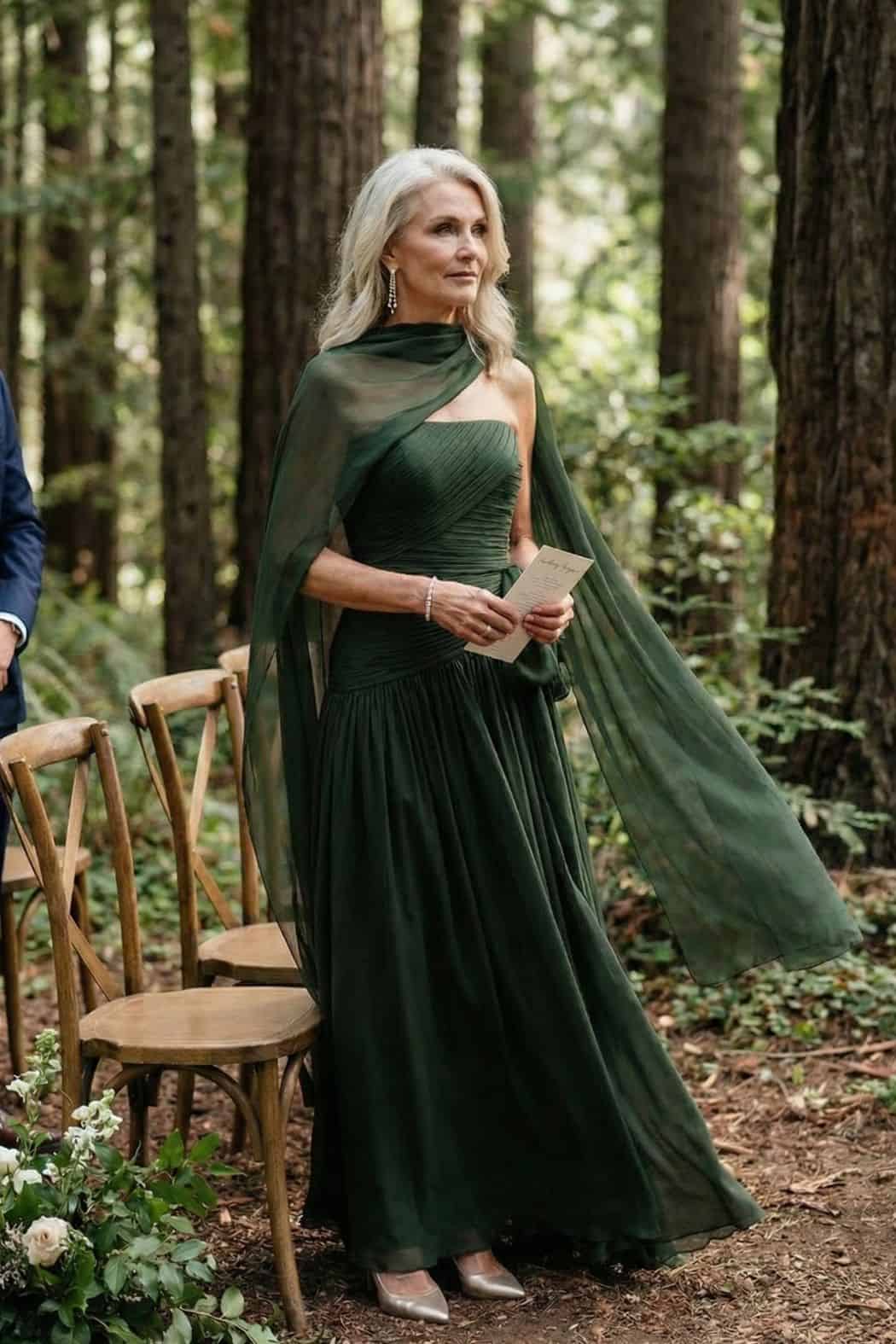
Not every rehearsal dinner is formal, and dressing too formally can feel just as out of place as dressing down too much.
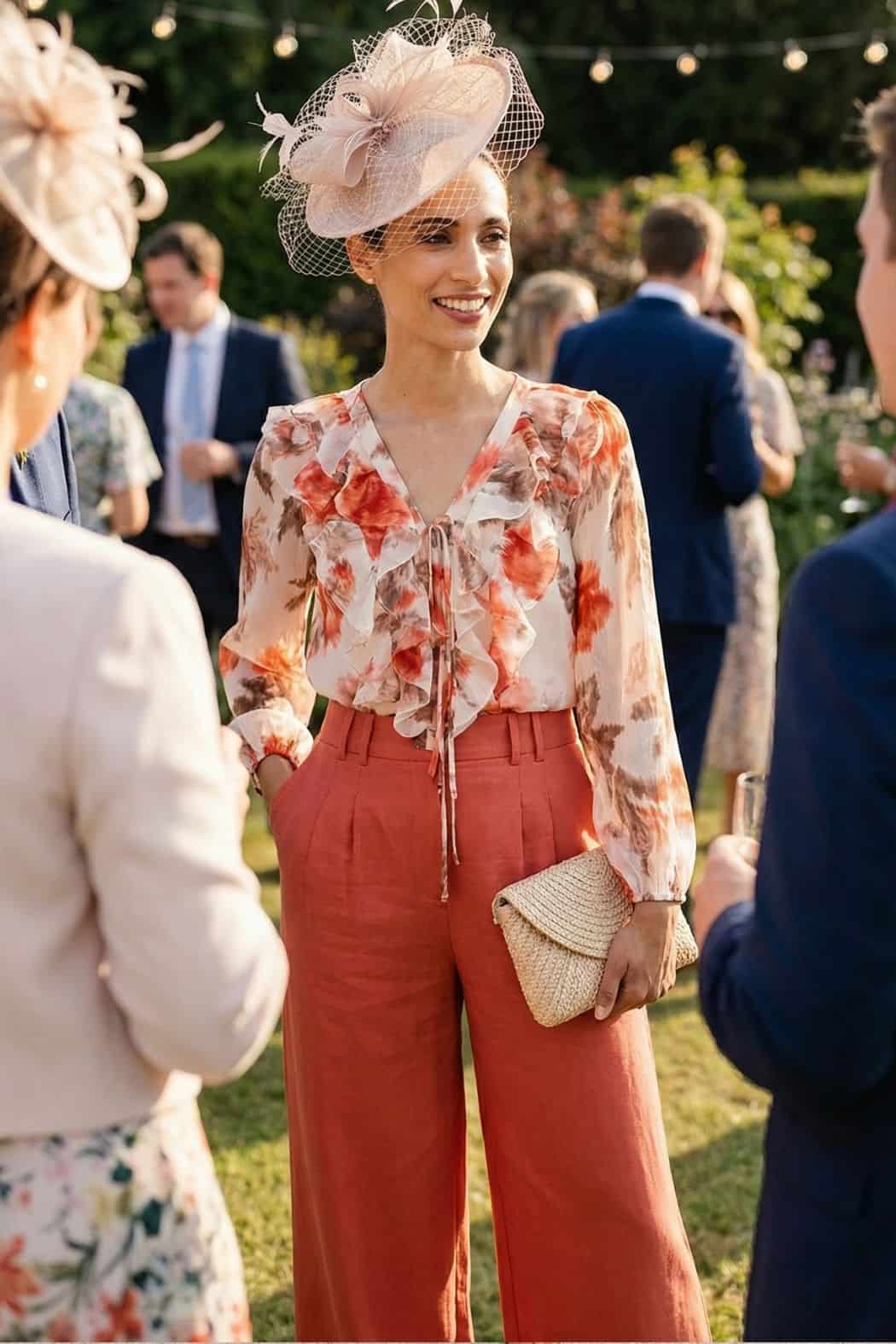
For outdoor, daytime, or more relaxed dinners, a softer dress works better than anything structured.
From the research, this includes:
- Floral tea-length or shirt dresses
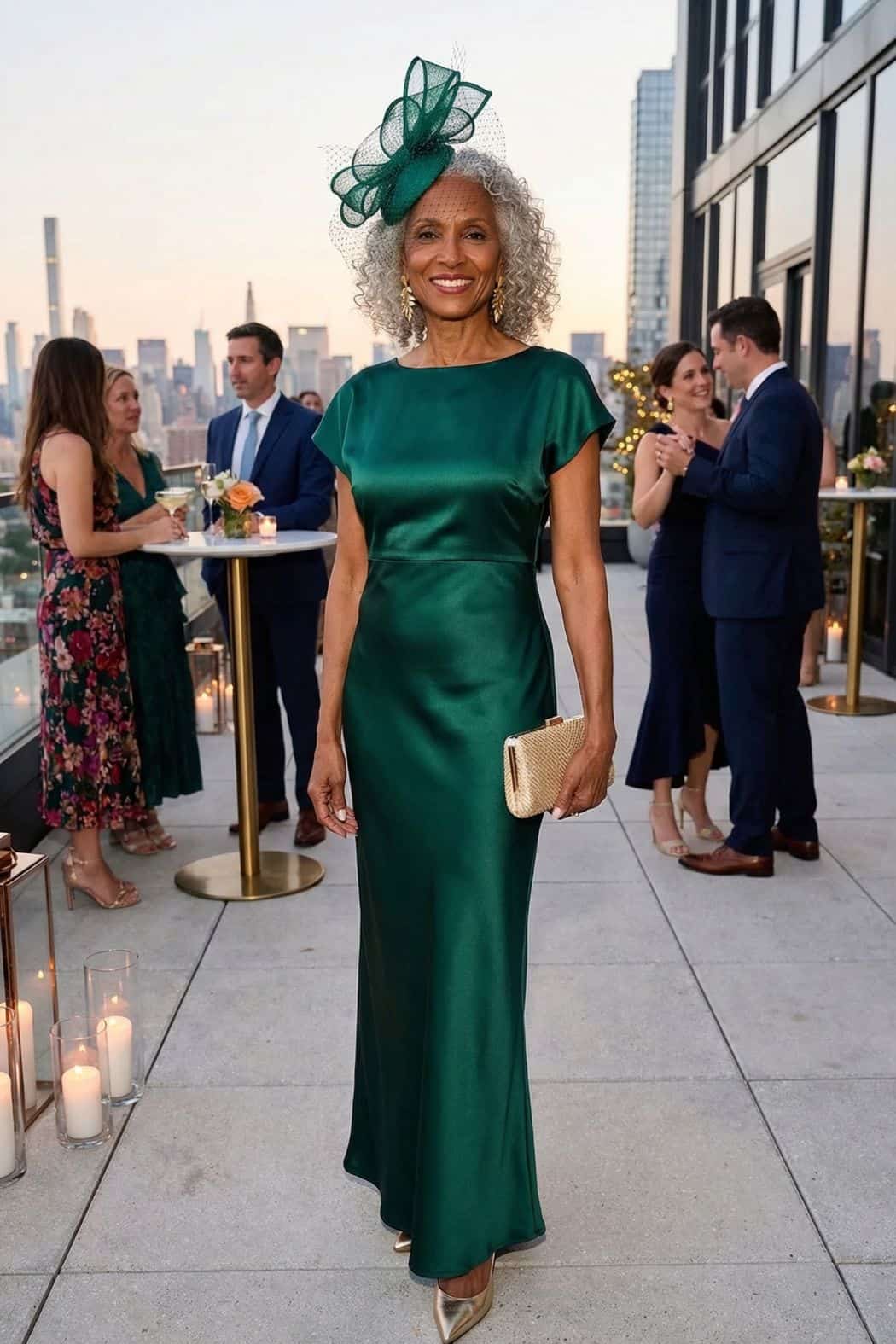
- Satin A-line dresses in richer tones like emerald
- Softer embellished A-line styles in colours like mauve or blush
These styles are designed to look put-together without feeling stiff or overdressed. They also tend to be easier to wear for longer periods.
Brands like Azazie offer more accessible, occasion-ready options in softer fabrics, while GLS Collective leans more into embellished A-line designs if you still want a slightly dressier feel.
What makes this work:
- Movement in the fabric
- A defined shape without heavy structure
- A balance between casual and intentional
This works best for:
- Backyard dinners
- Garden venues
- Destination or outdoor settings
The goal here is simple: look like you’ve made an effort, but not like you’re dressed for the wedding itself.
4. The Dressy Long Dress (For More Formal Settings)
A longer dress can absolutely work, but only when the setting calls for it.
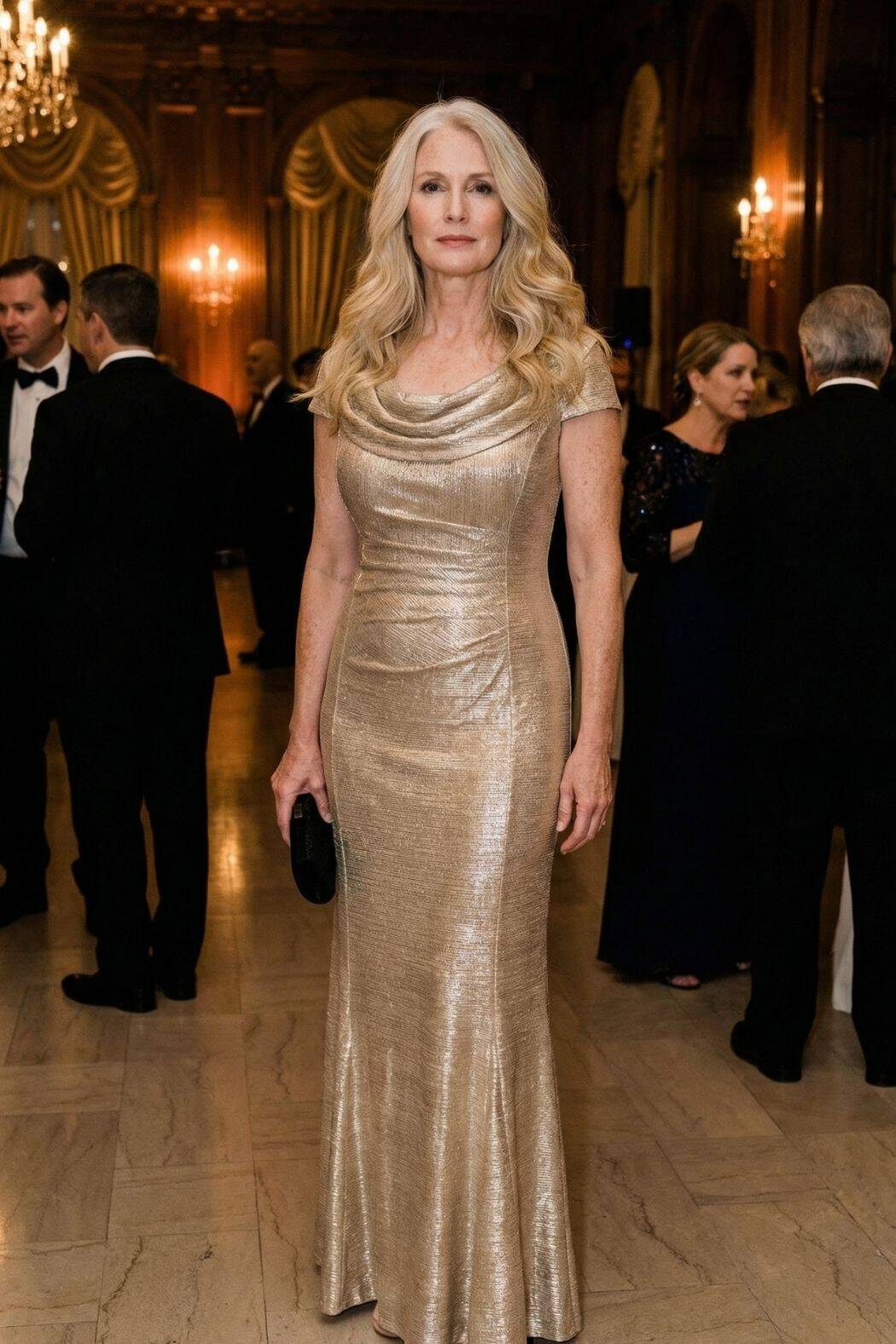
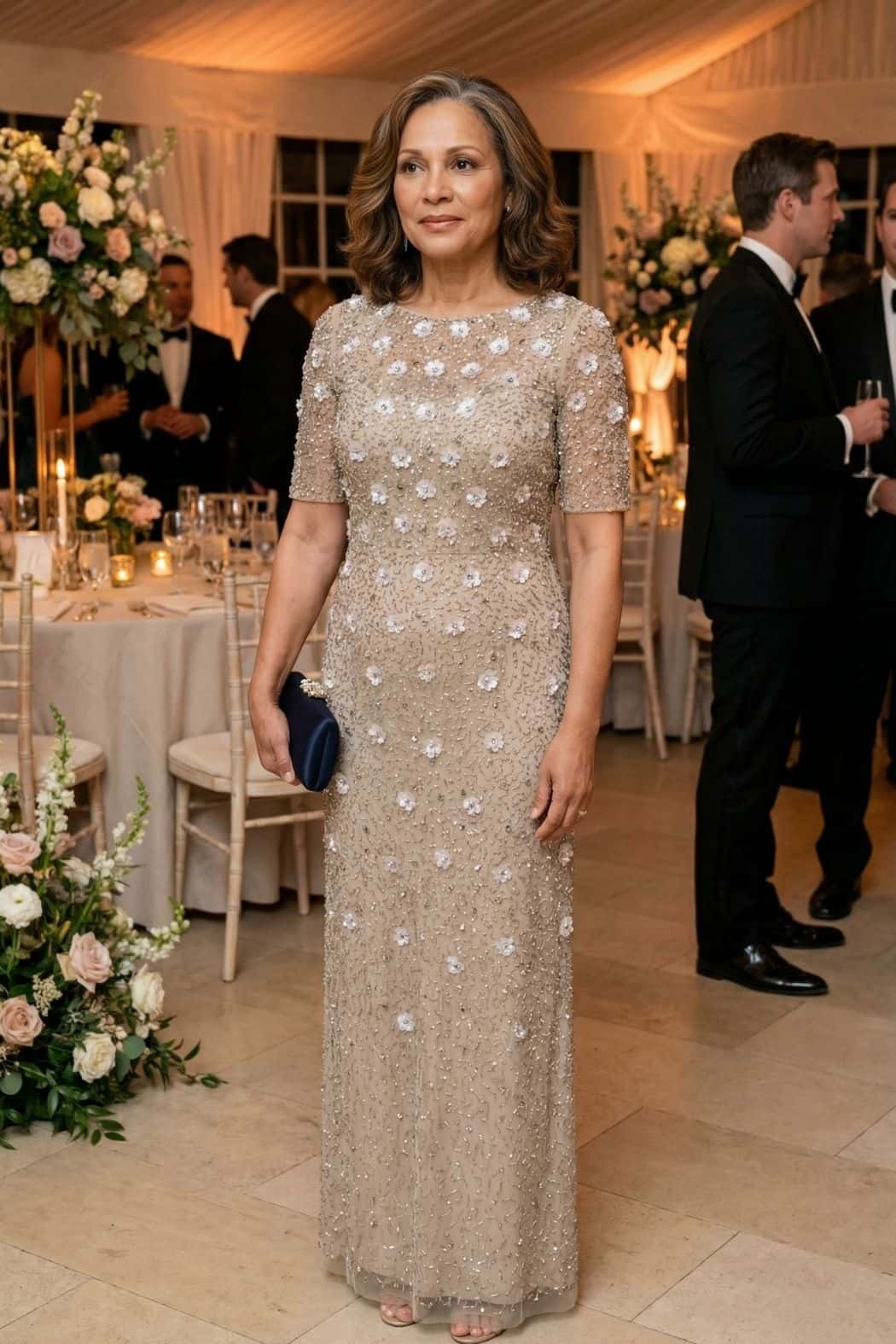
The mistake most people make is defaulting to a full-length gown regardless of the venue. In reality, long dresses make the most sense for more formal rehearsal dinners, such as private dining rooms, upscale restaurants, or evening events with a clear dress code.
From the research, the most relevant styles include:
- Soft embroidered gowns in lighter tones (like sage for spring)
- Lace long-sleeve dresses for evening or winter
- Textured fabrics like jacquard in richer tones (bronze, navy, deep blue)
Retailers like Couture Candy, NewYorkDress, and LARA New York all focus on these more formal, occasion-driven pieces.
What to keep in mind:
- The fabric should still allow movement and comfort
- Avoid anything that feels too bridal or overly dramatic
- Keep styling simple so the look doesn’t compete with the wedding day
This works best for:
- Formal rehearsal dinners
- Luxury or hotel venues
- Evening events with a clear dress code
If the setting is elevated, a long dress can feel completely appropriate. If it’s not, it will feel overdressed very quickly.
The Key Takeaway
There isn’t one outfit you’re supposed to wear anymore.
The best option is the one that:
- matches the setting
- feels comfortable for the full evening
- looks polished without feeling overdone
If it feels like a slightly more elevated version of what you’d wear to a really nice dinner, you’re exactly where you should be.
What to Wear by Venue (This Is What Actually Decides Your Outfit)
This is the part that matters most.
Not your role, not your age, not outdated “mother” rules. The venue tells you what to wear.
Rehearsal dinners now range from upscale private dining to barefoot beach dinners. That’s why copying a generic “mother of the bride outfit” rarely works. You need to dress for the environment you’ll actually be in.
Below is how to get it right for each type of venue, with real guidance on fabrics, silhouettes, shoes, and styling.
Restaurant or Private Dining (Most Common Scenario)
This is where most rehearsal dinners sit. Think: a reserved space in a nice restaurant, hotel dining room, or private event space.
The expectation here is cocktail or slightly elevated, not full formal.
What works best:
- Satin, crepe, or chiffon midi dresses
- Structured tea-length dresses
- Tailored jumpsuits or wide-leg trouser sets
This is where brands like Adrianna Papell, Dress the Population, and Sachin & Babi sit perfectly. Their pieces are designed for exactly this level of formality.
What to prioritise:
- Clean, polished silhouettes
- Fabrics that hold shape but still move
- A hemline that feels intentional (midi or tea-length works best)
Shoes:
- Low to mid heels, dressy flats, or block heels
- You’ll likely be standing and moving between tables, so comfort matters
What to avoid:
- Anything too casual (jersey dresses, everyday prints)
- Full gowns unless the dinner is clearly formal
This is the setting where you want to look like you’ve made an effort, but not like you’re dressed for the ceremony.
Backyard or Casual Dinner
These are increasingly popular and often feel more like a relaxed dinner party than a formal event.
The mistake here is going too dressy. You’ll feel out of place quickly if you overdress.
What works best:
- Floral or soft midi dresses
- Wrap dresses or shirt dresses
- Blouse with tailored trousers or a relaxed co-ord
From the research, softer A-line dresses and tea-length styles in lighter fabrics are ideal here. Think movement, not structure.
Fabrics to focus on:
- Chiffon
- Cotton blends
- Lightweight satin
Shoes:
- Flats, wedges, or low block heels
- Grass, decking, or uneven ground makes stilettos impractical
What to avoid:
- Heavy fabrics like jacquard or velvet
- Overly structured or formal silhouettes
The goal here is simple: polished but relaxed. You should look like you belong in the setting, not like you’ve arrived from a different event.
Beach or Destination Dinner
This is where practicality becomes just as important as style.
You’re dealing with heat, wind, sand, and movement, so your outfit needs to work with the environment, not against it.
What works best:
- Lightweight, breathable fabrics like chiffon, cotton, or linen
- Flowy midi or maxi dresses
- Looser silhouettes that allow airflow
From the research, embroidered dresses, floral midis, and softer gowns in lighter tones (sage, blush, soft blue) work particularly well here.
Shoes:
- Flat sandals, espadrilles, or wedges
- Nothing that sinks into sand or feels unstable
What to avoid:
- Heavy fabrics
- Tight, restrictive fits
- Anything that requires constant adjusting
Extra considerations:
- Light layers if it gets cooler in the evening
- Minimal but secure accessories (wind is a factor)
This is one of the few settings where a slightly more relaxed look is expected, even for a mother.
Vineyard or Barn Venue
These are popular because they sit in that middle ground between relaxed and styled.
Your outfit should reflect that balance.
What works best:
- Midi dresses with texture (jacquard, satin, chiffon layers)
- Floral or nature-inspired prints
- Softly structured silhouettes
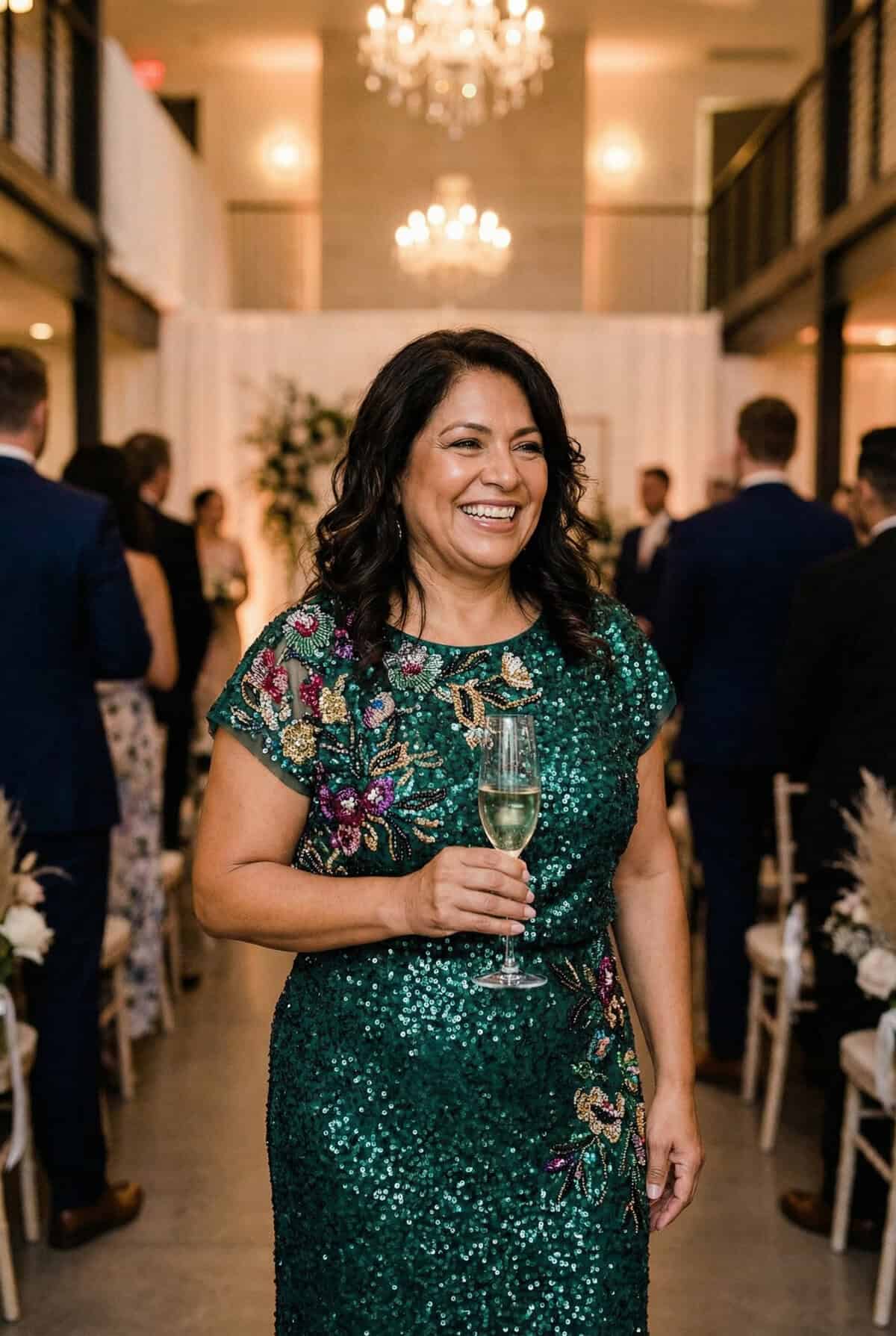
From the research, this is where richer tones and texture come in. Emerald, navy, bronze, dusty tones all work well in these settings.
Shoes:
- Block heels, wedges, or dressy boots
- Surfaces are often uneven, so stability matters
What to avoid:
- Ultra-glam evening looks that feel too formal
- Overly casual fabrics that feel underdressed
Styling tip:
This is a good setting to lean into slightly more detail, whether that’s texture, sleeves, or subtle embellishment.
City Venue or Cocktail Lounge
This is where you can be a bit more fashion-forward.
Think rooftop bars, modern restaurants, or stylish cocktail spaces. The overall look is usually more contemporary.
What works best:
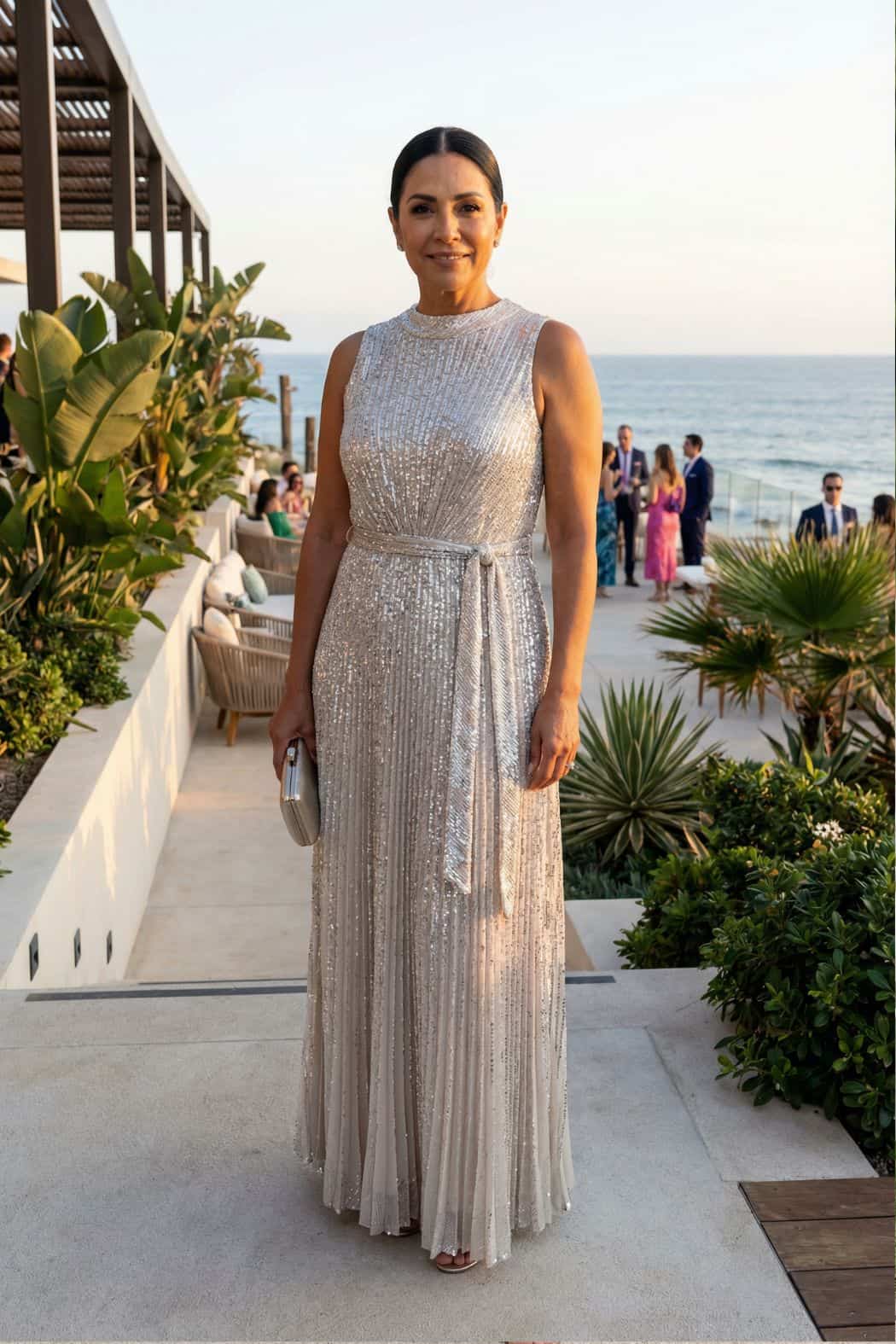
- Metallic or satin midi dresses
- Asymmetric or one-shoulder styles
- Tailored jumpsuits with strong silhouettes
From the research, this is where pieces like metallic plissé dresses or structured modern designs really work.
Fabrics:
- Satin
- Crepe
- Subtle metallics
Shoes:
- Heels, sleek sandals, or pointed flats
What to lean into:
- Clean lines
- Statement sleeves or neckline
- Slightly bolder styling choices
What to avoid:
- Anything too traditional or dated in shape
- Overly conservative styles that feel disconnected from the setting
This is the one venue where you can push your style slightly more and it will feel appropriate.
What to Wear by Season
Season matters more than people think. It affects fabric, colour, sleeve length, and how comfortable you’ll actually feel throughout the evening.
The key is not just “dressing for the season” but choosing fabrics and layers that work for the time of day, venue, and temperature changes you’ll realistically experience.
Spring Rehearsal Dinners
Spring is one of the easiest seasons to dress for, but it can be unpredictable. You’re often dealing with mild temperatures, cooler evenings, and mixed indoor-outdoor settings.
What works best:
- Midi or tea-length dresses with movement
- Light long sleeves or sheer sleeves
- Soft tailoring or lighter structured pieces
From the research, this is where sage tones, soft florals, and embroidered details come through strongly. A sage embroidered midi or a floral chiffon dress fits perfectly into this setting without feeling overly seasonal or cliché.
Fabrics to prioritise:
- Chiffon
- Lightweight crepe
- Soft satin
Layering matters here:
- A tailored blazer, shawl, or wrap is often needed once the temperature drops
Shoes:
- Closed-toe heels or elegant flats work well, especially if the venue includes outdoor areas
What to avoid:
- Anything too summery or sleeveless without a layer
- Heavy winter fabrics that feel out of place
Summer Rehearsal Dinners
This is where comfort becomes non-negotiable.
Heat, humidity, and longer evenings mean your outfit needs to breathe, move, and stay comfortable over several hours.
What works best:
- Sleeveless or short-sleeve midi dresses
- Looser silhouettes that don’t cling
- Lightweight jumpsuits or wide-leg trousers
From the research, softer A-line dresses, floral midis, and lighter-toned pieces dominate here. This is also where destination-style dressing overlaps, especially for outdoor or evening events.
Fabrics to prioritise:
- Cotton blends
- Linen blends
- Lightweight chiffon
Shoes:
- Sandals, wedges, or breathable flats
- Avoid anything that traps heat or feels heavy
What to consider:
- Evening temperatures may still drop slightly, so a light wrap can be useful
- Sweat-resistant fabrics and lighter colours will feel more comfortable
What to avoid:
- Heavy satin or thick structured fabrics
- Tight, restrictive fits
Fall Rehearsal Dinners
Fall is where outfits start to feel richer and more styled.
The setting often shifts to indoor venues, barns, vineyards, or evening dinners, which naturally calls for more depth in colour and texture.
What works best:
- Midi dresses with structure or texture
- Long sleeves or heavier fabrics
- Tailored jumpsuits or coordinated sets
From the research, this is where jewel tones like emerald, navy, and bronze come in, along with fabrics like jacquard and heavier satin.
Fabrics to prioritise:
- Crepe
- Jacquard
- Heavier satin
Shoes:
- Closed-toe heels, block heels, or boots (especially for outdoor venues)
Styling direction:
- This is a good time to introduce texture rather than just colour
- Slightly more structured silhouettes feel appropriate
What to avoid:
- Light, summery florals that feel out of season
- Very thin fabrics without layering
Winter Rehearsal Dinners
Winter events are usually more formal by default, often held in the evening and indoors, but you still need to plan for travel and temperature changes.
What works best:
- Long-sleeve midi or full-length dresses
- Structured silhouettes
- Elevated fabrics with weight
From the research, winter leans towards lace, satin, and darker tones, including navy, deep green, black, and icy blue.
Fabrics to prioritise:
- Satin
- Velvet (where appropriate)
- Lace
- Heavier crepe
Layering is essential:
- A tailored coat, wrap, or structured jacket
- Something that works with the outfit, not against it
Shoes:
- Closed-toe heels or dressy boots
What to avoid:
- Anything too light or summery
- Bare styles that don’t suit colder weather
Colors That Actually Work (And How to Choose Them Properly)
Color is where most people overthink or get it wrong.
You don’t need to match the bridal party, and you don’t need to avoid color altogether. The goal is to coordinate with the overall wedding palette and setting, while still choosing something that feels like you.
Reliable, Always-Appropriate Colors
These work across almost every venue, season, and dress code:
- Navy → softer than black, works day or evening
- Black → completely acceptable for rehearsal dinners now, especially for evening or city venues
- Champagne / taupe → polished, neutral, and easy to style
- Soft metallics → subtle gold, bronze, or pewter for evening settings
These are your safest options if you’re unsure or want something timeless.
More Modern, On-Trend Choices
From the research, rehearsal dinner styling has shifted toward softer, more fashion-led tones:
- Sage green → one of the most versatile modern shades, especially for spring and outdoor venues
- Dusty blue → understated but still interesting
- Emerald → richer, works well for fall and evening
- Soft blush or mauve → flattering and easy to wear without feeling overly “wedding guest”
These colors photograph well and feel current without being too bold.
How to Get the Color Right
Instead of guessing, use this approach:
- Look at the wedding palette and aim to complement, not copy
- Consider the venue tones (wood, greenery, ocean, cityscape)
- Think about time of day, lighter tones for daytime, deeper tones for evening
What to avoid:
- Exact bridesmaid color matches unless intentional
- Harsh neons or overly bright tones that distract
- Anything too close to white, ivory, or cream unless clearly approved
The goal is to look like you belong in the overall setting, not like you’re part of the wedding party.
Fabrics That Elevate the Outfit (This Makes a Bigger Difference Than You Think)
Fabric is what makes an outfit feel expensive, comfortable, and appropriate. Two outfits in the same color can feel completely different depending on the material.
Fabrics That Work Best
- Chiffon → soft, breathable, and forgiving. Ideal for warmer weather or layered looks
- Satin → one of the easiest ways to look polished without overcomplicating the outfit
- Crepe → structured but still comfortable, holds shape well for tailored looks
- Organza → adds light structure and interest without heaviness
From the research, these fabrics consistently show up in modern rehearsal dinner styling because they balance movement, comfort, and polish.
Fabrics to Be More Careful With
- Heavy jacquard or brocade → can feel too formal unless the venue calls for it
- Thick, stiff materials → restrict movement and feel uncomfortable over a long evening
- Cheap synthetics that don’t breathe → especially noticeable in summer or crowded venues
The key test:
If you can sit, walk, and move comfortably for a few hours, the fabric is right. If not, it will show.
What Not to Wear (Modern, Practical Version)
Most “rules” are outdated, but a few still apply for good reason.
Avoid:
- White, ivory, or anything that could photograph as bridal
- Overly revealing or club-style outfits that don’t match the setting
- Everyday casual pieces (distressed denim, basic cotton dresses, athletic wear)
- Shoes that don’t work for the venue (grass, sand, uneven surfaces)
Also worth noting from the research:
- Overdressing is just as noticeable as underdressing
- Comfort matters, if you’re adjusting your outfit all night, it’s the wrong choice
Easy Outfit Formulas (That Actually Work in Real Life)
If you’re stuck, don’t start from scratch. Use one of these and adjust based on the venue.
- Satin midi dress + low heels + simple clutch
- Wide-leg jumpsuit + statement earrings + sleek shoes
- Floral or soft A-line midi + block heels + light layer
- Tailored trousers + silk blouse + blazer or wrap
Why these work:
- They balance structure and comfort
- They suit most rehearsal dinner dress codes
- They can easily be adjusted for season or location
More blogs you will love!
- Winter Rehearsal Dinner & Wedding Welcome Party Ideas

- Fall Rehearsal Dinner & Wedding Welcome Party Ideas

- Fall Mother of the Bride Dresses: Warm, Rich, and Beautiful
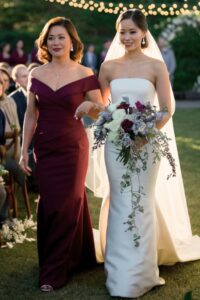
- Modern Fall Mother of the Bride Dress for 2026 weddings
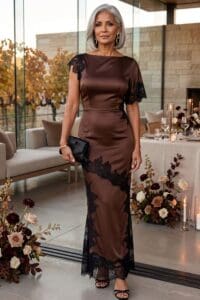
- What to Wear to a Rehearsal Dinner as a Guest (2026 Guide)

- A Mother’s Guide to Rehearsal Dinner Attire (Modern, Stylish + Actually Helpful)
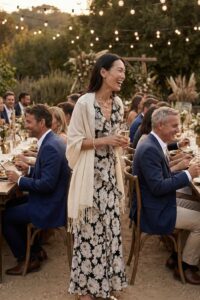
- Rehearsal Dinner Menu Ideas That Keep Things Simple but Stylish
- Who Hosts the Rehearsal Dinner? (Modern Guide for 2026 Weddings)

- The Ultimate Rehearsal Dinner Checklist (with free checklist)