
A mashed potato bar can work as anything from a small cocktail-hour station to the main wedding meal.
The important part is planning it for the role it needs to play.
Small cups of mash with one or two toppings are enough for an appetizer.
If it is replacing dinner, guests need larger portions, substantial proteins, vegetables, sauces and something fresh alongside it.
The equipment, staffing and quantities will be completely different too.
This guide covers how to plan a catered or DIY mashed potato bar, including menu ideas, portion sizes, serving vessels, station layout.
and how to stop the potatoes from becoming cold, dry or gluey.
If you prefer whole potatoes with more traditional toppings, my baked potato bar guide covers that setup separately.
First, Decide What Type of Mashed Potato Bar You Are Planning
Before choosing toppings, decide when the station will open and how much food guests should expect from it.
| Type of station | Suggested portion | What it needs |
|---|---|---|
| Side dish | 5–6 oz/140–170g | One mash, gravy and a few toppings alongside a separate main meal |
| Main meal | 8–10 oz/225–285g | Proper proteins, vegetables, sauces, fresh sides and generous portions |
| Cocktail-hour station | 3–4 oz/85–115g | Small cups with one or two easy toppings |
| Late-night food | 4–5 oz/115–140g | A limited selection of filling, familiar toppings |
| Staffed tasting station | 3–5 oz/85–140g | Small composed bowls finished individually by servers |
1. Mashed Potato Bar as a Side Dish
This is the easiest version to plan.
Serve one well-made mash alongside roast chicken, steak, barbecue food or another main dish.
then let guests add gravy, cheese, herbs or crunchy toppings.
Because guests already have a complete meal, you do not need several proteins or a huge toppings display.
A focused selection will look better and create less waste.
2. Mashed Potato Bar as the Main Meal
Mash can form the base of a full meal, but bacon, cheese and gravy alone are not enough for most guests.
Include at least two substantial protein choices.
a proper vegetarian or vegan option, warm vegetables and one fresh side.
Portions must also be large enough that guests are not left trying to turn a cocktail-size cup into dinner.
3. Mashed Potato Appetizer Station
For cocktail hour, use small cups or low dishes and keep the combinations simple.
Guests are normally standing, holding a drink and talking, so they should not have to balance a bowl while choosing from fifteen toppings.
One portion of mash with a choice of braised beef, mushroom ragù or roast chicken works better than a large DIY buffet at this point in the day.
4. Late-Night Mashed Potato Bar
A late-night bar can be smaller and more relaxed. I actually think done well this could be the best choice.
Everyone wants stodgy food after a drink and dance!
Offer one mash, one substantial topping, cheese, gravy and two or three finishes.
Guests have already eaten, so the aim is a warm snack rather than another full meal.
Limiting the choices also means the station can open quickly without creating a long queue late in the evening.
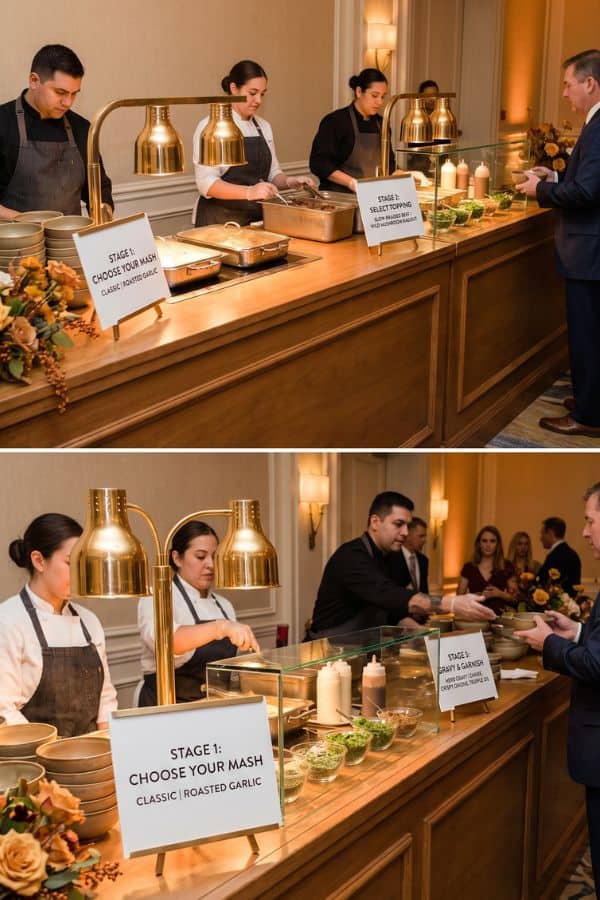
5. Staffed Mashed Potato Station
A staffed station is often the best option for weddings.
Servers control the amount of mash, keep the hot pans covered and replace them before they become dry or messy.
Guests can still choose their toppings, or staff can assemble complete combinations.
This gives you the interactive element without expecting every guest to serve a large scoop from a heavy chafing pan.
Is a Mashed Potato Bar Enough Food for a Wedding?
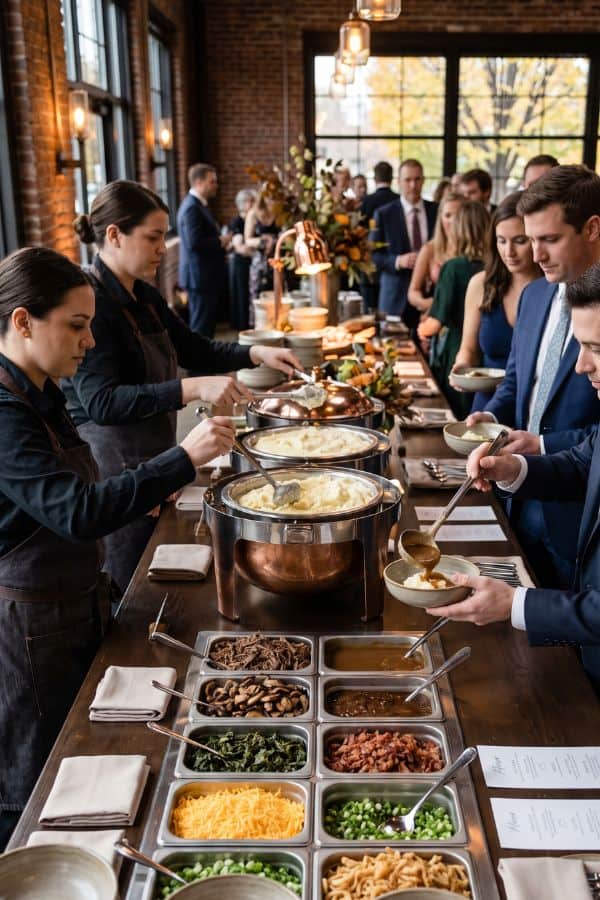
It can be, but only if it is planned as a meal.
Braised beef, sliced steak, chicken, meatballs, brisket, mushroom ragù and lentil ragù all work well because they can be spooned over the mash.
Large pieces of meat that guests need to cut are less practical, particularly if they are eating from a small bowl.
If the menu only includes mash, bacon, shredded cheese, sour cream and chives, treat it as a side dish or late-night station rather than dinner.
For a complete dinner, I would include:
- One main mashed potato base and, if needed, one dietary alternative.
- Two substantial proteins.
- One filling vegetarian or vegan protein.
- At least two vegetables.
- Two warm sauces or gravies.
- One fresh salad, slaw or green side.
- Enough food for a proper main-meal portion.
Choosing the Mashed Potato Base
One excellent mash is better than several average versions.
Each additional base needs another hot-holding pan, serving utensil, label and refill supply, so I would rarely offer more than two.
1. Classic Creamy Mashed Potatoes
Classic buttery mash is the safest option for a mixed guest list.
Its mild flavour works with steak, chicken, barbecue meats, vegetables and most sauces.
Use a floury or high-starch potato for a lighter result.
Russet or Idaho potatoes are common choices in the US, while Maris Piper and King Edward work well in the UK.
Yukon Gold potatoes produce a slightly denser, naturally creamy mash.
2. Garlic and Herb Mashed Potatoes
Garlic and herb mash works particularly well with roast chicken, mushrooms, beef and seasonal vegetables.
Keep the toppings relatively simple so the flavours do not compete.
Roasted garlic is usually softer and more crowd-friendly than a strongly seasoned raw-garlic mash.
3. Rustic Skin-On Mashed Potatoes
Skin-on mash has more texture and suits barbecue receptions, rehearsal dinners and relaxed venues.
It still needs to be properly mashed and seasoned. “Rustic” should not mean large undercooked pieces or tough strips of peel.
Use thin-skinned potatoes and make a test batch before committing to it for a large guest count.
4. Cheesy Mashed Potatoes
Cheddar, Parmesan or another firm cheese can be mixed into the mash, but remember that the base will already be rich and salty.
Pair it with simpler toppings, vegetables and a lighter sauce.
If guests can also add several cheeses at the station, a classic unflavoured mash will usually give them more control.
5. Sweet Potato Mash
Sweet potato mash works best as a second base rather than the only option.
Pair it with savoury toppings such as barbecue chicken, pulled pork, black beans, jalapeños, goat cheese or crispy onions.
Avoid making the entire combination sweet.
Maple-flavoured mash topped with sweet barbecue sauce and caramelized vegetables can quickly become too much.
6. Dairy-Free or Vegan Mash
A dairy-free mash can be made with olive oil, plant-based butter, unsweetened plant milk or vegetable stock.
Taste the complete recipe before the event. Some plant milks add a noticeable sweetness, while some butter alternatives have a strong flavour when used in large quantities.
Keep the vegan mash in a separate labelled warmer with its own utensil.
If the main mash and vegan mash are next to one another without supervision, spoons will almost certainly be swapped.
Complete Mashed Potato Bar Menu Ideas
Rather than choosing random toppings, build the bar around a clear menu.
This makes it easier to estimate quantities.
It stops the station from looking like several unrelated meals placed on one table.
1. Roast Dinner Mashed Potato Bar
Serve classic mash with sliced roast chicken or braised beef, rich gravy, roasted carrots, peas, stuffing crumble and crispy onions.
This is a natural choice for a fall or winter wedding.
The stuffing crumble adds the crunch mashed potatoes need, while the vegetables stop the bowl from becoming entirely beige.
2. Steakhouse Mashed Potato Bar
Use buttery mash with sliced steak, roasted mushrooms, caramelized onions, peppercorn sauce, blue cheese, Parmesan and chives.
Serve the steak in small, tender slices or bites so guests do not need a knife.
A staffed station is particularly useful here because it controls an expensive protein and keeps every guest’s portion consistent.
3. BBQ Mashed Potato Bar
Pair rustic or classic mash with pulled pork, brisket or barbecue chicken. Add sweetcorn, slaw, cheddar, pickled onions, jalapeños and barbecue sauce.
Keep the cold slaw away from the hot pans and serve it in small chilled batches.
It can be added to the bowl or offered as a side.
4. Southern-Inspired Comfort-Food Bar
Build the menu around creamy mash, roasted or fried chicken pieces, sausage gravy, greens, sweetcorn, cheddar and crispy onions.
If using fried chicken, serve small boneless pieces rather than large portions that are awkward to eat from a bowl.
Bring the chicken out in smaller batches so it stays crisp.
5. Irish-Inspired Mashed Potato Bar
Start with classic mash or colcannon-style mash and add stout-braised beef, sliced sausages, onion gravy, mature cheddar, scallions and crispy cabbage.
If the base already contains cabbage and scallions, keep the other toppings simple.
You do not need every element in both the mash and the topping selection.
6. Vegetarian Comfort-Food Bar
Use garlic mash with mushroom gravy, lentil ragù, roasted seasonal vegetables, caramelized onions, cheese, crispy chickpeas and fresh herbs.
The lentils, mushrooms or another substantial plant-based topping are important.
A few roasted vegetables should not be presented as the vegetarian equivalent of braised beef or steak.
7. Elevated Small-Bowl Station
Offer three composed combinations rather than a completely open bar. For example:
- Braised short rib, red-wine gravy and crispy onions.
- Mushroom ragù, Parmesan and fresh herbs.
- Roast chicken, chicken gravy and fried sage.
Staff can assemble each bowl to order.
This works well for a formal wedding, cocktail hour or a venue where a large self-service buffet would feel out of place.
Mashed Potato Bar Topping Ideas
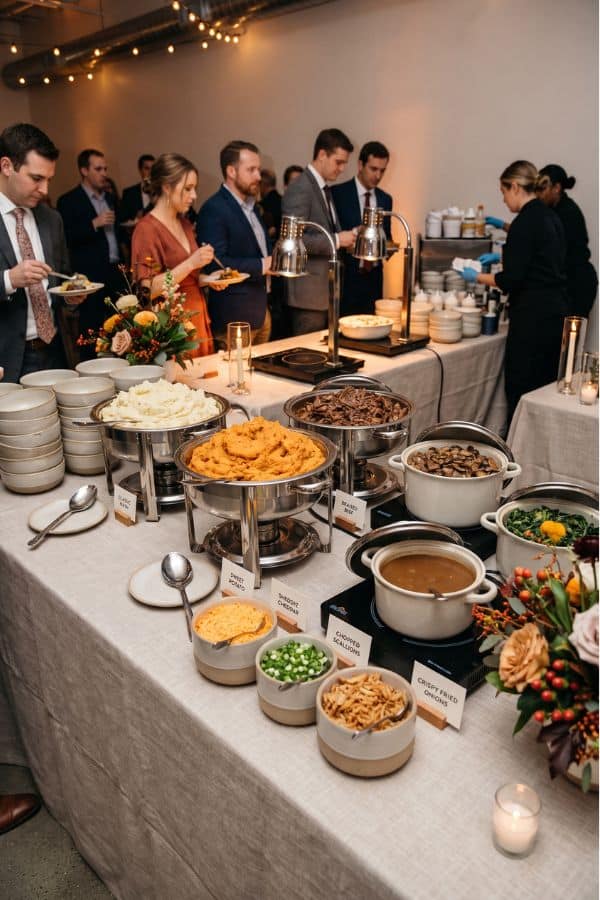
A good bowl needs contrast.
Mash is soft, rich and neutral, so include something substantial, something saucy, something fresh and something crunchy.
| Topping category | Ideas |
|---|---|
| Meat and protein | Braised beef, steak bites, roast chicken, pulled pork, brisket, meatballs, sliced sausage, bacon, lentil ragù, crispy chickpeas |
| Gravy and warm sauces | Beef gravy, chicken gravy, onion gravy, mushroom gravy, peppercorn sauce, cheese sauce, barbecue sauce |
| Vegetables | Roasted mushrooms, caramelized onions, peas, sweetcorn, broccoli, roasted carrots, spinach, greens, seasonal roasted vegetables |
| Cheese and creamy toppings | Cheddar, Parmesan, blue cheese, goat cheese, sour cream, crème fraîche, herb cream |
| Crunchy finishes | Crispy onions, toasted breadcrumbs, fried sage, stuffing crumble, crispy chickpeas, bacon pieces |
| Fresh and sharp finishes | Chives, scallions, parsley, pickled onions, jalapeños, fresh herbs, chopped pickles |
Choose toppings that work together rather than trying to use every idea.
For most stations, two proteins, two sauces, three vegetables or creamy toppings and two finishes are enough.
Large topping menus slow the line down because every guest stops to consider every option.
They also require more dishes, utensils, labels, preparation and backup food.
How Much Mashed Potato Do You Need?
The quantities below are planning estimates for prepared mash and include roughly a 10% allowance. They are not raw potato weights. And if working with a caterer, they will know best.
| Type of service | Portion per guest | 25 guests | 50 guests | 100 guests |
|---|---|---|---|---|
| Cocktail-hour cup | 4 oz/115g | 7 lb/3.2kg | 14 lb/6.3kg | 28 lb/12.6kg |
| Side dish | 6 oz/170g | 10.5 lb/4.8kg | 21 lb/9.5kg | 42 lb/19kg |
| Late-night snack | 5 oz/140g | 8.5 lb/3.9kg | 17 lb/7.7kg | 34 lb/15.4kg |
| Main meal | 10 oz/285g | 17.5 lb/8kg | 35 lb/16kg | 69 lb/31.5kg |
These amounts may need adjusting if:
- Guests are serving themselves with large spoons.
- The mash is the main meal and there are few side dishes.
- You expect a particularly hungry crowd.
- The station will remain open for a long time.
- Guests can return for unlimited seconds.
- Children are included in the final guest number.
Staffed portioning usually requires less buffer than a completely self-service station.
If guests are filling their own large bowls, it is safer to round up.
For raw ingredients, work from the yield of your tested recipe.
Peeling reduces the potato weight, while butter and liquid add some weight back, so raw and prepared quantities are not directly interchangeable.
How Much Protein and Gravy Do You Need?
For a main-meal bar, allow approximately 4–6 ounces/115–170g of cooked protein per adult in total.
If you are offering two meats, divide that total between them rather than ordering a full portion of each for every guest.
A 60/40 split is often more realistic than ordering equal amounts, particularly if one option is likely to be more popular.
Your caterer should help estimate this based on the menu.
As a starting point, allow approximately:
- 2–3 fluid ounces/60–90ml of gravy or sauce per guest.
- 1 ounce/28g of shredded cheese per guest.
- 1–1.5 ounces/28–40g of sour cream or a similar topping per guest.
- 2–3 ounces/55–85g of cooked vegetables per guest for each main vegetable option.
These are starting estimates, not fixed catering rules.
Bowl size, number of choices and whether staff serve the toppings will all affect the final amount.
DIY or Catered Mashed Potato Bar?
Potatoes are inexpensive, but a mashed potato bar is not automatically an easy DIY meal.
The difficulty comes from producing a large quantity at the right time, transporting it safely and keeping it hot without damaging the texture.
| Consideration | DIY | Catered |
|---|---|---|
| Best guest count | Smaller weddings and parties | Small or large events |
| Kitchen access | Essential for reheating and washing up | Caterer may bring mobile equipment |
| Staffing | Must be arranged separately | Often included or available |
| Equipment | You hire or buy everything | May be included in the quote |
| Food safety | Your responsibility | Managed by an insured professional |
| Transport | Requires insulated hot and cold storage | Usually handled by the caterer |
| Cleanup | Must be allocated to someone | Can be included |
| Menu flexibility | Complete control | Depends on the caterer |
| True cost | Ingredients, hire, staff and transport | Usually priced per person or per station |
DIY is most realistic when the venue has a proper kitchen, the guest count is manageable and someone experienced is responsible for the food.
It is much less practical when everything must be cooked off-site and transported in domestic vehicles.
Do not make close family members responsible for cooking, reheating and replenishing the station if they are also meant to be attending the wedding.
This is an active catering job, not a small task they can check between speeches.
How to DIY a Mashed Potato Bar
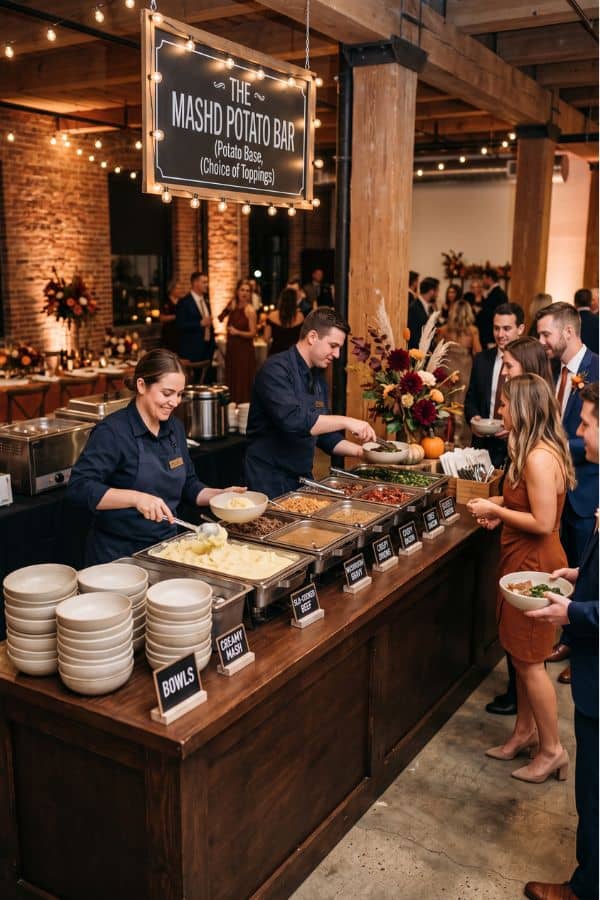
1. Check the Venue Rules
Ask whether you can bring outside food, use the kitchen and operate electric warmers or chafing fuel.
Some venue kitchens are only finishing kitchens and may not have enough oven, refrigerator or preparation space. Others only allow licensed caterers to use the equipment.
Also confirm where food can be unloaded, when the kitchen becomes available and who is responsible for waste removal.
2. Create a Manageable Menu
For a DIY main-meal bar, I would keep the menu to:
- One main mash.
- One dietary mash if required.
- Two proteins.
- One substantial vegetarian option.
- Two warm sauces.
- Two or three vegetables.
- Two cheeses or creamy toppings.
- Two crunchy or fresh finishes.
More choices do not necessarily create a better experience.
They usually create more preparation, more serving dishes and more food left at the end.
3. Test the Complete Meal
Do not test the mash on its own. Make a full bowl using the planned portion, protein, sauce and toppings.
Check whether it feels like enough food, whether the bowl is large enough and whether the flavours work together.
This will also show you how quickly the gravy soaks into the mash and whether the toppings need more colour or texture.
4. Prepare Toppings in Advance
Chop herbs, shred cheese, cook braised meats and prepare sauces ahead where it is safe to do so.
Separate toppings into service batches rather than putting everything into one huge container.
Backup pans can remain properly hot or chilled until they are needed.
Create clear labels for every container so the people setting up the station know what goes where.
5. Make the Mash Properly
Cut the potatoes into even pieces and cook them until they are completely tender. Drain them thoroughly and allow excess steam to escape before mashing.
Mash or rice the potatoes while hot. Add warm butter and dairy gradually, then fold everything together without repeatedly beating it.
Do not use a blender or food processor. They can overwork the starch and turn a large batch of mash gluey very quickly.
Season the base properly, but remember that gravy, cheese and bacon will add more salt.
Taste a complete sample bowl before adding extra seasoning.
6. Plan How the Mash Will Be Reheated
Large quantities reheat more evenly when divided between several shallower pans. One extremely deep container can be hot around the edges and cool in the centre.
Keep additional warm milk, cream, butter or stock available so staff can restore moisture if needed. Add it gradually; the mash should remain thick enough to support the toppings.
If you are cooking ahead, agree on a safe cooling, storage and reheating plan with the venue or a qualified food professional.
7. Use Proper Hot- and Cold-Holding Equipment
Chafing dishes, steam tables and electric food warmers are designed to hold already-hot food.
They should not be relied on to heat a cold pan of mash from scratch.
Cold toppings such as sour cream, cheese and slaw need chilled service containers, small bowls nested over ice or regular replacement from refrigeration.
Use food thermometers rather than guessing from the appearance of the food.
8. Assign Staff
For a larger wedding, this is more than one person’s job. Someone needs to:
- Check and record temperatures.
- Portion or monitor the mash.
- Replace empty pans.
- Stir and adjust the mash when required.
- Clean drips around sauces.
- Replace contaminated utensils.
- Monitor dietary dishes.
- Clear the station after service.
9. Write a Day-of Timeline
Work backwards from the time the station opens. Include cooking, cooling if preparing ahead, transport, reheating, setup, final temperature checks and staff briefing.
Also decide how long the station will remain open. A 60-minute dinner service needs a different food plan from a buffet that guests can revisit for three hours.
How to Keep Mashed Potatoes Warm Without Drying Them Out
Temperature is only one part of the problem.
Mash can be safely hot and still become dry, crusted or unpleasant if it sits for too long.
Use Several Smaller Pans
Bring out one pan at a time and keep the others properly hot in the kitchen. Replacing smaller pans gives guests fresher food and makes the station easier to manage.
Avoid continually adding new mash on top of an old pan. Replace the whole insert so older food is not repeatedly mixed through fresh batches.
Keep the Pans Covered
Lids help prevent moisture loss. Keep the mash covered between groups of guests and whenever the station is not actively being used.
If it is self-service, a roll-top chafing dish is easier for guests than a loose lid that needs somewhere to be placed.
Add Moisture Carefully
Reserve warm milk, cream, butter or stock from the original recipe. If the mash begins to tighten, fold in a small amount at a time.
Cold liquid can reduce the temperature and affect the texture, so any liquid added during service should be warmed first.
Stir Gently
Occasional gentle stirring helps distribute heat, but repeatedly beating the mash will not improve it. Overworking cooked potatoes can make them sticky.
Use a broad spoon or spatula and fold from the edge towards the centre.
Avoid Holding It for Too Long
Even with good equipment, mash is best when service is focused.
Open the station at a clear time, serve guests efficiently and then close it rather than leaving the same pans out indefinitely.
Follow Local Food-Safety Rules
Food-safety requirements vary by location and venue.
In the UK, hot-held food is generally kept at 63°C/145°F or above.
US guidance generally uses 140°F/60°C or above for hot holding and 40°F/4°C or below for cold food.
Food cooked ahead also needs to be reheated properly before entering a warmer.
The Food Standards Agency advises reheating food until steaming hot throughout, while FoodSafety.gov’s wedding guidance advises reheating prepared food to at least 165°F/74°C.
These are general planning points. Your venue or caterer should follow the regulations that apply where the event is taking place.
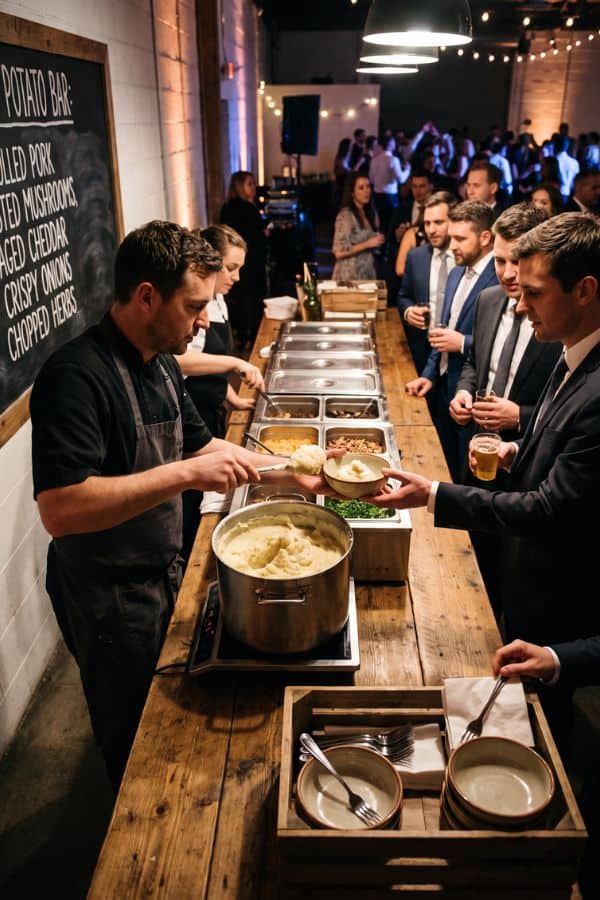
How to Set Up a Mashed Potato Bar
The order of the station should match the order in which guests build their bowls:
- Bowls or cups.
- Mashed potatoes.
- Proteins.
- Warm vegetables.
- Gravies and sauces.
- Cheese and chilled toppings.
- Crunchy toppings and fresh garnishes.
- Cutlery and napkins.
Put cutlery at the end so guests do not have to carry it while serving themselves.
If staff are portioning the mash, they should stand behind the station while guests remain on the other side.
Do not create a setup where servers and guests are both trying to access the same pans from different directions.
For a self-service station, include a small landing area where guests can put down their bowl while adding toppings. This makes sauces and small garnishes much easier to manage.
Preventing Long Lines
For larger weddings, use two identical serving lines rather than splitting different foods between two tables.
Guests should be able to build the same complete meal at either station.
Position the two lines away from walls and doorways.
Make sure guests leaving the buffet are not walking back through the queue.
Staffed mash portions also speed up service because one person can place the correct amount into each bowl before guests reach the toppings.
Keeping the Station Tidy
Use trays underneath gravy and sauce containers. Choose ladles that fit the bowls and do not release an oversized amount with every serving.
Bring out toppings in smaller containers and replenish them frequently.
Large bowls filled to the top can quickly look messy, particularly once shredded cheese, bacon or herbs start falling around them.
Keep refill tubs, packaging and spare equipment behind the station or in the kitchen rather than stored underneath a visible table.
Bowls, Cups or Mashed Potato Martinis?
The serving vessel affects the portion, the queue and how easy the food is to eat.
1. Proper Bowls
Bowls are the best option when the bar is the main meal. Choose something wide enough for guests to see and access the different toppings.
A very deep bowl can encourage oversized mash portions while leaving little surface area for the rest of the meal. Test the exact bowl with your planned serving.
2. Small Cups
Small cups work for cocktail hour and late-night snacks.
Look for a wide opening and enough strength to hold hot food safely.
A tiny tasting cup is not suitable for dinner, even if guests are allowed to return for more.
It creates extra queues and makes the meal feel less substantial than it is.
3. Stemless Glasses or Low Dessert Dishes
A low glass dish can create the layered “mashtini” look without a tall, narrow stem.
This works best for small staff-finished portions.
Check that the glass is designed to hold warm food and does not become uncomfortable to carry.
4. Martini Glasses
Martini glasses give a mashed potato bar a stylish, playful feel and are easy for guests to hold while eating with a spoon.
Keep portions small and leave enough room for toppings.
If guests will be standing, place a few cocktail tables nearby so they have somewhere to set down their drinks while they eat.
Questions to Ask a Mashed Potato Bar Caterer
Do not just ask what toppings are available. Find out exactly how the station will operate.
- Is the mash made fresh, supplied ready-made or made from instant potato?
- Which potatoes, dairy products and seasonings are used?
- Can we taste the mash with the complete toppings menu?
- Can you provide a separate vegan or dairy-free batch?
- How will the food be transported, reheated and held?
- Will the station be staffed?
- Who controls the mash and protein portions?
- How many serving lines are included?
- How long will the station remain open?
- Are guests allowed to return for seconds?
- How frequently will fresh pans be brought out?
- Are the bowls, cutlery, napkins and serving equipment included?
- Are chafing dishes, warmers and fuel included?
- How will cold toppings be kept chilled?
- How are allergens labelled and separated?
- Can severe-allergy meals be prepared separately?
- Who sets up and clears the station?
- Is waste removal included?
- What happens to leftovers?
- Are staffing, delivery, hire and service charges included in the quote?
What to Serve With a Mashed Potato Bar
Mash is already rich and filling, so the rest of the menu should add colour, freshness and texture.
1. A Crisp Green Salad
A simple salad with a sharp vinaigrette balances creamy mash and rich gravy. Avoid another heavy, mayonnaise-based side unless it specifically suits the menu.
2. Slaw
Slaw works particularly well with pulled pork, brisket and barbecue chicken. A vinegar-based slaw is lighter than a creamy version and can add useful acidity.
3. Seasonal Roasted Vegetables
Roasted carrots, squash, Brussels sprouts, broccoli and green beans all work. Choose two or three vegetables rather than offering a long selection in tiny amounts.
4. Fresh Green Vegetables
Broccoli, peas, spinach, greens and green beans add colour to an otherwise neutral-looking plate.
5. Bread
Bread is useful if the mash is being served in a smaller portion alongside a full meal.
If guests already have a large bowl of mash as the main base, another carbohydrate may be unnecessary.
6. A Lighter Dessert
After a particularly rich steakhouse or roast-dinner bar, consider fruit-based desserts, sorbet, lemon desserts or smaller dessert portions rather than another very heavy course.
Dietary Requirements and Allergens
Potatoes are naturally gluten-free, but the complete bar may not be.
Butter, cream, milk, cheese and sour cream contain dairy. Many gravies contain wheat, and crispy onions, stuffing crumble, sauces, sausages and meat substitutes may also contain gluten or other allergens.
Clearly label:
- Dairy-free and vegan mash.
- Vegetarian and meat-based gravies.
- Gluten-containing sauces and crunchy toppings.
- Nuts, soy, mustard and other allergens in prepared products.
- Meat substitutes that contain wheat, egg or dairy.
Use separate serving utensils and keep dietary dishes physically apart. Replenish them from clearly labelled backup containers.
For guests with severe allergies, a separately prepared and covered meal may be safer than expecting them to use a shared toppings bar. Discuss this with the guest and caterer before the event rather than assuming labels alone will be enough.
How Much Does a Mashed Potato Bar Cost?
The potatoes are rarely the expensive part. The final cost is usually determined by the proteins, labour, equipment and service style.
Include all of the following when comparing DIY and catered prices:
- Potatoes, butter, cream and seasoning.
- Meat and vegetarian proteins.
- Vegetables, cheese, sauces and toppings.
- Bowls, cups, cutlery and napkins.
- Chafing dishes or electric warmers.
- Serving utensils and food thermometers.
- Kitchen or equipment hire.
- Transport and insulated storage.
- Setup and serving staff.
- Clearing, washing up and waste removal.
- Venue charges and service fees.
A DIY bar may look much cheaper when you compare grocery costs with a caterer’s per-person price. It can look very different once you add equipment hire, transport and enough staff to run it safely.
When requesting quotes, ask every caterer to price the same guest count, menu, service duration and staffing level. Otherwise, you may be comparing a delivered buffet with a fully staffed station.
Modern Mashed Potato Bar Styling Ideas
The food and equipment need to be practical first. Styling should work around the service rather than filling the table with decorations that block access.
1. Minimal White and Stainless-Steel Station
Use clean stainless-steel chafing dishes, white ceramic bowls, simple printed labels and a neutral table covering.
This works in modern city venues and keeps the setup looking intentional without trying to hide all the catering equipment.
2. Elevated Steakhouse Station
Use dark linens, low warm lighting, ceramic bowls and restrained greenery. Display the menu on one clear sign at the entrance to the line.
Let the sliced steak, mushrooms and sauces provide most of the visual interest.
3. Modern Fall Wedding Station
Choose warm neutral linens, amber or smoked glass details and small arrangements of seasonal foliage placed away from the food.
Avoid scattering pumpkins, loose leaves or decorative bowls across the working area. The servers still need space to replace hot pans safely.
4. BBQ Reception Setup
Use a straightforward buffet with proper hot pans, chilled slaw containers and clearly grouped toppings.
Wooden signs and natural textures can suit the menu, but the food should not be served from small household bowls simply to make the station look rustic.
5. Staff-Finished Small-Bowl Station
Place the mash and hot toppings behind the counter. Guests choose from two or three combinations, and staff finish each bowl with sauce and garnish.
This is the cleanest option for a formal wedding and allows the station to look more like an open kitchen than a traditional buffet.
Common Mashed Potato Bar Mistakes
- Treating toppings as a complete meal. Bacon, cheese and sour cream are additions, not substitutes for proper proteins and vegetables.
- Making the mash too early. The longer it is stored and held, the harder it becomes to preserve the texture.
- Overmixing the potatoes. Blenders, food processors and excessive stirring can make mash gluey.
- Using one enormous pan. Smaller replacement pans heat more evenly and stay fresher.
- Forgetting texture. Every menu needs something crisp, fresh or sharp to balance the soft mash.
- Offering too many bases. Multiple potato flavours increase the equipment, queue time and waste without necessarily improving the meal.
- Using unstable glassware. Tall martini glasses may look good in a photograph but can be difficult to carry and eat from.
- Underestimating the portion. A small cup is appropriate for cocktail hour, not as the main wedding dinner.
- Forgetting a substantial vegetarian option. Roasted vegetables and gravy do not replace the protein offered to other guests.
- Putting every topping out at once. Smaller, regularly replaced containers look better and are easier to keep at the right temperature.
- Creating one slow serving line. Use two identical lines for larger guest counts or have staff portion the mash.
- Leaving relatives in charge. Reheating, serving, checking temperatures and clearing is catering work.
- Assuming the bar is gluten-free. Gravies, crispy toppings and meat alternatives may contain gluten even when the mash does not.
- Assuming DIY requires no staff. Someone still needs to operate and clean the station throughout service.
Mashed Potato Bar FAQs
Can a Mashed Potato Bar Be a Full Wedding Meal?
Yes, if it includes a main-meal portion of mash, substantial proteins, vegetables, sauces and something fresh. A small cup with cheese, bacon and gravy is better treated as a snack or side dish.
How Much Mashed Potato Do I Need for 50 Guests?
For 50 guests, allow approximately 14 pounds/6.3kg of prepared mash for small cocktail portions, 21 pounds/9.5kg as a side or 35 pounds/16kg when it is the main base of the meal. These estimates include roughly a 10% allowance.
How Much Mashed Potato Do I Need for 100 Guests?
Allow approximately 28 pounds/12.6kg for cocktail cups, 42 pounds/19kg as a side or 69 pounds/31.5kg for main-meal portions. Increase this if the bar is completely self-service or guests can return for unlimited seconds.
Can Mashed Potatoes Be Made the Day Before?
They can be prepared ahead, chilled correctly and reheated, but the process must be planned carefully. Large containers cool and reheat unevenly, so divide the mash into manageable pans and follow local food-safety guidance.
If possible, test the exact make-ahead recipe before the event. Some mash recipes reheat much better than others.
How Do Caterers Keep Mashed Potatoes Warm?
Caterers normally use steam tables, chafing dishes, warming cabinets or electric food warmers. The mash should enter the equipment already hot and be brought out in smaller replacement pans throughout service.
What Are the Best Potatoes for Making Mash in Bulk?
Floury or high-starch varieties such as Russet, Idaho, Maris Piper and King Edward produce a lighter mash. Yukon Gold potatoes create a denser, naturally creamy texture.
Whichever variety you choose, test the recipe using the same equipment and reheating method planned for the event.
How Many Toppings Should We Offer?
For most weddings, eight to ten well-chosen toppings across proteins, vegetables, sauces and finishes are plenty. You do not need eight cheeses or six gravies.
A smaller menu is easier to label, replenish and keep at the correct temperature.
What Meat Goes Well With a Mashed Potato Bar?
Braised beef, sliced steak, roast chicken, pulled pork, brisket, meatballs and sausage all work. Choose tender meats that can be eaten easily with a fork or spoon.
What Vegetarian Toppings Make It Filling?
Mushroom ragù, lentil ragù, plant-based meatballs, bean-based chilli and crispy chickpeas all add more substance than vegetables alone.
Include a vegetarian gravy and check that cheese is suitable for your guests if you are describing the complete dish as vegetarian.
Are Mashed Potato Martinis Still a Good Idea?
They can work for a small staffed station, but traditional martini glasses are not the most practical choice. Low stemless glasses or small bowls are easier to hold, fill and eat from.
What Size Cup or Bowl Should We Use?
Use a 4–6 ounce cup for a tasting portion or late-night snack. For a main meal, choose a proper bowl that comfortably holds 8–10 ounces of mash plus the proteins, vegetables and sauce.
Always test the vessel with a complete portion before ordering it.
Is a Mashed Potato Bar Cheaper Than Traditional Catering?
It can be, but the potatoes are only one part of the cost. Steak, braised meats, staff, equipment, crockery and transport can make an elaborate mashed potato station similar in price to other buffet meals.
Can a Mashed Potato Bar Work at a Formal Wedding?
Yes. Use proper crockery, a staffed station and two or three composed topping combinations. The style of service will have more impact on how formal it feels than the potatoes themselves.
Can It Be Served During Cocktail Hour?
Yes, but keep portions small and easy to hold. Staff-finished cups are more practical than asking guests to navigate a full toppings buffet while holding a drink.
What Should We Serve Alongside It?
Choose fresh or colourful sides such as green salad, slaw, roasted vegetables, broccoli or green beans. Avoid building an entire menu from rich sauces, cheese and additional carbohydrates.
Final Mashed Potato Bar Planning Checklist
Before confirming the bar, check that you have:
- Decided whether it is a side, snack, appetizer or complete meal.
- Chosen the portion size and serving vessel.
- Calculated the prepared mash, protein and sauce quantities.
- Tested the mash and complete topping combinations.
- Confirmed the venue’s outside-catering and equipment rules.
- Planned safe transport, reheating, hot holding and cold storage.
- Arranged enough staff for portioning, replenishment and cleanup.
- Designed a clear serving order and enough lines for the guest count.
- Included a substantial vegetarian or vegan option.
- Labelled allergens and separated dietary meals.
- Confirmed what is included in the caterer’s quote.
- Created a service timeline from delivery through clearing.
More blogs you will love!
- 35 Vegetarian Wedding Appetizers for Cocktail Hour, Crowds & More
- 43 Vegan Wedding Food Ideas – From Appetizers to Late-Night Snacks

- Mashed Potato Bar for Weddings and Parties: A Complete Planning Guide

- 20 Bridal Shower Lunch Menu Ideas That Are Anything But Boring

- 20 Rehearsal Dinner Appetizer Ideas for a Crowd (Easy, Fun & Modern)

- Bridal Shower Dessert Ideas for a Crowd

- Bridal Shower Brunch Menu Ideas That Go Beyond the Usual Pancakes and Pastries

- 30 Make-Ahead Bridal Shower Food Ideas That Aren’t Boring
- 30 Winter Wedding Appetizer Ideas for a Cozy Seasonal Menu