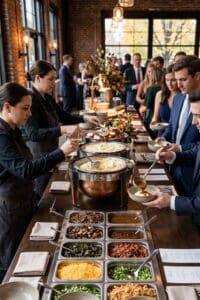
Winter is one of the best seasons for wedding food stations.
Warm, comforting dishes make sense. guests are usually happy to linger over food, and you can have a lot more fun with hearty flavors than you might at a hot summer wedding.
That does not mean every winter wedding needs turkey, cranberry sauce and Christmas-themed food.
Think bubbling mac and cheese, fresh pasta finished in front of guests, smoky BBQ, raclette melting over potatoes, steaming bowls of soup and warm desserts served straight from the kitchen.
Food stations can replace a traditional seated dinner, become part of cocktail hour or give guests something substantial later in the evening.
Here are 15 winter wedding food station ideas that actually work at a wedding, plus what to think about before choosing yours.
Winter Wedding Food Station Ideas
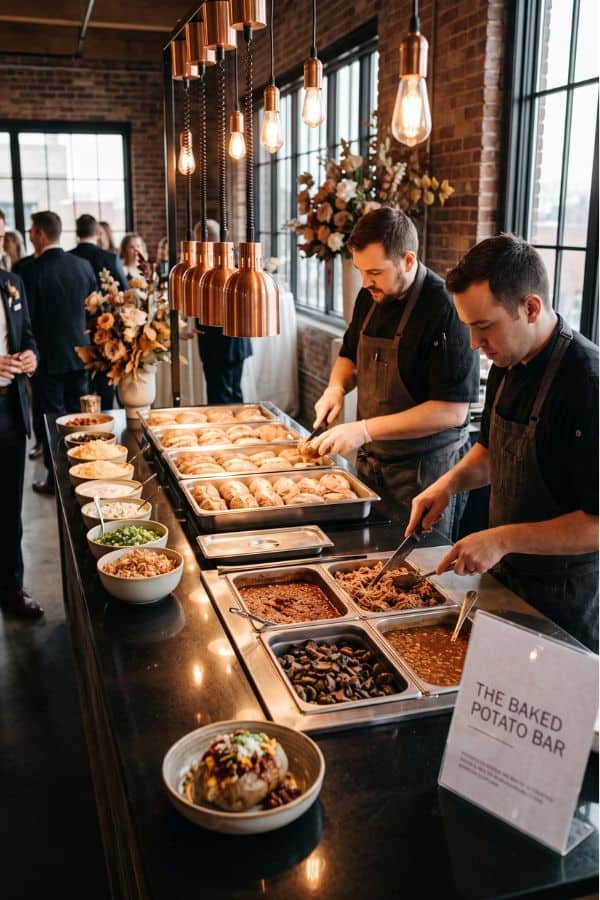
1. Loaded Baked Potato Bar
A baked potato station is simple, filling and surprisingly easy to make feel intentional.
You could serve full-size potatoes as part of the main meal or use smaller potatoes if guests are trying several different stations.
Start with properly crisp baked potatoes and offer toppings such as:
- Beef or bean chili
- Pulled pork
- Roasted mushrooms
- Broccoli and cheese
- Caramelized onions
- Sour cream
- Scallions
- Garlic and herb butter
- Grated cheese
The main thing is not to offer twenty toppings just because you can. Around six to eight good choices will make the station easier to use and stop queues building while everyone decides what they want.
If you have vegan or dairy-free options, keep them clearly separate rather than expecting guests to work out which toppings they can eat.
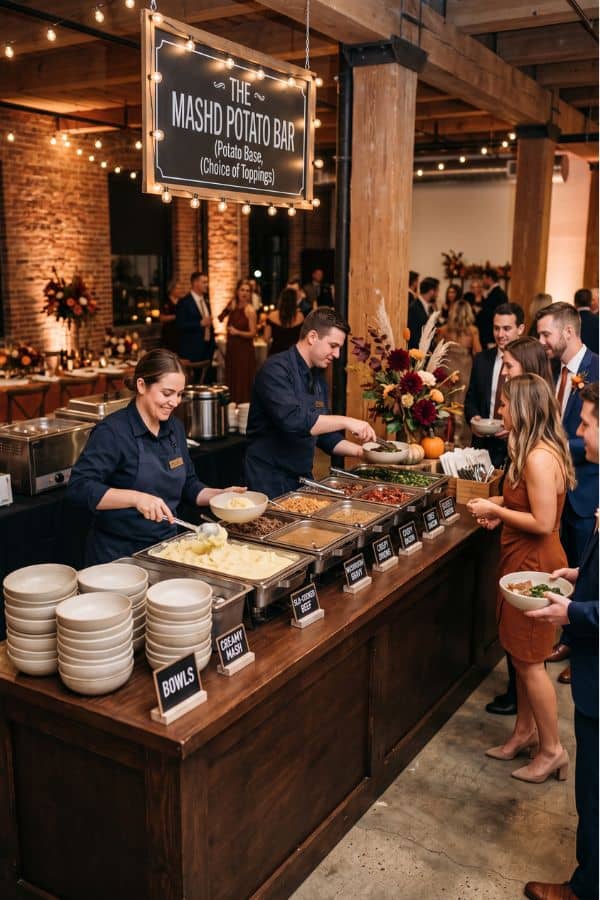
2. Mashed Potato Bar
Mashed potato bars have been around for a while, but they can still work if you keep the presentation modern.
Skip the old martini-glass setup and serve small bowls or cups instead.
You could offer classic creamy mash alongside one alternative such as roasted garlic mash or sweet potato.
Then add toppings that turn it into something more substantial:
- Slow-cooked beef
- Mushroom gravy
- Crispy onions
- Bacon
- Roasted mushrooms
- Cheese
- Winter greens
- Fresh herbs
If this is one of several stations, keep the portions small. A large bowl of mashed potato is going to fill guests up before they get anywhere near the rest of the food.
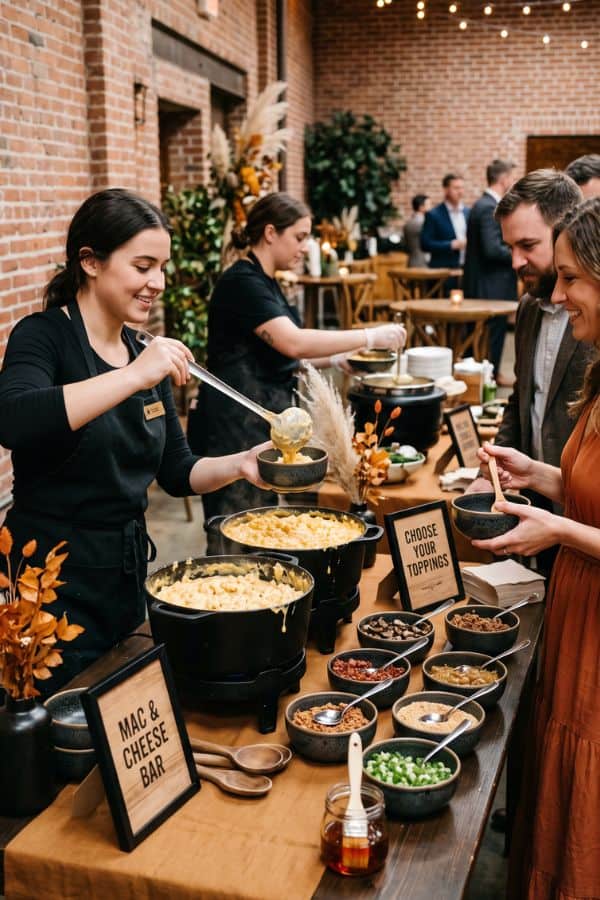
3. Mac and Cheese Station
Mac and cheese makes sense at a winter wedding because it is warm, familiar and works particularly well for evening food.
Instead of one huge pan with dozens of toppings, consider two or three different versions.
You might have:
- Classic cheddar
- Smoked gouda
- Truffle mushroom
- Buffalo chicken
- Lobster mac and cheese
Then offer a few toppings such as crispy onions, toasted breadcrumbs, bacon, chili oil or scallions.
Mac and cheese does not improve after sitting under a heat lamp for an hour, so ask your caterer how they plan to replenish it. Smaller batches coming out regularly will be much better than one enormous tray slowly drying out.
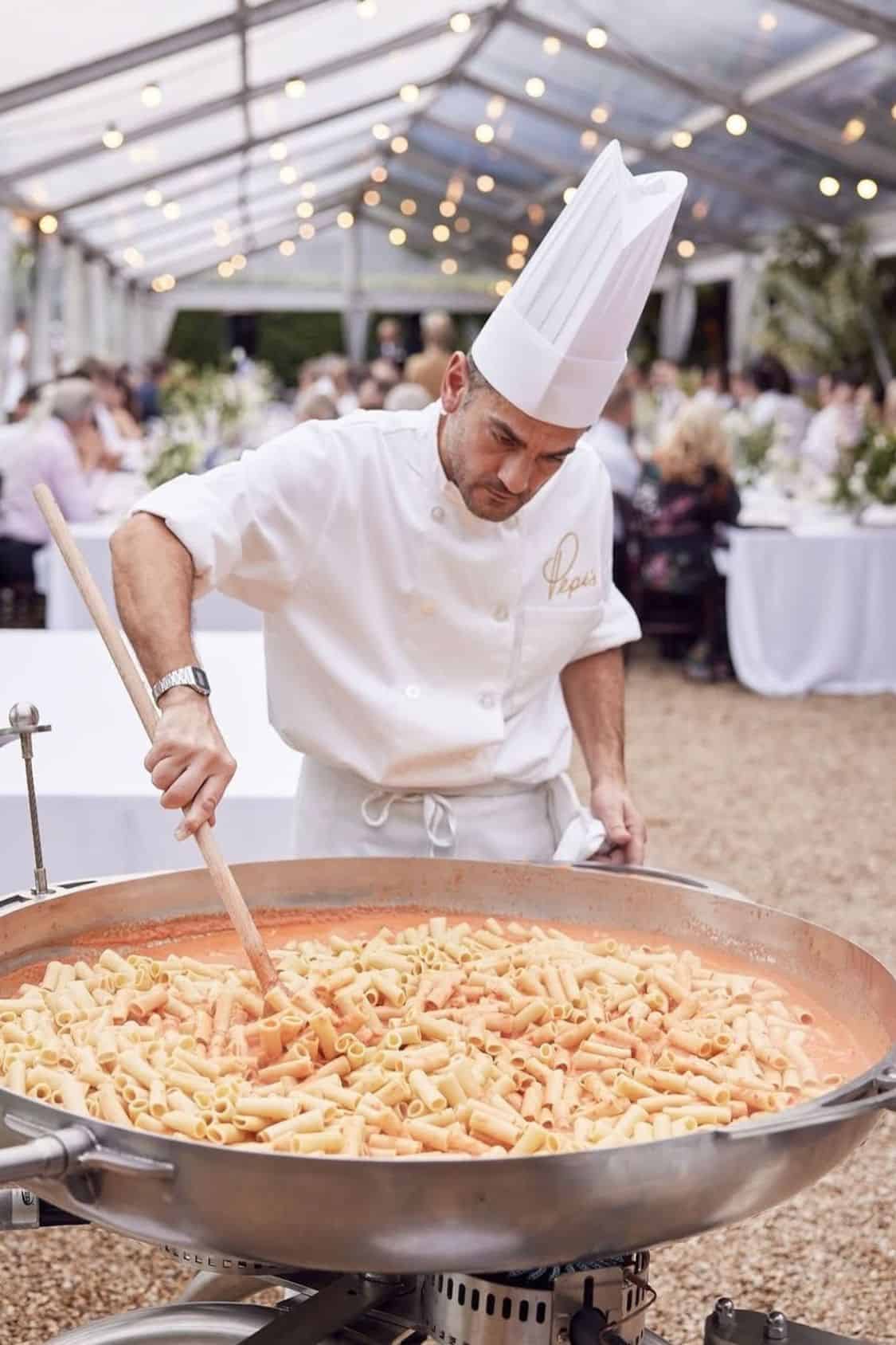
4. Live Winter Pasta Station
A live pasta station works especially well if you want food stations to feel like part of the wedding rather than simply another buffet.
Guests can choose from a small selection of pasta and sauces, with the final dish tossed or finished in front of them.
Winter combinations could include:
- Short-rib ragù
- Wild mushroom tagliatelle
- Sausage and fennel rigatoni
- Brown butter and sage ravioli
- Creamy garlic pasta
- Mushroom and truffle pasta
You do not need guests choosing every ingredient individually. Two or three finished combinations will move much faster.
For a larger wedding, check how many portions the chef can realistically produce at once. One person cooking individual pasta dishes for 150 guests sounds lovely until everyone is standing in a queue.
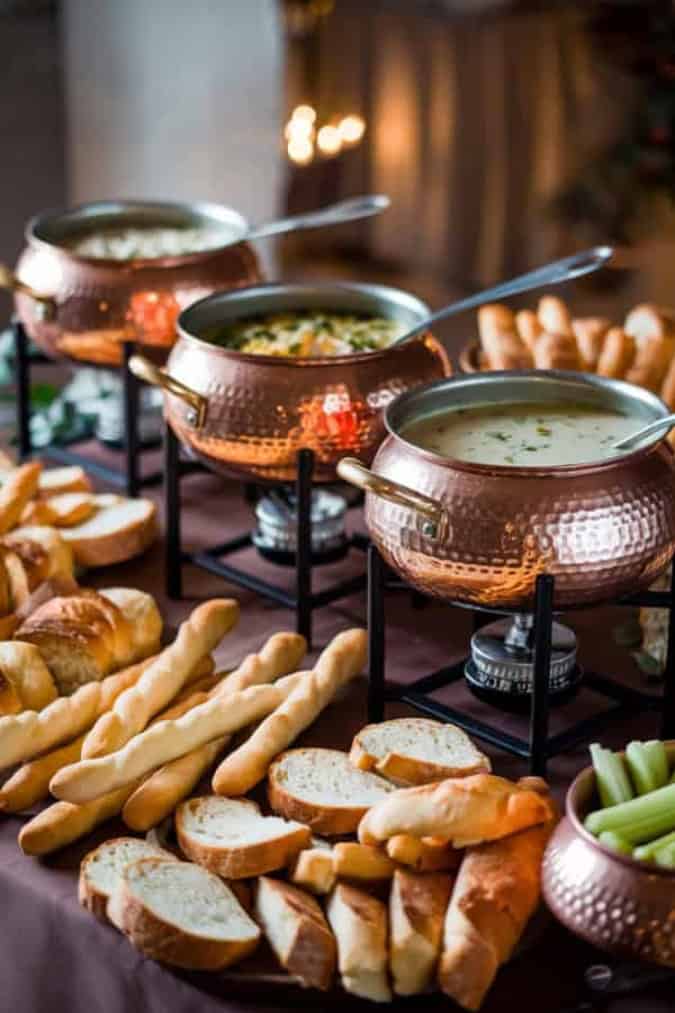
5. Soup and Grilled Cheese Station
Soup alone can feel a little light for a wedding station. Pair it with mini grilled cheese sandwiches or toasted bread and it suddenly becomes much more useful.
You could create simple pairings such as:
- Roasted tomato soup with grilled cheese
- French onion soup with cheese toast
- Wild mushroom soup with warm focaccia
- Potato and leek soup with cheddar toasties
- Roasted cauliflower soup with garlic bread
This is particularly good for cocktail hour after a cold ceremony or as guests arrive at an evening reception.
Use small cups rather than huge bowls if people will be standing. Guests should be able to hold the food comfortably without balancing a plate, drink and handbag at the same time.
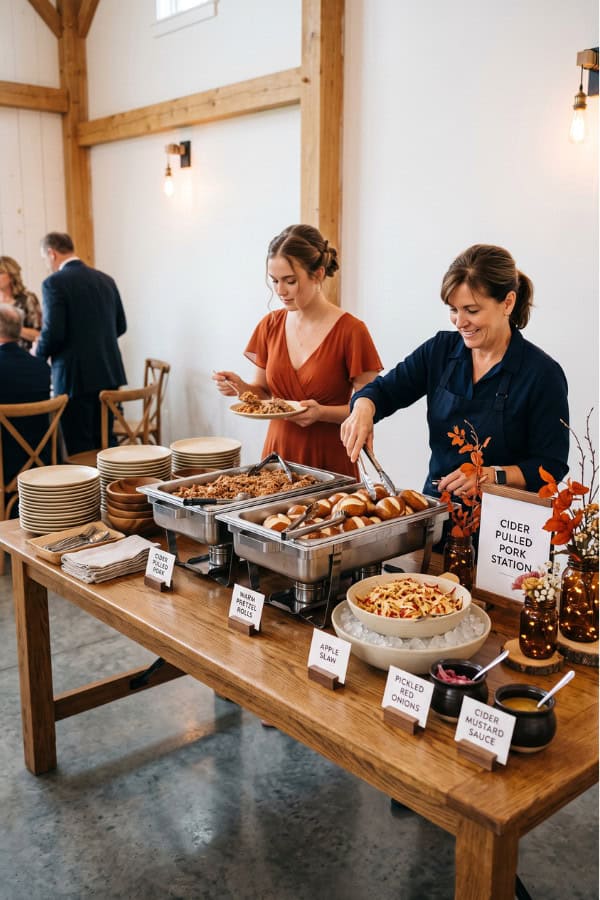
6. Winter BBQ and Smokehouse Station
BBQ does not have to be a summer wedding thing.
In winter, smoky meats, warm sides and rich sauces can actually make more sense.
A winter BBQ station could include:
- Beef brisket
- Pulled pork
- Smoked chicken
- Sausages
- Smoked mushrooms
- BBQ cauliflower
- Cornbread
- Baked beans
- Slaw
- Pickles
- Roasted potatoes
Keep the menu balanced. If you already have a separate mac and cheese station, you do not need to repeat it here.
The bigger consideration is your venue. Ask where the food will actually be cooked, whether smokers or grills are allowed and what happens if part of the setup needs to be outdoors in bad weather.
7. Raclette Station
If melted cheese over potatoes sounds like exactly the kind of food you want at a winter wedding, look at raclette.
Traditionally, the cheese is heated and scraped over food as guests are served.
Serve it with:
- Baby potatoes
- Crusty bread
- Charcuterie
- Roasted mushrooms
- Roasted vegetables
- Pickled onions
- Cornichons
It works particularly well for smaller weddings or cocktail-style receptions because the serving itself becomes part of the experience.
For a larger wedding, you will need several people serving at once. One wheel of cheese and one server will not get through 100 guests quickly.
8. Winter Carving Station
A carving station is a good middle ground if you like the relaxed feel of food stations but still want something close to a traditional wedding dinner.
Meats could include:
- Roast beef
- Lamb
- Glazed ham
- Turkey
Serve alongside roast potatoes, winter vegetables, gravy and sauces.
You can also make the presentation less formal by serving mini roast bowls or carved-meat sandwiches rather than building an enormous traditional roast dinner.
If this is your main meal, make sure vegetarian and vegan guests have an equally substantial option elsewhere. A plate of roast vegetables while everyone else gets carved beef is not really an equivalent meal.
9. Curry and Rice Station
A curry station brings warmth without relying on cheese, potatoes and slow-cooked meat for every dish.
Rather than offering lots of unrelated curries, choose a small menu that works together.
For example:
- Butter chicken
- Lamb curry
- Chickpea curry
- Lentil dhal
- Paneer curry
- Vegetable curry
Then add rice, bread and a few appropriate accompaniments.
This is also a great place to make the wedding menu personal. If a particular cuisine reflects your family, heritage, travels or simply the food you always eat together, use that rather than picking dishes because they are currently popular.
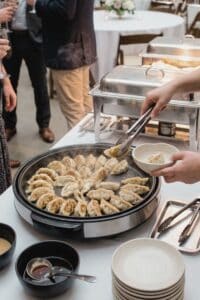
10. Dumpling or Bao Station
A hot street-food station can stop a winter menu feeling too traditional.
Depending on the rest of your food, you could serve:
- Steamed bao
- Dumplings
- Gyoza
- Potstickers
Fillings might include pork, chicken, mushrooms, tofu or vegetables, with sauces, chili crisp and pickled vegetables alongside.
This style of food works particularly well during cocktail hour or later in the evening because portions are naturally smaller.
Again, keep the choice manageable. Two or three fillings served quickly will usually work better than trying to turn the station into a full build-your-own menu.
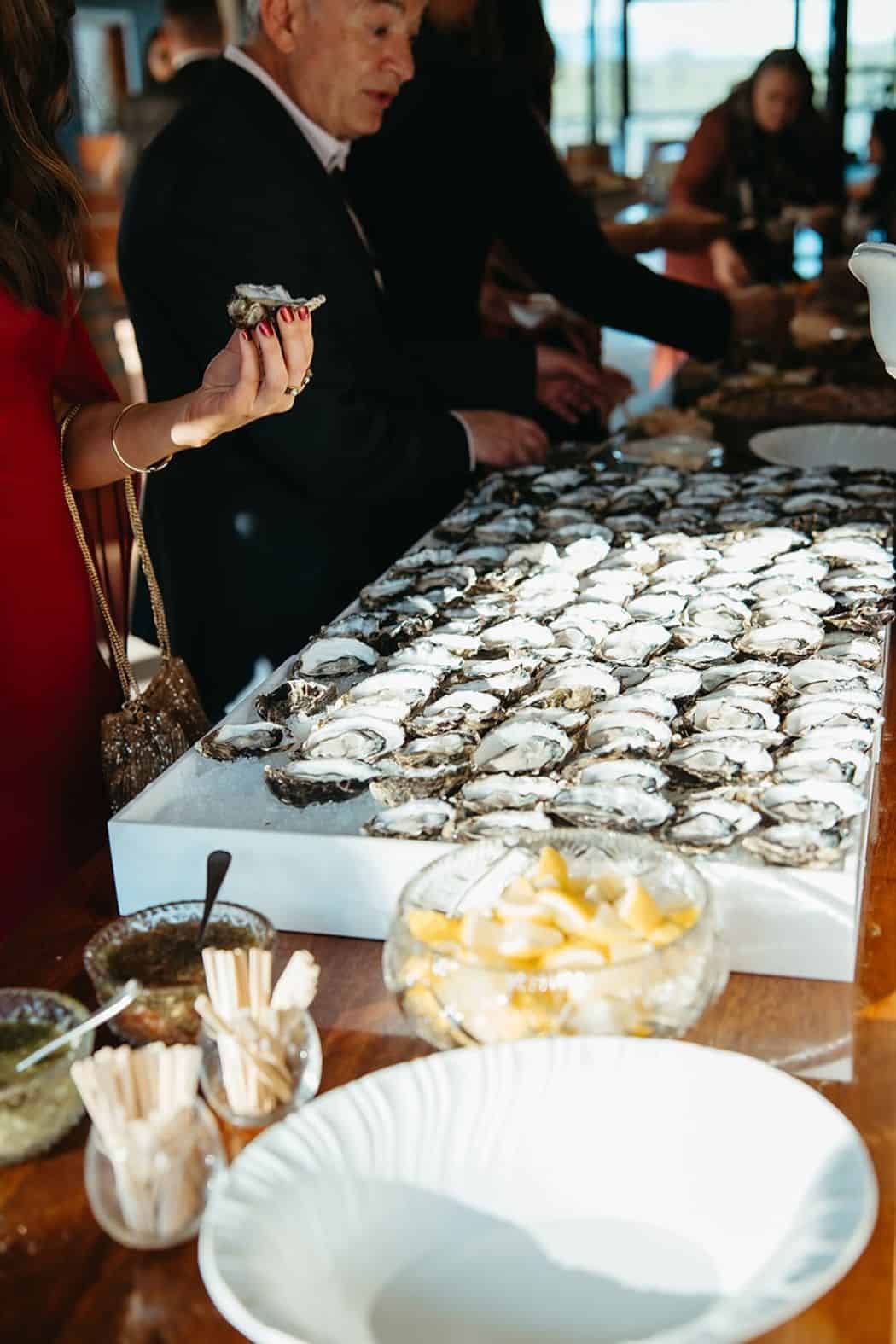
11. Oyster and Seafood Bar
Winter wedding food does not all need to be hot and heavy.
An oyster or seafood bar gives you something fresh and works especially well for a city, restaurant or modern black-tie wedding.
Depending on your caterer, it could include:
- Oysters shucked to order
- Shrimp or prawn cocktail
- Smoked salmon
- Crab
- Ceviche
- Seafood canapés
It is generally better suited to cocktail hour than the main meal.
Temperature control matters here more than styling. Ask exactly how the seafood will be stored, chilled and replenished throughout service.
If oysters are the main feature, having them shucked in front of guests adds an interactive element without asking guests to build anything themselves.
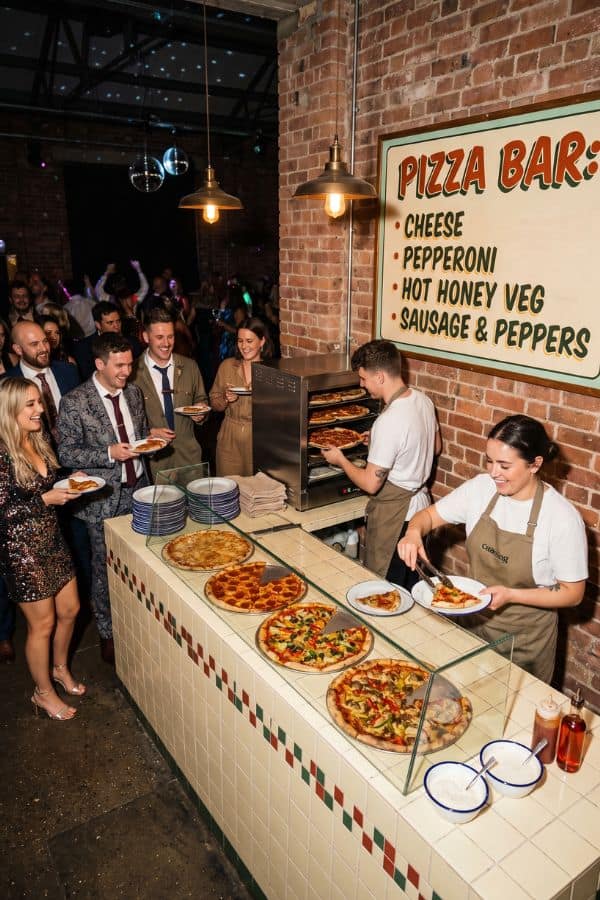
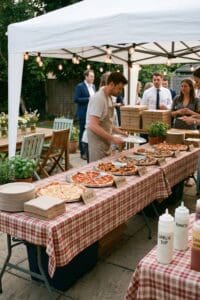
12. Wood-Fired Pizza and Flatbread Station
Fresh pizza is reliable wedding food because most guests understand what they are getting and you can easily offer vegetarian options.
For winter, mix classics with a few richer combinations such as:
- Mushroom and truffle
- Sausage and caramelized onion
- Potato and rosemary
- Pear and blue cheese
- Prosciutto and hot honey
- Classic margherita
If you are bringing in a mobile pizza oven, ask how many pizzas can be cooked per hour.
This matters far more than how pretty the pizza truck looks.
You also need a bad-weather plan if the oven is outside. Guests should not have to stand in the rain waiting for dinner.
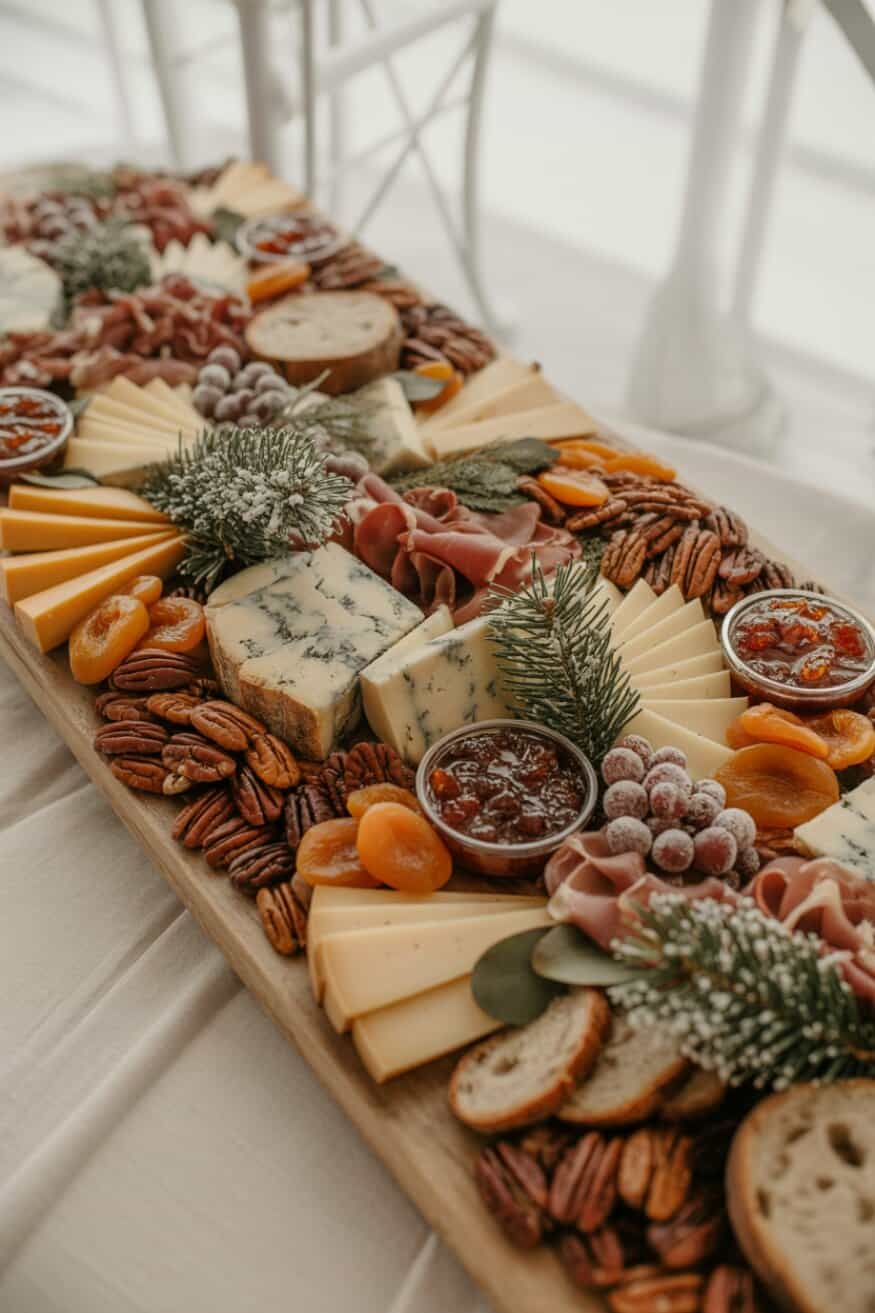
13. Winter Grazing Station
A grazing station can work well during cocktail hour, but it should feel like a proper food offering rather than a table covered in crackers.
Build it around a mixture of cold and warm elements.
Think:
- Good cheeses
- Charcuterie
- Warm focaccia
- Roasted vegetables
- Olives
- Pickles
- Seasonal dips
- Nuts
- Small savory pastries
- Warm bites added in batches
Avoid creating an enormous display that looks impressive for ten minutes and then becomes messy once guests start eating from it.
Smaller sections that can be replenished usually work better.
14. Loaded Fries or Poutine Station
Loaded fries are ideal late-night wedding food.
They are familiar, quick to eat and feel indulgent without needing another full meal.
Toppings could include:
- Gravy and cheese curds
- Pulled beef
- Chili
- Crispy onions
- Truffle parmesan
- Garlic mayo
- Jalapeños
- Scallions
Serve smaller portions in trays or cups so guests can still dance, drink and move around.
The biggest thing to ask your caterer is whether fries will be cooked in batches throughout service. Fries that have been sitting around waiting for guests are never going to be good.
15. Warm Winter Dessert Station
A warm dessert station feels much more winter-specific than another generic wedding dessert table.
Choose two or three desserts rather than trying to offer everything.
Ideas include:
- Sticky toffee pudding
- Warm brownies
- Apple or berry crumble
- Bread pudding
- Churros
- Fresh doughnuts
- Warm cookies
- Chocolate pudding
Then add custard, cream, ice cream or a couple of sauces.
You could also serve hot chocolate, coffee or chai alongside it.
If dessert is being served late in the evening, mini portions normally make more sense than full plated desserts.
How to Combine Food Stations Without Ending Up With a Plate Full of Carbs
This is the biggest thing to watch with winter wedding food.
Baked potatoes, mashed potatoes, mac and cheese, pasta, pizza and loaded fries are all great ideas individually. You probably do not want all six at the same wedding.
Think about contrast.
A balanced station-style dinner might include:
- One main protein-led station, such as BBQ or carving
- One comfort-food station, such as mac and cheese or baked potatoes
- One lighter or fresher option, such as seafood or grazing
- One vegetarian or plant-forward station
- Dessert
You also want different textures and flavors.
If every station is creamy, cheesy and slow-cooked, the food will start to feel repetitive even if the dishes technically look different.
Decide When Each Station Will Be Served
Not every food station needs to operate at the same time.
Some naturally suit different parts of the wedding.
Soup and grilled cheese, oysters and grazing work well during cocktail hour.
Pasta, curry, BBQ and carving can form part of the main meal.
Mac and cheese, loaded fries, pizza and bao are good late-night options.
Warm desserts can open later once dinner has finished.
Spacing stations through the day can also make them feel more memorable than putting ten different options in one room at once.
Interactive Food Does Not Have to Mean Build-Your-Own
There has been a lot of build-your-own wedding food over the last few years, but interactive food does not have to mean laying out twenty bowls of toppings.
A chef tossing fresh pasta, someone shucking oysters, raclette being scraped over potatoes or dumplings being steamed and finished in front of guests can all create interaction.
In many cases, this actually works better because service is controlled and guests are not standing around deciding between twelve sauces.
Make at Least One Station Personal
Food stations are an easy place to put something genuinely personal into the wedding.
It could be food from where one of you grew up, a cuisine connected to your family, your favorite date-night meal or something you always order when you travel.
It does not need a sign explaining the entire story.
If the food means something to you, that is enough.
Think About How Guests Will Actually Eat It
Before choosing a station, picture someone standing at your wedding holding the finished dish.
Can they eat it easily?
Soup, curry, pasta and anything covered in gravy usually needs seating or somewhere to put a drink down.
Bao, dumplings, pizza slices and loaded fries are much easier for a standing reception.
This is especially important if you are planning a warehouse, rooftop or cocktail-style wedding where guests will not all have assigned seats.
Keep Hot Food Hot Without Leaving It Sitting Around
Winter food stations depend heavily on temperature and timing.
Mashed potatoes develop a skin. Pasta absorbs sauce. Mac and cheese thickens. Meat dries out. Fries go soft.
Ask your caterer how food will be replenished.
In most cases, smaller batches replaced regularly are going to taste much better than huge trays being kept warm for hours.
Plan for Queues
One beautiful station is not enough if 150 guests all need dinner at the same time.
Ask:
- How many guests can be served per minute?
- Will there be multiple serving points?
- Which dishes are prepared to order?
- Can some stations open earlier than others?
- Will guests be invited up by table or area?
Interactive stations usually need more staff than a simple buffet.
That is not a reason not to have them. It just needs to be factored into the plan.
Check Venue Restrictions Before Booking Live Cooking
Pizza ovens, BBQs, smokers, fryers and some live cooking stations may need ventilation, outdoor space or additional power.
Do not book a supplier first and then discover your venue will not allow their equipment.
For anything operating outdoors in winter, have a proper weather plan too.
That includes where staff will work, how food travels from the cooking area to guests and whether queues will be under cover.
Make Dietary Options Proper Options
Vegetarian, vegan and gluten-free guests should be able to eat an actual meal rather than assemble one from whatever happens to be left.
If BBQ is your main station, make sure there is a substantial meat-free alternative.
If everything revolves around cheese and cream, make sure dairy-free guests are properly covered.
Also ask how allergens and cross-contact will be managed, particularly at build-your-own stations where serving utensils can quickly move between dishes.
Keep It Winter, Not Automatically Christmas
A winter wedding menu can feel seasonal without becoming Christmas dinner.
Slow-cooked meat, rich sauces, roasted vegetables, mushrooms, smoky flavors, warming spices, melted cheese, soups and warm desserts all work from November through February.
Use Christmas flavors because you genuinely want them, not because someone decided every December wedding needs turkey and cranberry sauce.
The best winter wedding food station menus feel generous, warm and a little indulgent — but still balanced enough that guests want to try the next station.
More blogs you will love!
- 30 Winter Wedding Appetizer Ideas for a Cozy Seasonal Menu
- 15 Winter Wedding Food Station Ideas

- Winter Rehearsal Dinner & Wedding Welcome Party Ideas
- 30 Modern Bridal Shower Finger Food Ideas That Aren’t Boring
- Wedding Brunch Menu Ideas for Daytime Celebration
- Pizza Bar for Weddings: Toppings, Setup and Menu Ideas
- Mac and Cheese Bar for Weddings and Events
- Indoor BBQ Wedding Ideas for Fall and Winter
- Mashed Potato Bar for Weddings and Parties: A Complete Planning Guide