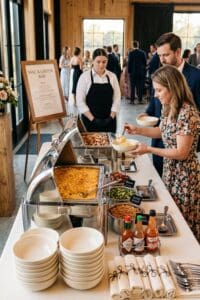
Smoked brisket, pulled pork and hot cornbread arguably make more sense on a cold October evening than they do during a summer heatwave.
BBQ can be an excellent fall or winter wedding meal, but it needs to be planned as a cold-weather reception rather than a summer cookout moved inside.
That means choosing dishes that hold well, working out where the food will actually be cooked and using a serving setup that gets hot food to guests quickly. It can still feel relaxed, but it should not feel makeshift.
An indoor BBQ wedding also rarely means grills and smokers are used inside the reception room. Guests normally eat indoors while the meat is cooked outside, in a designated catering area or at the caterer’s commercial kitchen.
Indoor BBQ Wedding Ideas for Colder Months
The best starting point is deciding what kind of BBQ meal you want to create. A Southern-style buffet, modern BBQ bowl station and plated smoked-short-rib dinner may all involve BBQ food, but they require completely different menus, staffing and setups.
1. Create a Fall Smokehouse Buffet
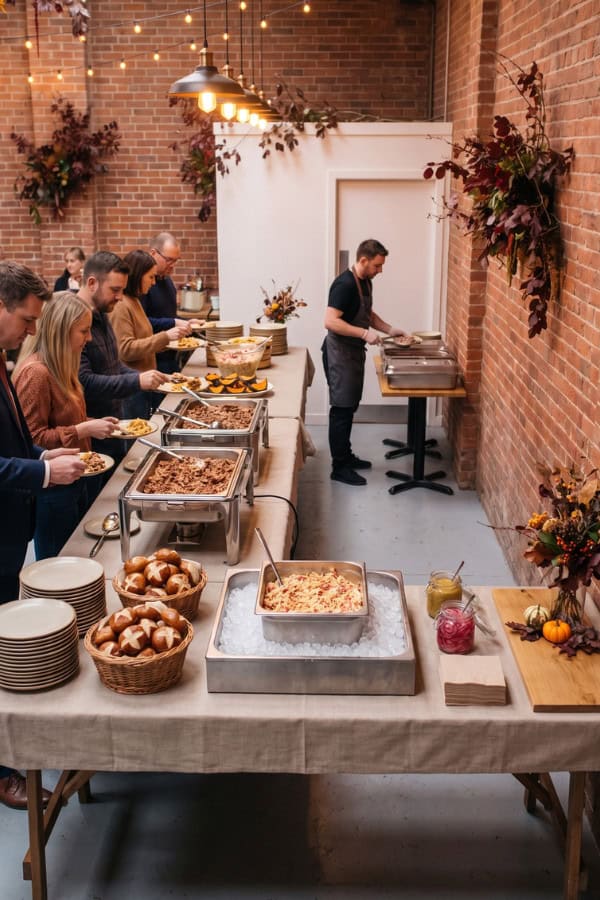
A smokehouse buffet is one of the easiest ways to serve BBQ to a large wedding, but it needs more structure than trays of meat followed by every possible side.
Choose two proteins, such as sliced brisket and pulled pork, and balance them with one creamy side, one vegetable and something crisp. Mac and cheese, roasted squash and apple slaw would make a much better plate than offering mac and cheese, mashed potatoes, baked beans and potato salad together.
A fall smokehouse menu could include:
- Smoked brisket
- Apple-cider pulled pork
- Baked mac and cheese
- Roasted squash and onions
- Apple and cabbage slaw
- Cornbread
- Smoky BBQ sauce and cider mustard
Have staff serve the proteins while guests help themselves to the sides. This prevents the first tables from taking oversized portions of brisket and keeps the serving dishes tidier.
For a realistic setup, place the sides first, followed by two staffed meat stations. Put sauces on a separate table so guests comparing bottles do not hold up the main buffet.
2. Plan an Elevated Winter Steakhouse BBQ
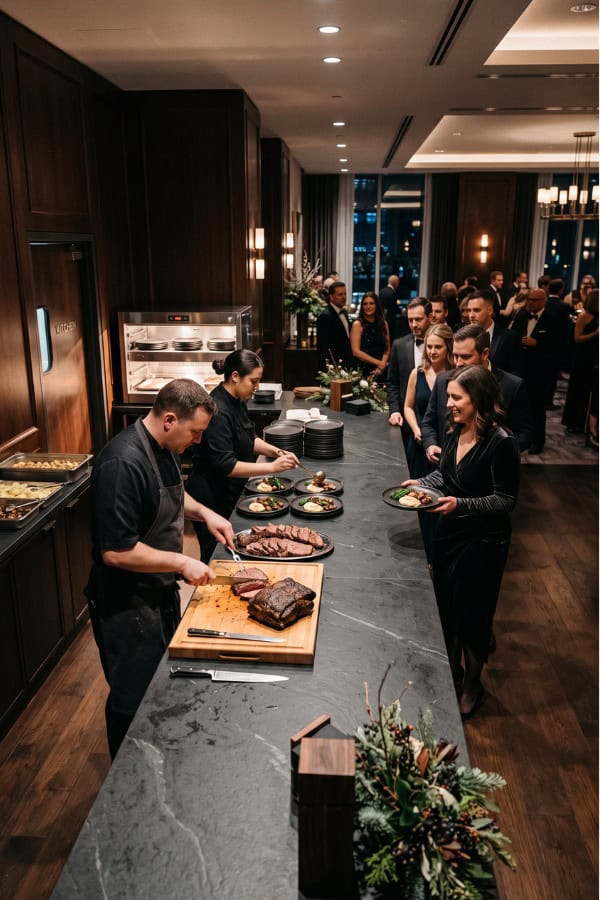
BBQ does not have to be served in buns or alongside traditional cookout dishes. For a more formal winter reception, use smoked and flame-grilled meat as the basis of a steakhouse-style dinner.
Carved beef, smoked short rib or brisket can be paired with whipped potatoes, roasted mushrooms, charred greens and a sharp sauce such as chimichurri. The food still has the rich, smoky qualities of BBQ, but the finished plate looks more like a restaurant meal.
A winter steakhouse BBQ menu could include:
- Smoked short rib or carved steak
- Whipped potatoes
- Roasted mushrooms
- Charred broccolini
- Bourbon jus
- Chimichurri
- Warm chocolate pudding
This works best as a plated dinner or staffed carving station. If using a carving station, sides can be plated in advance so guests only wait for the meat. For a larger wedding, one person slowly carving every portion can become a significant bottleneck.
3. Build the Menu Around Cider Pulled Pork
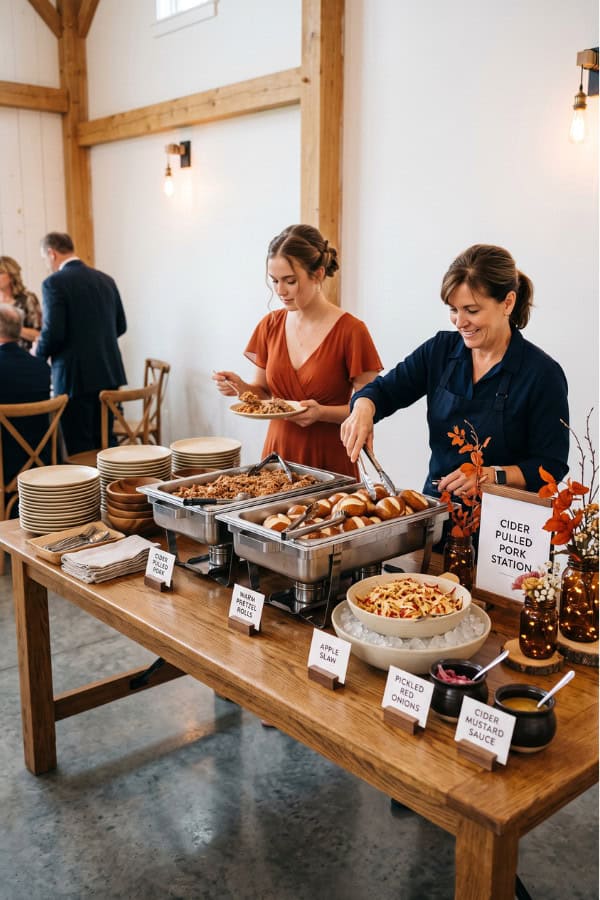
Pulled pork is useful for weddings because it can be cooked in advance, portioned quickly and kept moist more easily than pre-sliced steak or brisket. It is also usually less expensive than premium beef.
For a fall wedding, use apple and cider in one or two supporting elements rather than making the entire menu sweet. Cider-braised pulled pork could be served with sharp apple slaw and a savoury mustard sauce, while the remaining sides stay smoky or herby.
Serve it:
- In brioche or pretzel rolls
- Over creamy mashed potatoes
- In BBQ bowls
- On loaded baked potatoes
- As part of a full dinner plate
- In smaller rolls for late-night food
If pulled pork is the main meal, do not rely on small sliders alone. Guests may need several each, creating more assembly work and a longer queue than serving normal portions.
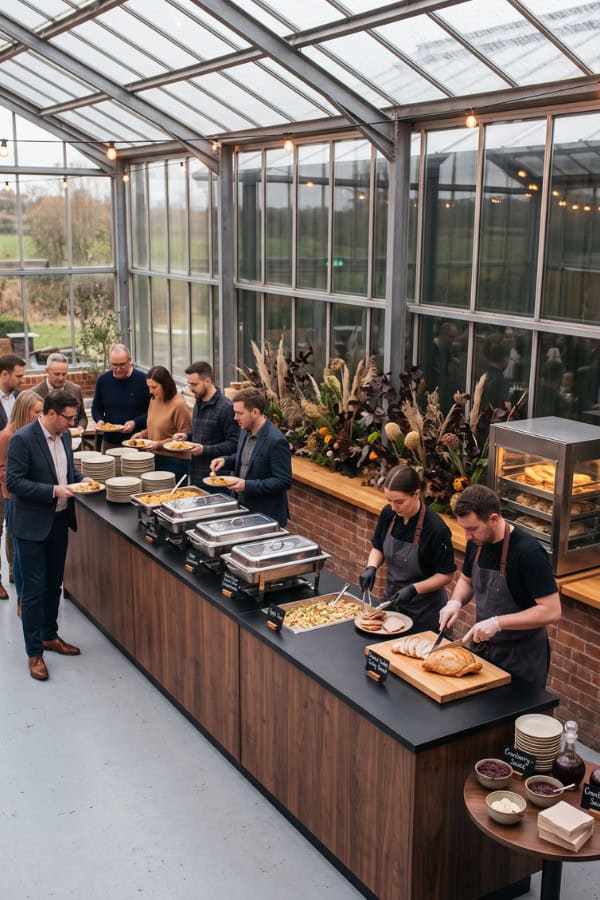
4. Serve a Smoked Turkey Harvest Dinner
Smoked turkey is a useful fall alternative to beef and pork. It feels seasonal without automatically turning the wedding meal into an early Thanksgiving or Christmas dinner.
The key is pairing it with BBQ sides rather than recreating a traditional roast. Try smoked turkey with cornbread, charred squash, greens, cranberry-chipotle sauce and cider slaw.
Turkey breast can dry out if it is sliced too early and left uncovered. Ask whether it will be carved in batches and whether darker meat will also be served. A mixture of breast and thigh meat is often more forgiving during buffet service.
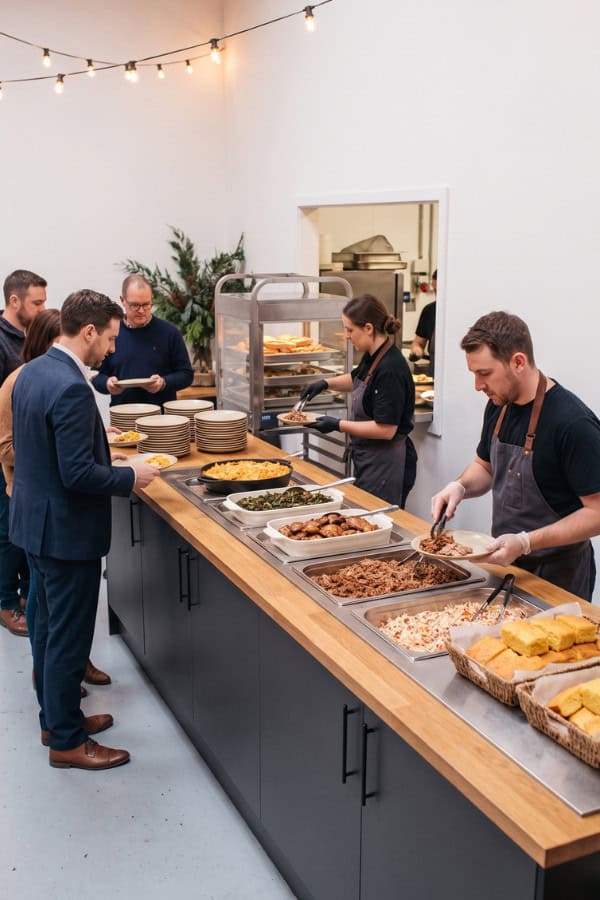
5. Put Together a Southern-Style Comfort Food Spread
A Southern-inspired BBQ menu suits an informal fall or winter wedding, especially in a barn, brewery, warehouse or restaurant venue.
Instead of offering ten different dishes, build the meal around a few properly made favourites. Pulled pork, smoked chicken, baked mac and cheese, greens, cornbread and vinegar slaw are enough to create a generous plate.
If you want additional choice, add one smaller feature rather than another full main. Burnt ends could be served during cocktail hour, for example, while pulled pork and chicken remain the main proteins.
Biscuits or cornbread should be protected from the heat and replenished in smaller baskets. Leaving all the bread beside open warming equipment can cause it to dry out before later tables are served.
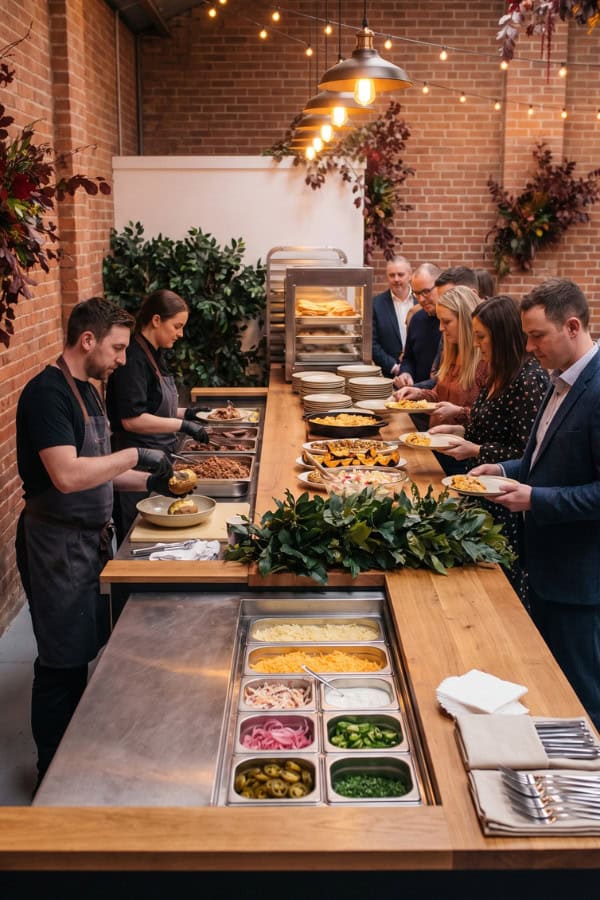
6. Create a Loaded BBQ Baked Potato Bar
A loaded baked potato bar makes BBQ meat go further while still giving guests a substantial cold-weather meal. It is particularly useful for a relaxed reception, welcome party or evening food station.
Suitable toppings include:
- Pulled pork
- Chopped brisket
- BBQ chicken
- Baked beans
- Cheese sauce
- Grated cheese
- Sour cream
- Slaw
- Pickled onions
- Jalapeños
- Crispy onions
- Chives
The potatoes should be fully cooked and opened before service. Expecting every guest to cut and fluff their own potato while holding a plate slows down the queue.
Have staff add the meat because it will be the most expensive topping. Guests can then move along the station to add sauces and smaller garnishes. Keep cold toppings in appropriate chilled containers rather than arranging everything in decorative bowls for the full service period.
My baked potato bar guide covers the quantities, toppings and setup in more detail.
7. Offer Build-Your-Own BBQ Bowls
BBQ bowls are easier to carry and eat than overloaded sandwiches, making them a good option if the venue has informal seating or several food stations.
Start with no more than two bases, such as mashed potato and rice. Guests then choose a protein, vegetable, sauce and one or two toppings.
One possible station could offer:
- Mashed potato or seasoned rice
- Pulled pork or BBQ chicken
- Smoked mushrooms and beans
- Charred corn
- Slaw
- Pickled onions
- Crispy onions
- Smoky BBQ, chipotle and herb sauces
The biggest mistake is treating a bowl station like an unlimited toppings bar. Twelve garnishes might look impressive before guests arrive, but they require more space, utensils, labelling and maintenance. A smaller selection produces a better bowl and keeps the queue moving.
Use wide, sturdy bowls rather than narrow disposable cups. Guests need enough room to cut the meat and mix the components without spilling sauce over the sides.
8. Serve a Family-Style Smokehouse Supper
Family-style service gives a BBQ meal a generous, communal feel without asking every guest to queue. Platters of meat and sides are brought to each table and passed around.
This works well with pulled pork, sliced brisket, chicken thighs and sausages because they can be portioned onto large platters. Use separate dishes for slaw, vegetables and heavier sides rather than piling the entire meal onto one board.
Before choosing this format, check the available table space. Platters need to fit alongside glasses, bottles, candles and personal items. Low floral arrangements or minimal bud vases are more practical than wide centrepieces.
Family-style service also requires more crockery and staffing than couples sometimes expect. Someone needs to portion the platters, carry them to every table, replace empty dishes and make sure dietary meals reach the correct guests.
9. Try a Korean-Inspired BBQ Menu
For something more modern than a traditional smokehouse menu, use Korean-inspired grilled flavours in a bowl station or shared-table meal.
A possible menu could include:
- Gochujang-glazed chicken
- Korean-style grilled beef
- Sticky BBQ tofu
- Steamed rice
- Sesame slaw
- Charred vegetables
- Pickled cucumbers
- Kimchi
- Spring onions
- Gochujang and sesame sauces
This works particularly well when the caterer is experienced with the food rather than simply adding gochujang to an otherwise standard BBQ menu.
Keep spicy sauces separate and label them clearly. Kimchi, marinades and sauces may also contain ingredients that affect vegan, gluten-free or allergy-sensitive guests, so the dietary information needs to cover every component rather than just the main proteins.
10. Make the Vegetarian BBQ Main Part of the Menu
Vegetarian and vegan food should be designed into the station from the beginning. It should not look like the caterer removed the meat from an ordinary BBQ plate.
Substantial options include:
- Smoked mushrooms with BBQ butter beans
- Sticky BBQ tofu bowls
- Smoked aubergine with lentils
- Stuffed sweet potatoes
- Grilled cauliflower with chimichurri and white beans
- BBQ tempeh
- Plant-based chilli with cornbread
- Mushroom and lentil loaf with smoky tomato sauce
Pulled jackfruit can provide a similar texture to pulled pork, but it is not a substantial protein on its own. Combine it with beans, lentils, tofu or another filling element.
If the buffet includes a small number of vegetarian portions, reserve them for the guests who ordered them. Otherwise, curious meat-eating guests may take them before the intended diners reach the buffet.
11. Use BBQ for Cocktail-Hour Food
You do not have to commit the entire meal to one BBQ buffet. Smoked and grilled flavours can be introduced through appetizers before a more traditional dinner.
Ideas include:
- Burnt-end bites with pickles
- Mini cornbread topped with pulled pork
- BBQ chicken skewers
- Smoked sausage bites with mustard
- Small cups of brisket chilli
- Grilled halloumi with hot honey
- Smoked mushroom crostini
- Mini BBQ meatballs
- Cornbread with whipped honey butter
Choose items that can be eaten cleanly in one or two bites. Full ribs and heavily sauced sliders are awkward when guests are standing, holding drinks and wearing formal clothes.
Serving a small BBQ item during cocktail hour can also make the overall menu feel more cohesive if the main dinner includes smoked meat.
12. Finish the Evening With a BBQ Slider Station
Pulled pork, brisket or BBQ chicken sliders work well as late-night food because they can be assembled quickly and eaten without returning to a formal table.
Offer one meat slider and one vegetarian alternative rather than reopening the entire dinner buffet. Add pickles, slaw and one sauce, but avoid a large selection of loose toppings late in the evening.
Ask whether the meat will be held from dinner or prepared specifically for the evening station. Food should not simply sit on the buffet for several hours before being served again.
How to Build a Balanced BBQ Wedding Menu
The most successful BBQ menus are edited. Couples often begin with two meats and then keep adding sides until every comfort food appears on the same plate.
A useful main-meal structure is:
- Two proteins
- One complete vegetarian or vegan main
- Three or four sides
- Two or three sauces
- One small selection of pickles or toppings
- Bread only if it has a clear purpose
Choose One Premium Protein and One Reliable Crowd-Pleaser
If you want brisket, steak or short ribs, pair them with something easier to produce in larger quantities, such as pulled pork or chicken thighs.
This gives guests choice without making every portion dependent on an expensive meat with a lower cooked yield.
Good combinations include:
- Brisket and pulled pork
- Short rib and smoked chicken
- Carved steak and sausages
- Pulled pork and maple-mustard chicken
- Smoked turkey and brisket
You do not necessarily need equal quantities of both. Ask the caterer which option is likely to be more popular and how they will make sure both remain available for later tables.
Pick Sides by Function
Instead of choosing sides individually, consider the job each one does on the plate.
A balanced menu normally needs:
- A creamy or starchy side, such as mac and cheese, mashed potato or potato gratin.
- A cooked vegetable, such as roasted squash, glazed carrots, greens or charred cabbage.
- A crisp or acidic side, such as vinegar slaw, pickled cucumber or bitter-leaf salad.
- An optional extra, such as beans, cornbread or corn pudding.
If the meat is rich, the acidic side is particularly important. Brisket, short ribs, mac and cheese, potato gratin and creamy slaw may all taste good separately, but together they create a very heavy plate.
Fall BBQ Side Combinations
For pulled pork or chicken:
- Baked mac and cheese
- Roasted squash
- Apple and cabbage slaw
- Cornbread
For smoked turkey:
- Sweet potato mash
- Charred greens
- Cranberry and cabbage slaw
- Sage cornbread
For brisket:
- Roasted root vegetables
- Creamy polenta
- Vinegar slaw
- Pickled onions
Winter BBQ Side Combinations
For short ribs or steak:
- Whipped potatoes
- Roasted mushrooms
- Charred broccolini
- Horseradish cream
For pulled pork:
- Smoked mac and cheese
- Braised greens
- Winter slaw
- Cornbread
For BBQ chicken:
- Potato gratin
- Maple-roasted carrots
- Kale and apple salad
- Herb sauce
Seasonality does not require adding maple, apple or cranberry to every dish. Choose one or two seasonal flavours and allow the rest of the menu to remain savoury.
Which BBQ Meats Work Best for Weddings?
The best meat is not only the one you like most. It must also suit the guest count, serving format and time it may spend being transported, rested or held.
Pulled Pork
Pulled pork is one of the most practical choices for a large buffet. It portions quickly, works with several serving formats and generally remains moist when held correctly.
It is a strong choice for couples who want the feel of BBQ without building the budget around brisket or steak.
Brisket
Brisket feels more premium, but it is labour-intensive and loses a substantial amount of weight during cooking. The finished cost per serving can therefore be higher than the raw price suggests.
It should be rested properly and sliced against the grain. Ask whether it will be carved during service or sliced in small batches. A large tray of pre-sliced brisket can dry out before later guests are served.
Chicken
Chicken thighs are usually more forgiving than breast meat on a buffet. Boneless thighs are easy to eat, while bone-in pieces can be juicier but create more waste and mess.
If the caterer proposes chicken breast, ask how it will be held and whether it will be sliced before service.
Ribs
Ribs are memorable but messy. A large part of the ordered weight is bone, and guests need space to eat them properly.
They are best for an informal reception, welcome party or late-night station. Provide substantial napkins and do not rely on delicate china plates.
Steak
Carved steak creates a more formal meal, but it requires precise cooking and fast service. Guests may also have different preferences about how well done it should be.
Rather than offering individual steaks from a live grill, carved larger cuts can be more manageable for a wedding. Discuss how the caterer will deal with guests who prefer more thoroughly cooked meat.
Short Ribs
Short ribs suit a plated winter dinner particularly well. They feel substantial and can be served with refined sides, but they are generally a premium option.
A braised and smoked combination can provide BBQ flavour while allowing the meat to be prepared consistently for a large group.
Sausages
Good-quality sausages work well as a second protein or as part of a relaxed food station. They help stretch more expensive beef but should not feel like a last-minute filler.
One classic flavour and one more distinctive option are enough. Too many varieties make quantities harder to predict.
How Indoor BBQ Service Should Work
An attractive station is only useful if it can feed the guest list efficiently.
Decide Where Cooking Will Take Place
There are three common arrangements:
Cooked on-site outside
The caterer brings a smoker, grill or live-fire setup and cooks in an approved outdoor catering area. This creates freshly cooked food but requires suitable access, ventilation, power, water, lighting and weather protection.
Cooked off-site and transported
Long-cooked meats such as brisket and pulled pork may be prepared at the caterer’s kitchen and transported to the venue. Ask how the food will be packed, held and finished before serving.
Prepared off-site and finished at the venue
The main cooking takes place elsewhere, with meat rested, carved, sauced or reheated in the venue’s catering area. This can be a sensible compromise when outdoor cooking is restricted.
The venue and caterer should agree on the plan before you pay a deposit. Do not accept separate assumptions from each supplier and hope they work it out later.
Create a Proper Wet-Weather Plan
Rain is not the only issue. High winds can affect smoke, flames, gazebos and temporary cooking equipment, while snow or ice can make the route between the catering area and dining room unsafe.
Confirm:
- Whether the cooking area is genuinely covered
- Whether the cover is safe for the equipment being used
- How food will reach the reception room
- Whether staff must cross grass or uneven ground
- Whether the venue has restrictions during strong winds
- Whether an alternative kitchen-based plan exists
- Who makes the final weather decision
Guests should not have to queue outside for their food. If part of the appeal is seeing the smoker or grill, position it where guests can view it without placing the actual serving line outdoors.
Design the Buffet Around Guest Flow
A practical BBQ buffet could be arranged as follows:
- Plates
- Two or three sides
- Staffed meat service
- Bread
- A separate sauce and toppings table
- Cutlery already placed on dining tables
Placing meat near the end allows staff to portion it according to the available plate space. It also prevents guests from covering it with several heavy sides before reaching the rest of the buffet.
For a larger wedding, ask whether the buffet can be accessed from two sides or duplicated. One carving point will move more slowly than a station serving pre-portioned pulled pork.
Release tables gradually rather than sending everyone to the buffet at once. The caterer should be able to explain how long they expect it to take to serve your actual guest count.
Keep the Meat Hot Without Ruining It
BBQ should not be displayed in open trays simply because that looks better in photographs. Hot food requires suitable professional holding equipment.
The most effective approach is usually to:
- Keep pulled meats covered and moist
- Hold large cuts whole for as long as possible
- Carve brisket and steak in smaller batches
- Replenish the buffet with smaller trays
- Assign staff to monitor each protein
- Keep replacement food close to the station
- Avoid repeatedly opening and closing the main holding containers
Ask how the caterer will serve the final tables, not only how the food will look when the buffet first opens.
How Much BBQ Food Do You Need?
Your caterer should calculate the final order because different meats produce very different cooked yields. Bone-in ribs cannot be estimated in the same way as boneless pulled pork, while brisket can lose a considerable amount of its raw weight during trimming and cooking.
As a broad starting point, caterers may plan approximately 5–8 ounces, or around 140–225 grams, of cooked meat per adult in total when several sides are included. That is the combined meat allowance, not the amount required for each protein.
The appropriate amount depends on:
- Whether it is lunch or dinner
- The number of appetizers
- The number and size of sides
- Whether guests serve themselves
- Whether the meat is bone-in
- How long the reception lasts
- The number of children and teenagers
- Whether late-night food is also planned
A staffed buffet gives the caterer more control over portions. If all meat is completely self-service, the first guests may take some of every protein rather than choosing one normal serving.
Count dietary meals separately and reserve them for the correct guests. Teenagers may also need adult portions even if the venue’s child pricing applies to younger children.
Catering for Allergies and Dietary Requirements
BBQ menus can contain less obvious allergens. Sauces and marinades may include gluten, soy, mustard or dairy. Mac and cheese, cornbread, bread rolls and creamy slaws add further considerations.
Beans and greens may be cooked with pork or meat stock, so they should not automatically be labelled vegetarian.
Ask the caterer:
- Which dishes are prepared separately
- Whether separate utensils will be used
- Whether vegetarian food shares the same grill
- How dietary dishes will be labelled
- Whether individual meals will be reserved
- How serious allergies will be managed
- Whether pork-free or halal options require separate equipment
If most of the menu contains pork, offering one chicken dish does not necessarily solve the problem. Cross-contact, shared sauces and shared serving utensils must also be considered.
Making an Indoor BBQ Buffet Look Wedding-Ready
The buffet should look intentional, but the styling must work around the catering equipment rather than hiding or obstructing it.
Use a Proper Staffed Counter
A clean black, wood or neutral counter frontage can conceal the functional side of the warming equipment while allowing staff to work behind it.
Guests should remain on one side and staff on the other. Servers positioned randomly between guests or working from both sides make the setup confusing and unrealistic.
Choose One Clear Visual Direction
For a modern industrial wedding, use matte-black counters, simple white menu cards, brushed metal details and warm lighting.
For a fall wedding, use dark wood, warm neutral linens, amber glass and restrained seasonal foliage.
For an elevated winter reception, use black or deep brown counters, ivory linens, ceramic dishes for cold sides and low candlelight away from the food.
The BBQ theme does not require checked cloths, wooden crates, hay bales or multiple chalkboard signs.
Style Cold and Hot Food Differently
Cold garnishes, wrapped bread and some sides can be displayed in attractive ceramic dishes. Meat and hot sides still need appropriate temperature-controlled equipment.
If the caterer provides stainless-steel chafing dishes, ask whether they offer station surrounds or frontages. Do not assume you can cover working equipment with loose fabric, foliage or wooden decorations.
Use Strong Plates and Practical Napkins
BBQ plates are heavy and may contain sauces, meat juices and several sides. Thin disposable plates can bend under the weight.
Use sturdy dinner plates, wide bowls for BBQ bowl stations and good-quality napkins. If ribs or handheld food are served, add extra napkins at the table rather than creating another stop in the buffet line.
Fall and Winter BBQ Drinks
The drinks should complement the smoke and richness rather than competing with it.
Fall options include:
- Bourbon and apple cocktails
- Hard cider
- Ginger and apple spritzes
- Local beer
- Dry sparkling wine
- Alcohol-free apple and rosemary drinks
Winter options include:
- Red wine
- Bourbon cocktails
- Spiced rum drinks
- Cranberry and ginger spritzes
- Espresso martinis
- Hot cider
- Coffee and hot chocolate
Hot drinks require a staffed and safely positioned station. Guests should not be carrying full mugs through the busiest part of the buffet or dance floor.
Desserts That Work After BBQ
Because the main meal is rich, dessert does not need to include every cold-weather favourite.
Good options include:
- Warm apple crumble
- Pecan pie
- Fruit cobbler
- Sticky toffee pudding
- Brownies with salted caramel
- Baked cheesecake
- Mini pies
- Doughnuts with warm dipping sauce
- Wedding cake with coffee
A warm plated dessert can make an informal buffet meal feel more complete. Alternatively, serve wedding cake with one additional warm option rather than creating a large dessert table.
If you are considering s’mores, check the venue’s flame rules first. A fire pit, tabletop burner and indoor flame may all be treated differently.
Is an Indoor BBQ Wedding Budget-Friendly?
BBQ can be affordable, but it is not automatically a budget meal.
Pulled pork, chicken thighs, sausages and buffet service are usually easier to manage on a lower budget. Brisket, steak, short ribs, live-fire chefs and staffed carving stations can cost as much as, or more than, a traditional wedding dinner.
The final quote may include:
- Long cooking and preparation times
- Fuel
- Smoker or grill transport
- Chefs and carving staff
- Buffet attendants
- Warming equipment
- Serving dishes
- Plates and cutlery
- Travel
- Setup
- Clearing and waste removal
- Kitchen or venue fees
When comparing quotes, check what is included rather than comparing the food price alone.
For a more affordable menu, choose pulled pork and chicken with three strong sides. If brisket matters to you, serve a controlled carved portion alongside a less expensive second protein.
Food stations are not always cheaper than one buffet. Several stations can require duplicate equipment and additional staff.
Questions to Ask a BBQ Wedding Caterer
Take your guest count and venue information to the caterer and ask for a specific service plan.
- Where will each dish be cooked?
- What will be prepared on-site and what will arrive ready to serve?
- What grill, smoker or warming equipment will you bring?
- Does the venue need to approve the equipment?
- What access, power, water and covered space do you require?
- What is the plan for rain, snow and high winds?
- How will food travel from the cooking area to the reception room?
- How will brisket, steak or turkey be rested and carved?
- How many serving points will our guest count need?
- How many chefs and buffet attendants are included?
- How long should it take to serve all guests?
- Will staff serve the meat or will it be self-service?
- How will you prevent later tables receiving dry or limited food?
- How are vegetarian meals and allergies handled?
- Are sides, sauces, toppings and bread included?
- Are plates, cutlery, napkins and serving equipment included?
- Who sets up, replenishes and clears the buffet?
- Are travel, equipment and service fees included in the quote?
- What happens to safe, usable leftovers?
- Can we taste the food in the same format in which it will be served?
That final question matters. Brisket eaten immediately beside the smoker may not represent brisket that has been transported, held and served to 150 people.
Complete Fall and Winter BBQ Wedding Menus
Affordable Fall BBQ Buffet
Service: Staffed buffet
Mains:
- Pulled pork
- Maple-mustard chicken thighs
- Smoked mushrooms with BBQ beans
Sides:
- Baked mac and cheese
- Roasted seasonal vegetables
- Vinegar slaw
- Cornbread
Sauces:
- Classic smoky BBQ
- Cider mustard
- Chipotle sauce
Dessert:
- Warm apple crumble
This menu keeps the proteins affordable while still offering plenty of choice. Serving the meat and allowing guests to help themselves to the sides will make quantities easier to control.
Modern Fall BBQ Bowl Station
Service: Two staffed bowl lines
Bases:
- Creamy mashed potatoes
- Seasoned rice
Mains:
- Apple-cider pulled pork
- BBQ chicken
- Smoked mushrooms and butter beans
Vegetables and toppings:
- Charred corn
- Apple slaw
- Pickled onions
- Crispy onions
- Fresh herbs
Sauces:
- Bourbon BBQ
- Chipotle
- Chimichurri
Dessert:
- Mini apple and pecan pies
Keep the bases and mains behind the counter for staff to serve. Guests can add small toppings from the final part of the station.
Cozy Winter Smokehouse Dinner
Starter:
- Small cup of smoked tomato soup with cornbread
Mains:
- Smoked brisket
- BBQ chicken thighs
- Stuffed sweet potato with smoky lentils
Sides:
- Whipped potatoes
- Charred cabbage
- Roasted carrots
- Winter slaw
Sauces:
- Classic BBQ
- Horseradish cream
- Herb sauce
Dessert:
- Sticky toffee pudding
The soup should be a small starter rather than a full bowl. The main meal is already substantial.
Elevated Winter Steakhouse BBQ
Service: Plated dinner or staffed carving station
Starter:
- Charred pear, blue cheese and winter-leaf salad
Main:
- Smoked short rib or carved beef
- Smoked mushroom and lentil main for vegetarian guests
Sides:
- Whipped potatoes
- Roasted mushrooms
- Charred broccolini
Sauces:
- Bourbon jus
- Chimichurri
- Horseradish cream
Dessert:
- Warm chocolate pudding with salted caramel
This is a good example of how BBQ can feel polished without disguising the smoked flavours that make the meal distinctive.
Relaxed Winter BBQ Wedding Reception
Service: Staffed buffet followed by late-night sliders
Mains:
- Pulled pork
- Smoked sausages
- BBQ tofu
Sides:
- Smoked mac and cheese
- Braised greens
- Mustard slaw
- Baked beans
Sauces and toppings:
- Smoky BBQ sauce
- Hot honey
- Pickles
- Crispy onions
Late-night food:
- Pulled pork and BBQ tofu sliders
Dessert:
- Wedding cake with coffee
Reserve a fresh portion of meat for the late-night sliders rather than leaving food from dinner on display until the station opens.
Planning a BBQ Wedding That Works in Cold Weather
A fall or winter BBQ wedding needs three things: a focused menu, a realistic cooking plan and a service setup designed for the guest count.
Start with the type of meal you want to create, then choose two proteins and sides that balance one another. Confirm where the cooking equipment can go, how food will reach the dining room and what happens if the weather changes.
When those details are handled properly, BBQ can feel warm, generous and completely suited to a cold-weather wedding—whether you choose an informal pulled-pork buffet or a plated smoked-short-rib dinner.
More blogs you will love!
- 30 Winter Wedding Appetizer Ideas for a Cozy Seasonal Menu

- 15 Winter Wedding Food Station Ideas

- Winter Rehearsal Dinner & Wedding Welcome Party Ideas

- 30 Modern Bridal Shower Finger Food Ideas That Aren’t Boring
- Wedding Brunch Menu Ideas for Daytime Celebration
- Modern Fall in Love Bridal Shower Ideas That Feel Elevated

- 10 Modern Fall Bridal Shower Themes That Feel Fresh for 2026

- Pizza Bar for Weddings: Toppings, Setup and Menu Ideas
- Mac and Cheese Bar for Weddings and Events