
Wedding food stations have become a go-to choice for couples who want their reception to feel relaxed, social, and guest-focused. Instead of a rigid meal schedule, stations allow people to eat when they want, try a variety of flavours, and move around the space more naturally.
They also give couples more freedom to personalise their food, whether that’s through comfort-driven favourites, interactive chef-led options, or sweet treats that double as décor.
This roundup brings together some of the most popular and practical wedding food station ideas, along with tips to help them run smoothly on the day.
Wedding Food Stations Trending Right Now (2026)
If you want wedding food that feels current, social, and guest-focused, these are the food stations couples are actually choosing right now. They work because they’re interactive, flexible, and easy to enjoy throughout the evening, not just at a set mealtime. These are the first five food stations leading the trend for 2026.
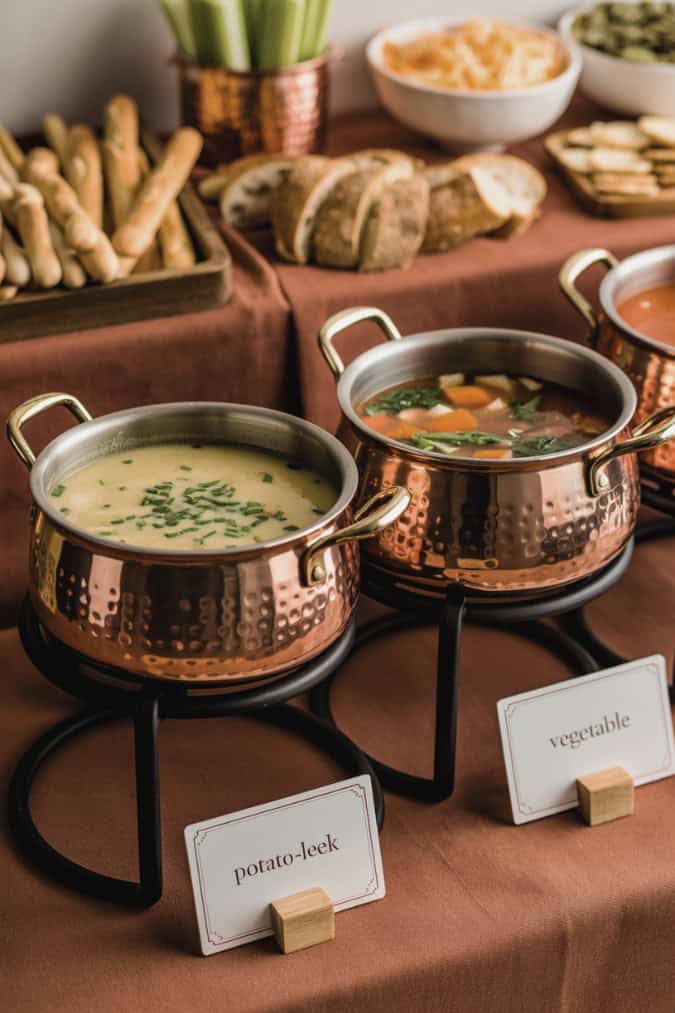
1. Soup Stations
Soup stations have quietly become one of the most popular modern wedding food choices, especially for evening and colder-season weddings. Instead of a plated starter, soup is served as a dedicated station with a small selection of seasonal options guests can help themselves to when they’re ready.
The appeal is simple: soup is warm, comforting, easy to eat between dances, and feels intentional without being heavy.
Bread, rolls, or simple sandwiches can be offered alongside, but the soup itself remains the main focus.
We have a whole guide on creating a soup bar for your wedding.
2. Live Pasta & Risotto Stations
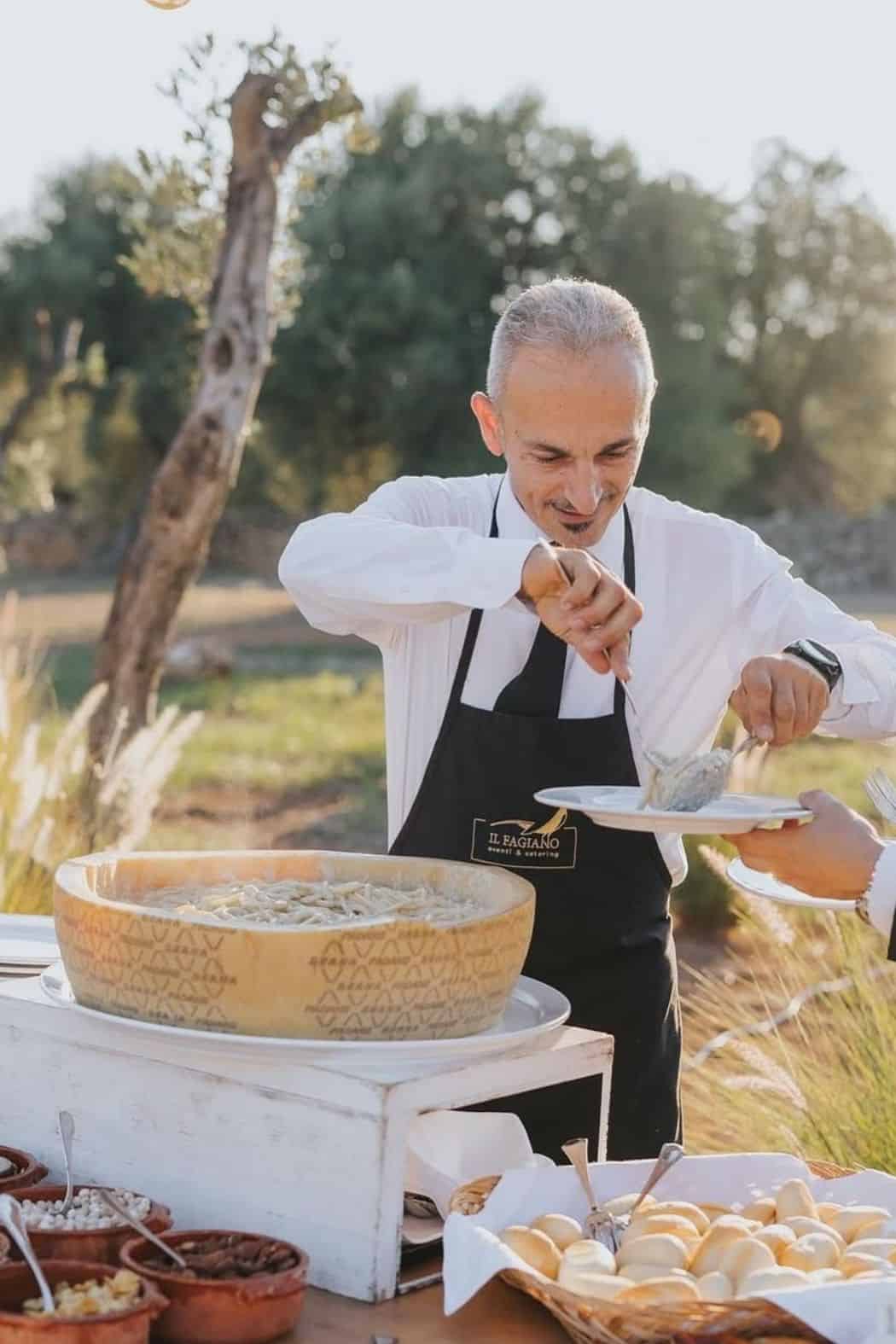
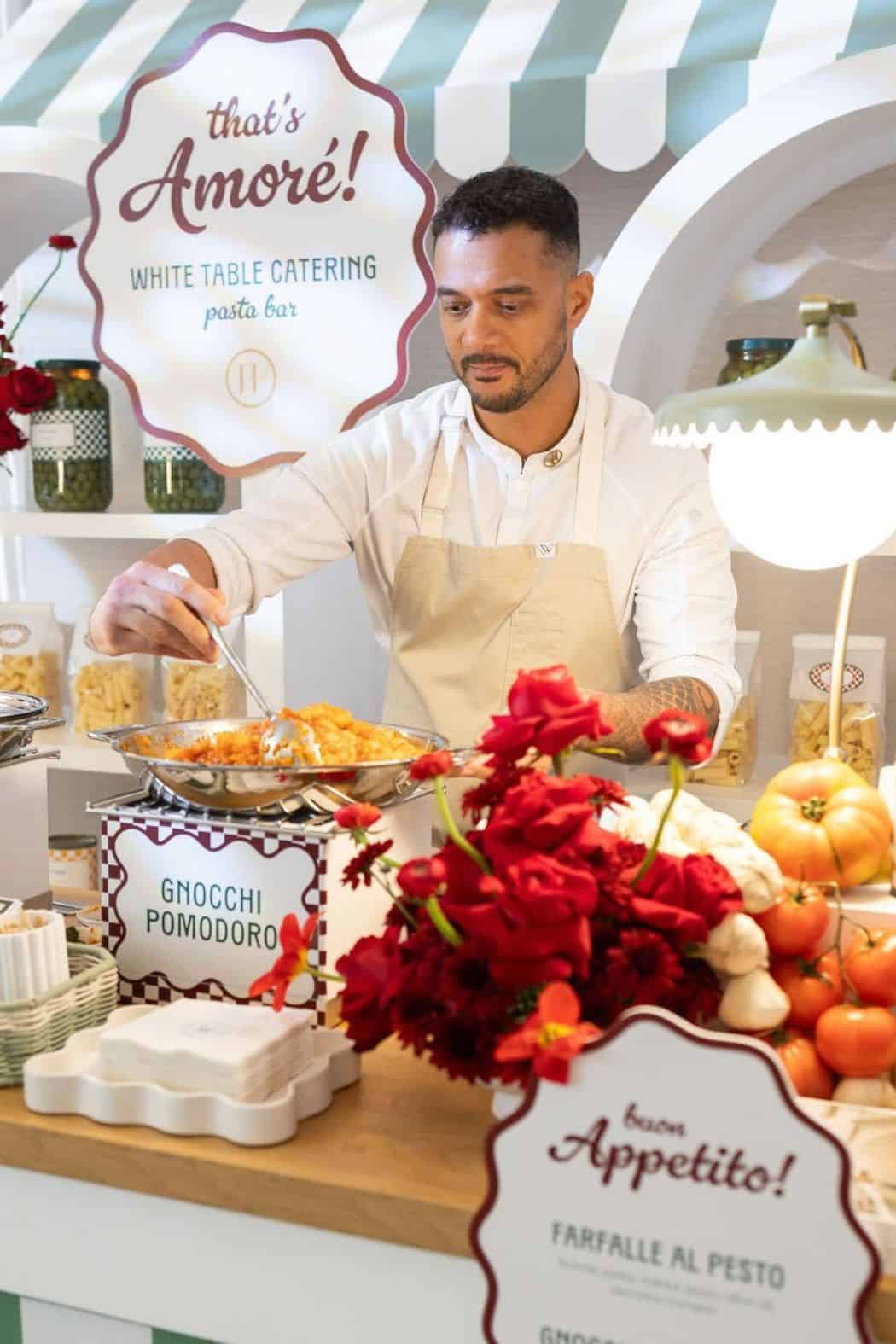
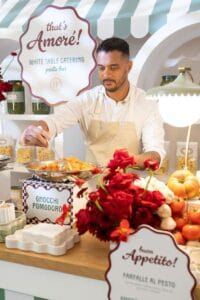
Live pasta and risotto stations continue to be a favourite for couples who want food that feels both elevated and relaxed. Chefs cook and finish dishes in front of guests, creating an interactive experience that also fills the room with atmosphere. These stations work well as a full dinner replacement or as substantial evening food, especially for couples skipping a formal sit-down meal.
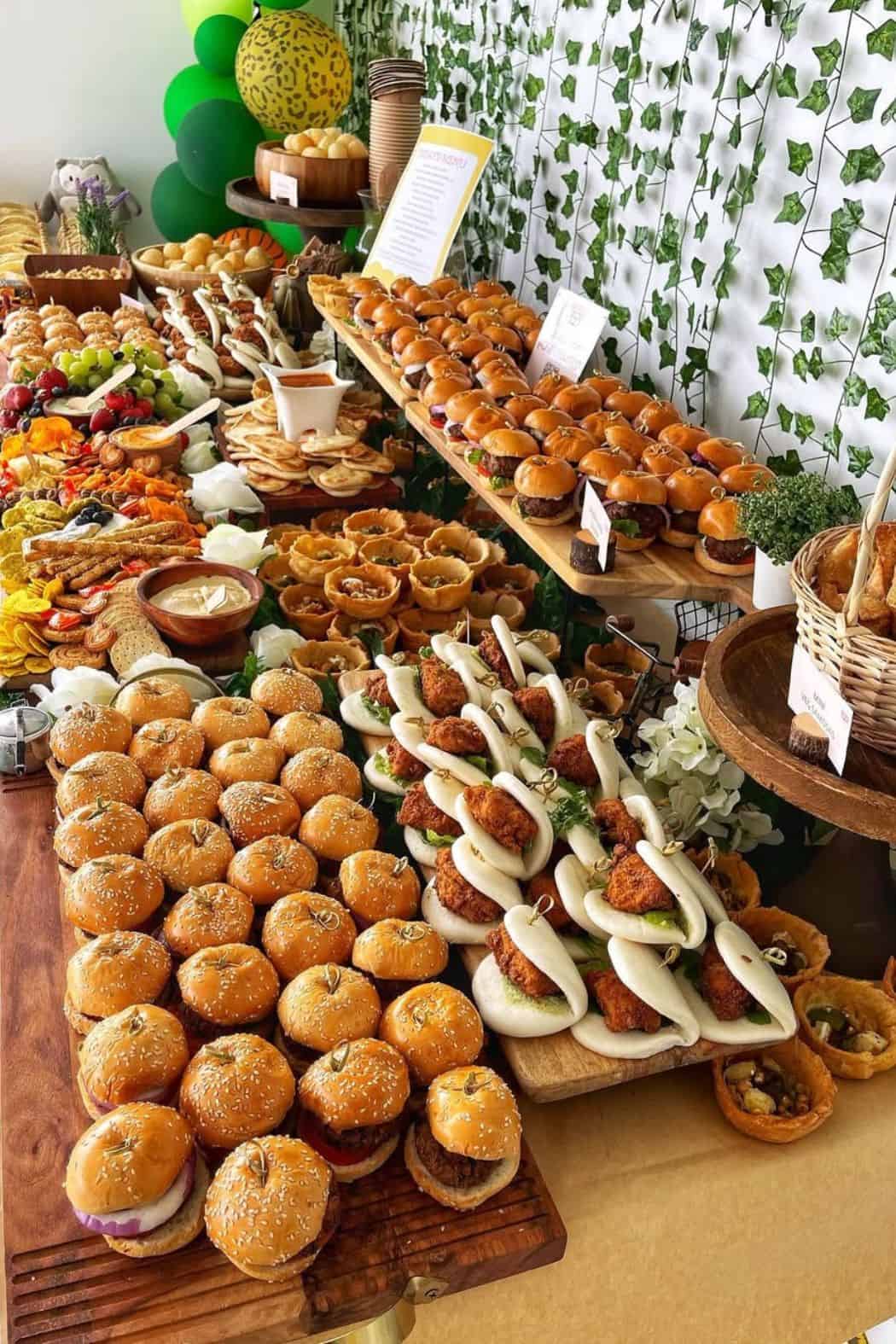
3. Midnight Comfort Food Stations
Midnight comfort food stations are now a planned part of the reception rather than an afterthought. These stations appear once the dance floor is in full swing, offering savoury, filling food that guests can grab quickly and get straight back to the party. Popular choices include mini burgers, pizza slices, loaded fries, grilled cheese, or warm wraps, all served in small portions that are easy to eat while standing. The focus is on familiar food done well, making this one of the most appreciated moments of the night.
Check out our late-night snack ideas for more options.
4. Taco Stations
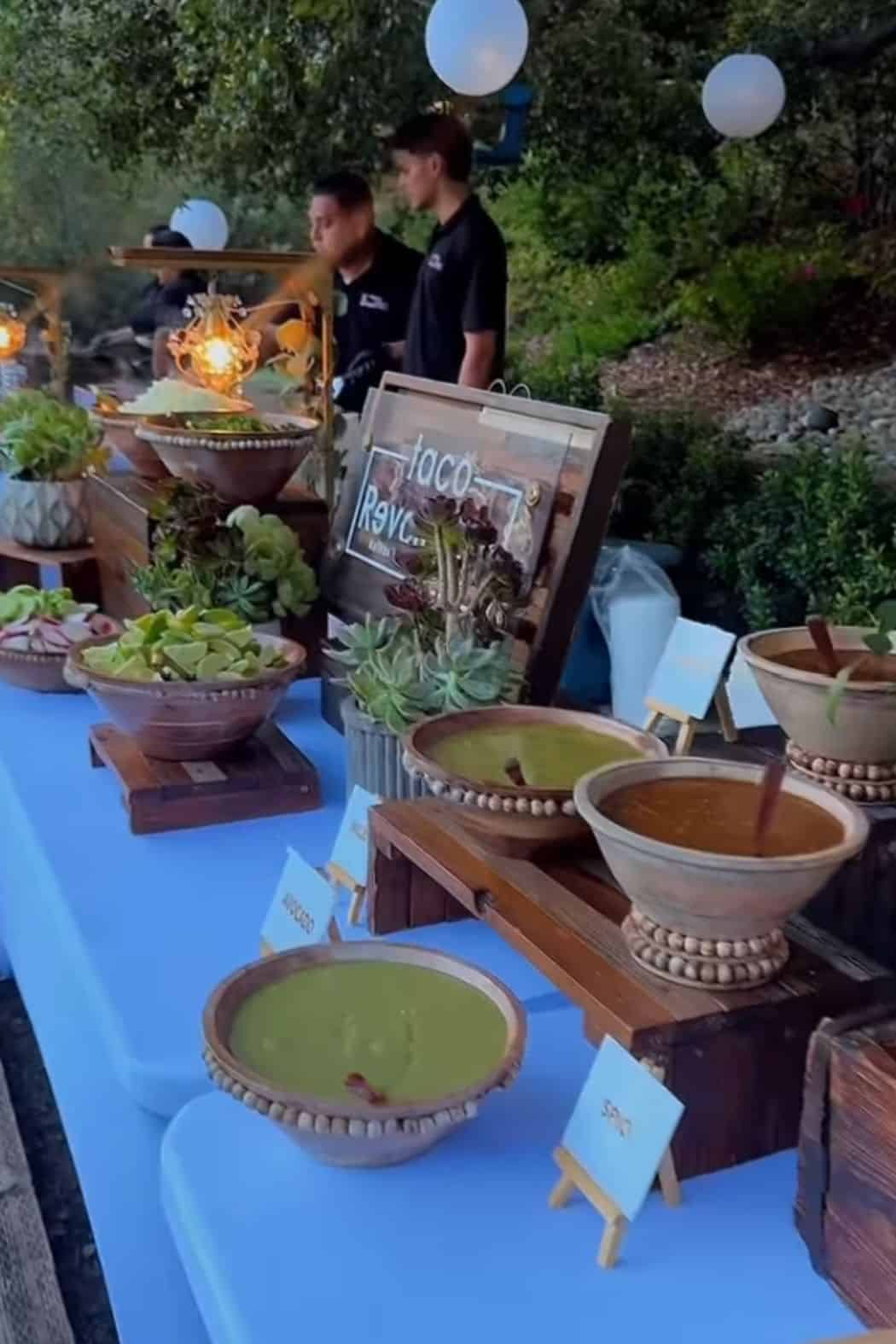
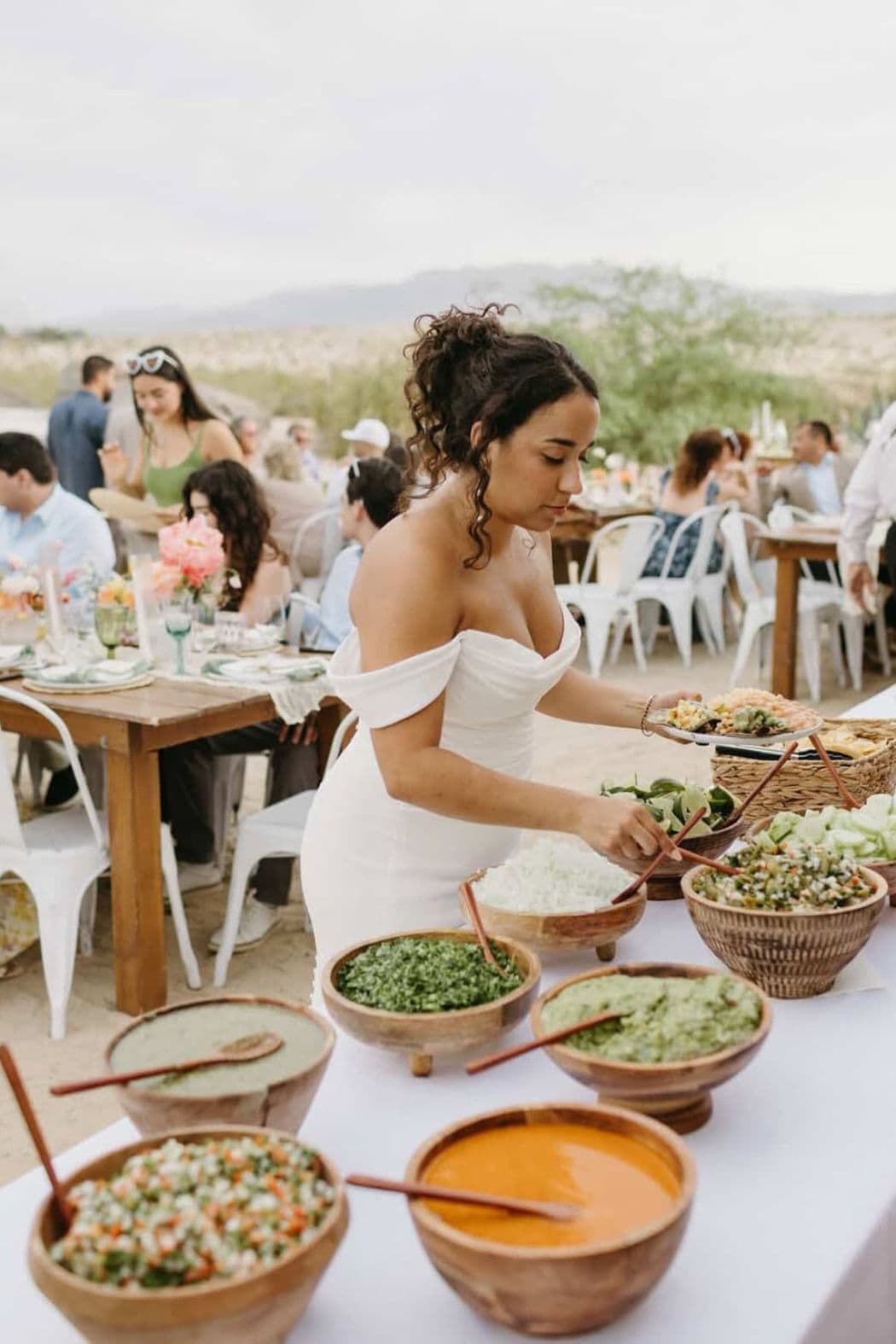
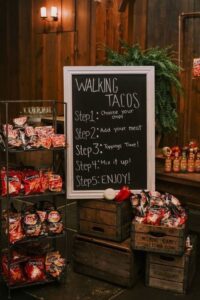
Taco stations are one of the most popular wedding food choices because they’re familiar, flexible, and easy for guests to enjoy while standing or mingling. Tacos can be served build-your-own, where guests choose fillings and toppings, or partially assembled by staff to keep things moving and avoid mess. With a mix of proteins, fresh toppings, and sauces, taco stations cater well to different tastes and dietary needs while keeping the atmosphere relaxed and social. They work especially well for casual, modern, and city weddings where food is meant to feel informal but intentional.
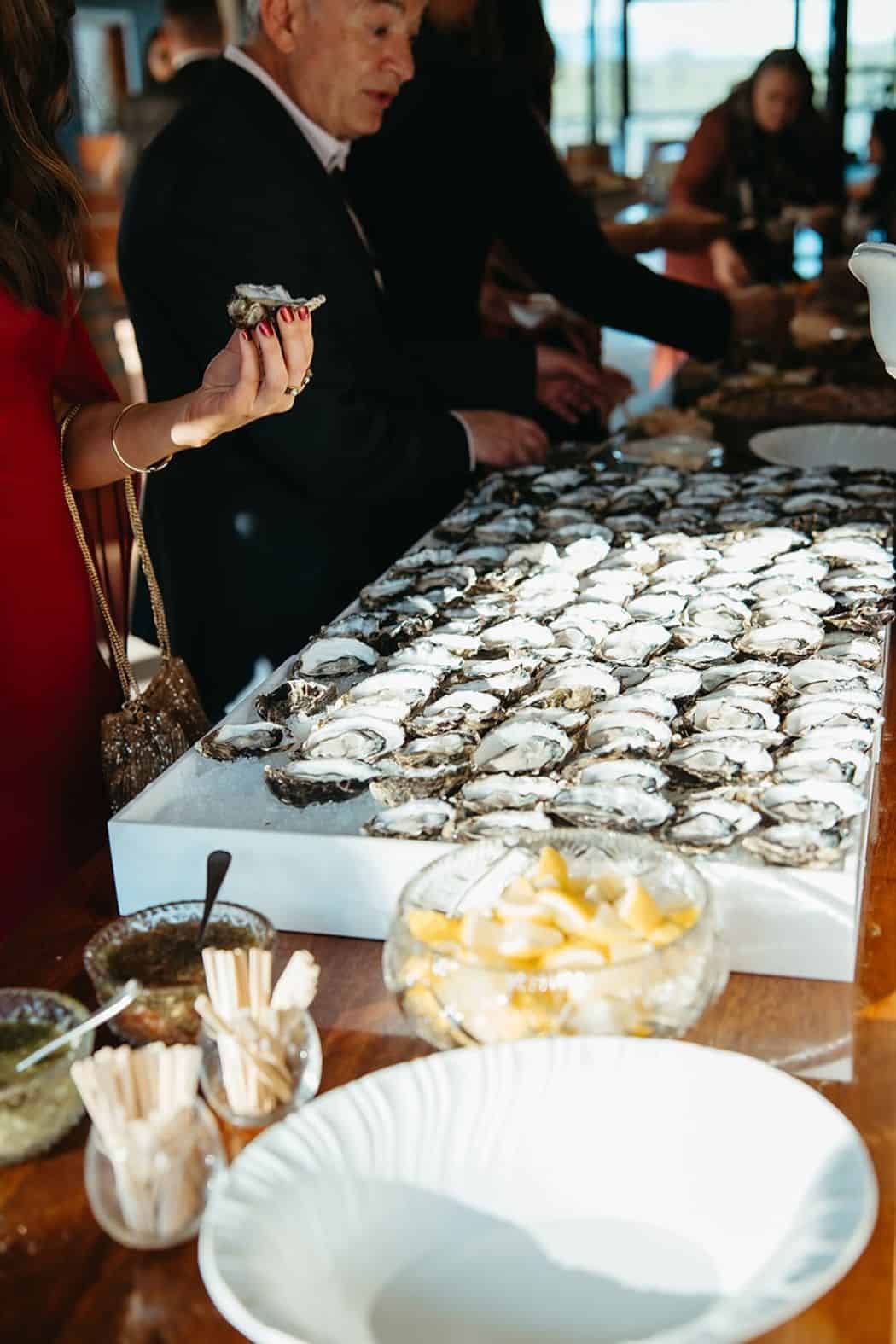
5. Raw Seafood & Oyster Bars
Raw seafood and oyster bars are being used as statement food stations that instantly elevate the reception. They’re especially popular for urban venues, coastal locations, and couples who want one standout food moment alongside simpler options elsewhere. These stations feel luxurious without needing a full plated service and are often remembered as one of the most distinctive parts of the day.
Interactive Chef-Led Food Stations
6. Sushi Preparation Stations
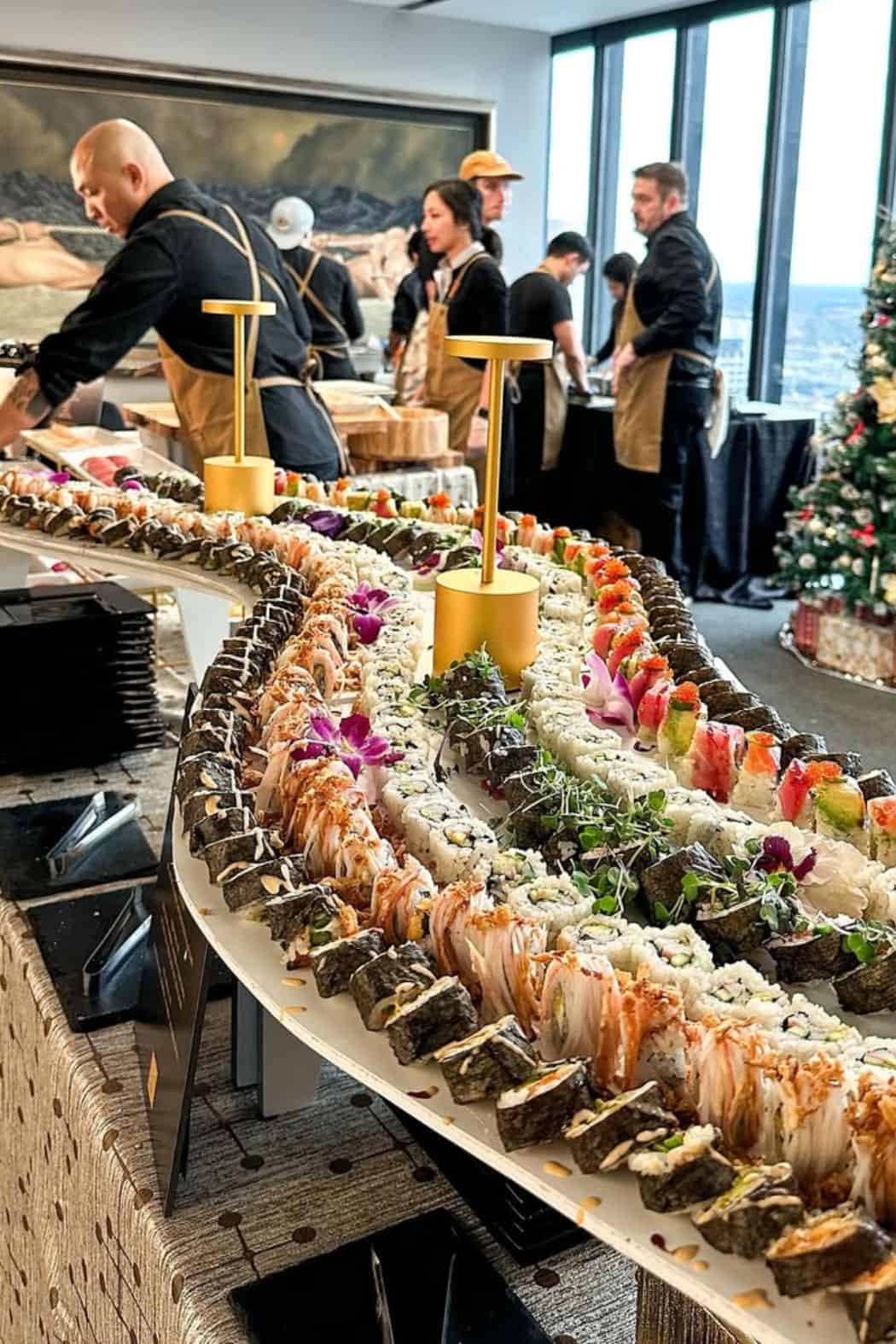
Sushi preparation stations add a sense of theatre without feeling overdone. Chefs prepare rolls or plates fresh in front of guests, which keeps the station feeling calm and intentional rather than messy or rushed. These work particularly well for modern, city weddings where couples want something a little more design-led and refined, and they’re often paired with simpler food elsewhere so this station can stand out.
7. Crepe or Pancake Stations
Crepe and pancake stations are a versatile option that works for brunch weddings, relaxed receptions, or late-night dessert moments. Guests choose sweet or savoury fillings while chefs cook to order, which keeps food fresh and avoids trays sitting out too long. The live cooking element makes this feel more like an experience than a standard dessert table.
8. Carving Stations
Carving stations bring a more traditional food idea into a modern format. A chef carving meat to order feels elevated and interactive without requiring guests to sit down for a formal meal. These stations suit couples who want something substantial and familiar, but still presented in a way that feels deliberate and well thought out rather than old-fashioned.
9. Made-to-Order Specialty Stations
Made-to-order specialty stations cover anything where guests choose their components and a chef assembles the final dish in front of them. This could be regional or cuisine-specific, but the key appeal is personalisation combined with live preparation. These stations feel bespoke, reduce food waste, and give guests a clear reason to engage rather than just queue and move on.
Build-Your-Own Wedding Food Stations
10. Mac & Cheese Bars
Mac and cheese bars are a modern comfort-food favourite that feels nostalgic without being childish. A simple, well-made base is paired with a small range of elevated toppings so guests can customise without the station becoming overwhelming. This works especially well for evening receptions or relaxed weddings where food is meant to feel indulgent, familiar, and satisfying.
11. Mashed Potato Stations
Mashed potato stations are an unexpected but very practical option, particularly for colder months. Guests choose from a base of classic or sweet mashed potato and add toppings to suit their taste. It’s filling, easy to eat standing up, and feels comforting in a way few other stations manage, making it ideal for late-evening service without being branded as “midnight food.”
12. Poke Bowl Bars
Poke bowl bars offer a fresh, modern alternative to heavier food stations. Guests build bowls starting with a base such as sushi rice, brown rice, quinoa, or mixed greens, then add sashimi-grade fish, vegetables, and sauces. This station works particularly well for summer weddings or couples looking for something lighter but still visually appealing and interactive.
13. Build-Your-Own Brunch Stations
Build-your-own brunch stations are most commonly used for daytime weddings or next-day celebrations. Options like bagel bars or breakfast biscuit stations allow guests to customise their food while keeping service relaxed. This style of station suits informal timelines and social, drop-in eating.
Grazing & Charcuterie Style Stations
14. Charcuterie as a Full Station
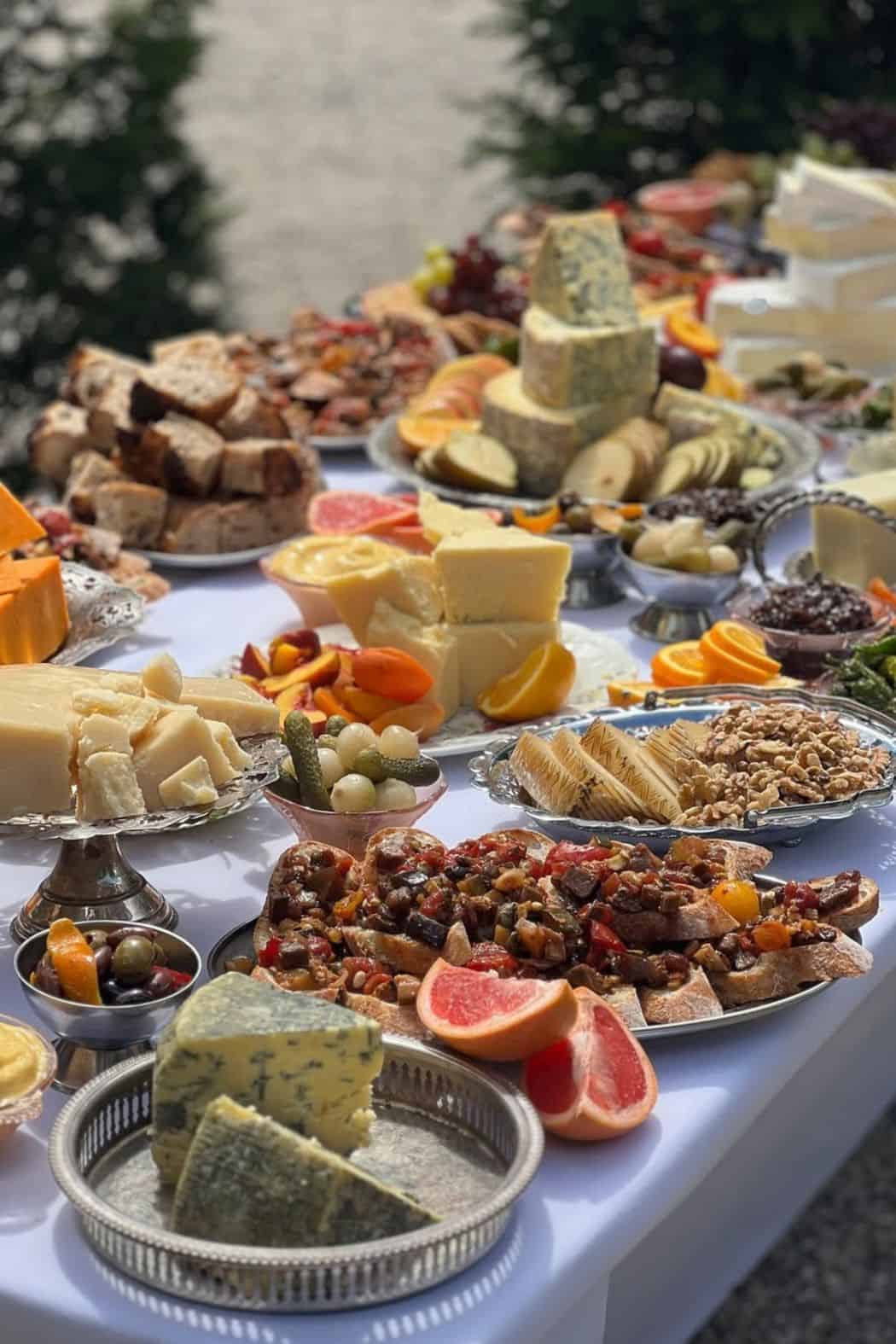
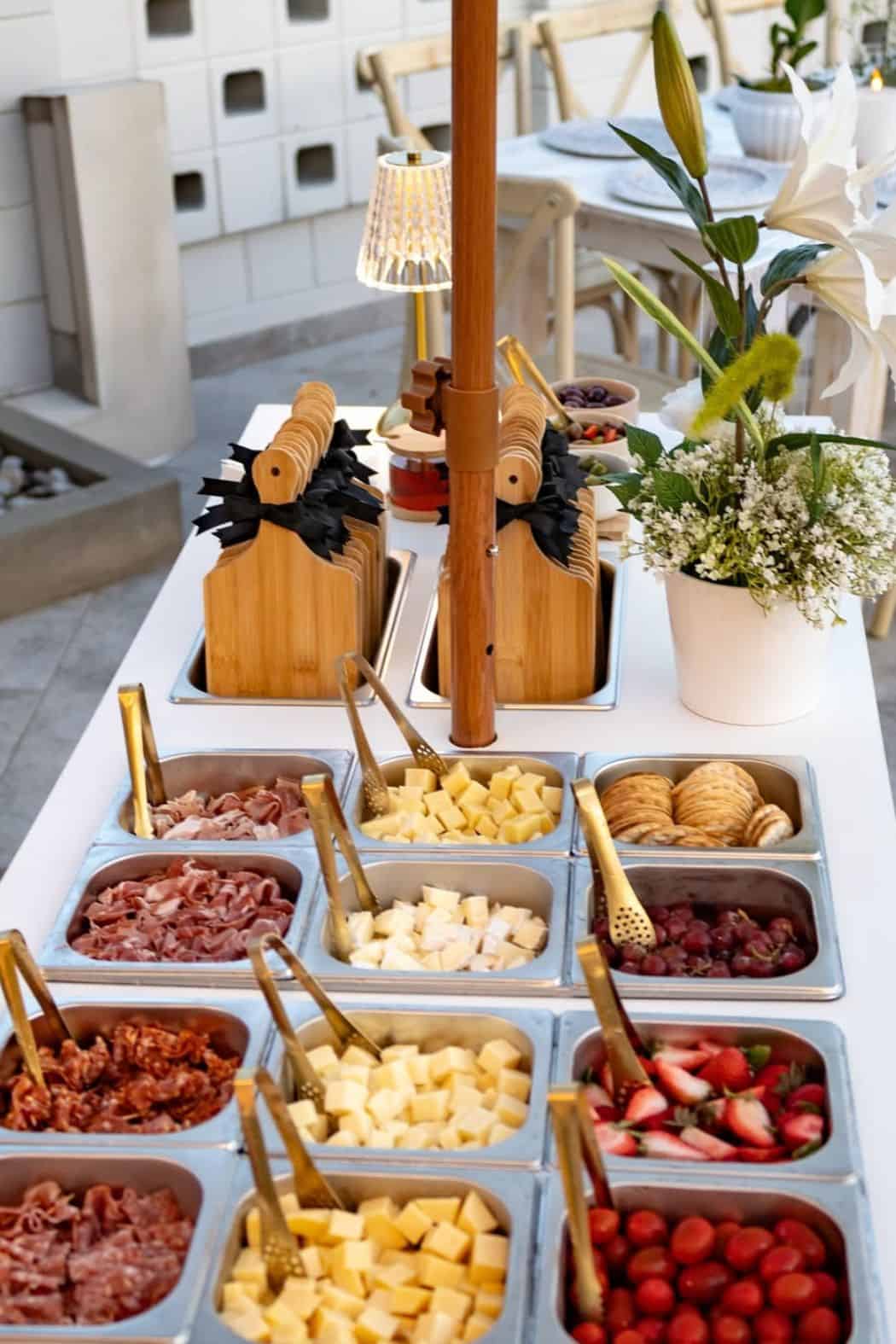
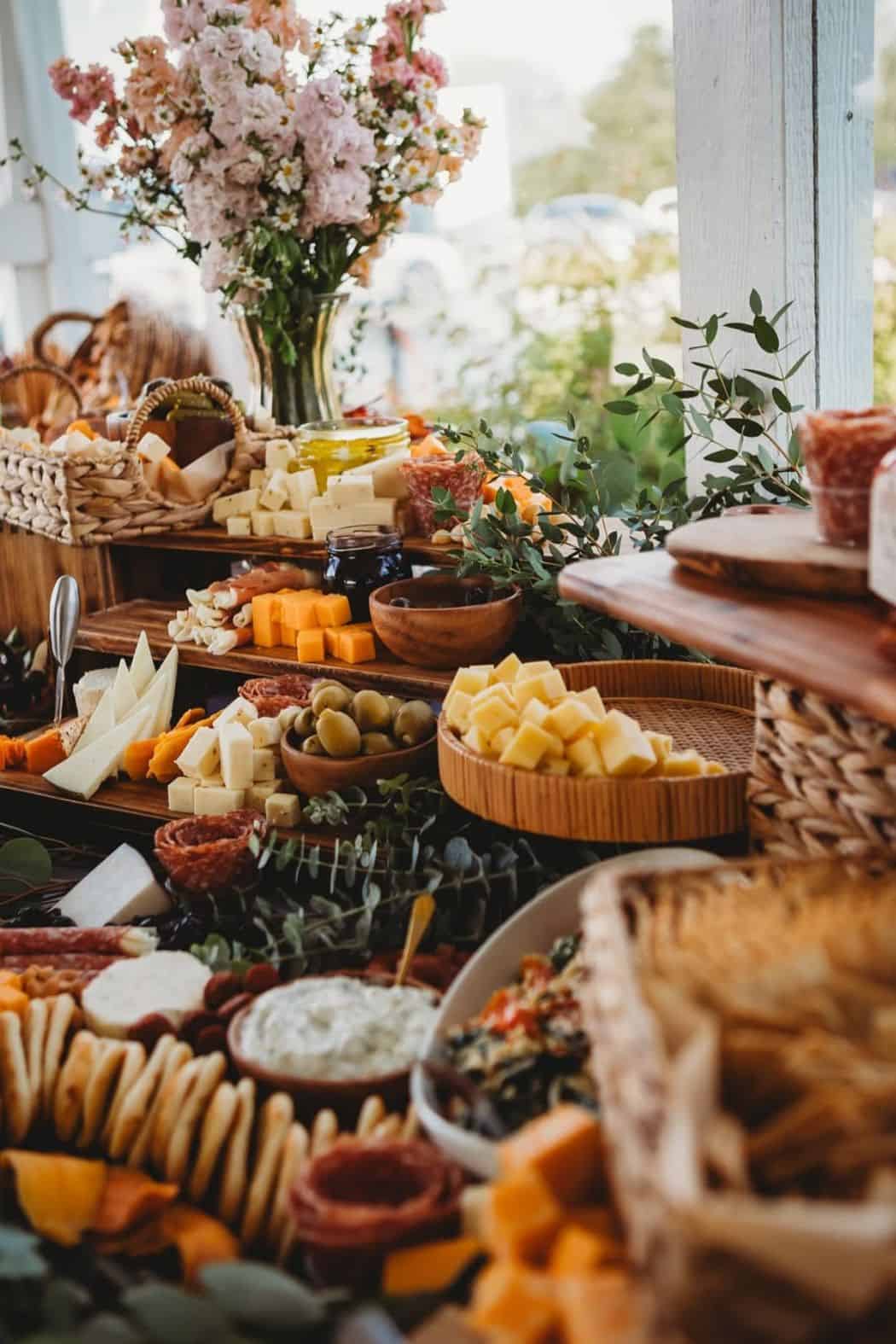
Charcuterie has moved beyond small boards and is now being used as a dedicated food station where guests can help themselves throughout the reception. Instead of one oversized display, this works best when designed with clear sections for meats, cheeses, bread, and accompaniments so it feels intentional rather than picked over. It’s a strong option for couples who want flexible eating without committing to a full hot food moment.
15. Grazing Tables as Décor
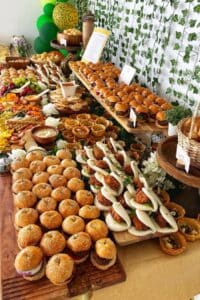
Grazing tables blur the line between food and styling. When done well, they act as a visual focal point as much as a catering choice, encouraging guests to mingle and snack at their own pace. These tables are usually designed to stay out for a longer period, making them ideal for cocktail-style weddings or as a supplement to other food stations rather than the main meal.
16. Antipasto Stations
Antipasto stations take the grazing concept and give it more structure. With cured meats, cheeses, marinated vegetables, olives, and bread laid out in a considered way, this feels more deliberate than casual grazing while still keeping things relaxed. It works particularly well for evening receptions where guests want something savoury without needing a full plate.
17. Mediterranean Mezze Stations
Mezze stations focus on smaller dishes that guests can mix and match, creating a sociable and shareable food experience. Dips, flatbreads, vegetables, and salads allow guests to build a light plate or return multiple times, which makes this a good option for longer receptions. It suits couples who want food that feels generous, flavour-led, and easy to enjoy while standing or moving around.
Seafood & Raw Bars
18. Raw Seafood & Oyster Bars
Raw seafood and oyster bars are one of the most visually striking food stations and are especially popular for coastal, waterfront, and upscale weddings. These stations typically feature oysters, clams, and chilled shrimp served on ice, allowing guests to graze throughout the reception. The appeal lies in the luxury feel combined with a relaxed, help-yourself format that doesn’t require a formal sit-down meal.
19. New England Clam Bake Stations
New England clam bake stations offer a more substantial seafood option while still keeping things informal. Lobsters, clams, and corn on the cob are served together, often pre-prepped or partially shelled to reduce mess for guests. This style of station works particularly well for outdoor or destination weddings and has also inspired the rise of mini lobster roll stations as a more manageable alternative.
20. Seafood Stations or Seafood Tables
Seafood stations or full seafood tables showcase a broader spread, often including oysters, prawns, and ceviche displayed on ice. These stations are commonly used as a focal food moment rather than the main source of catering, pairing well with simpler food elsewhere. They suit venues where presentation plays a big role and guests are encouraged to move, mingle, and sample.
Comfort Food Stations with a Twist
21. Rustic Pizza Stations
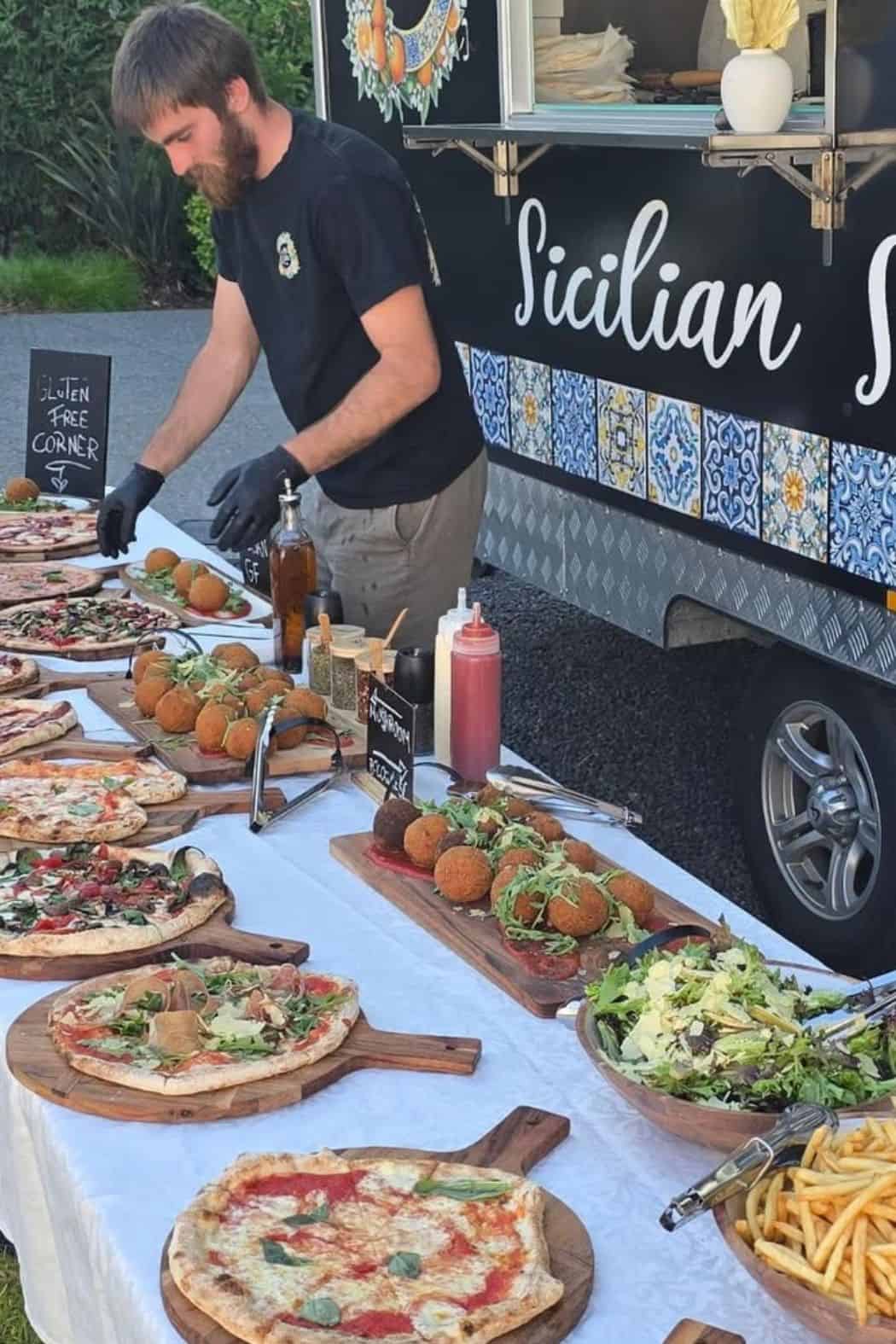
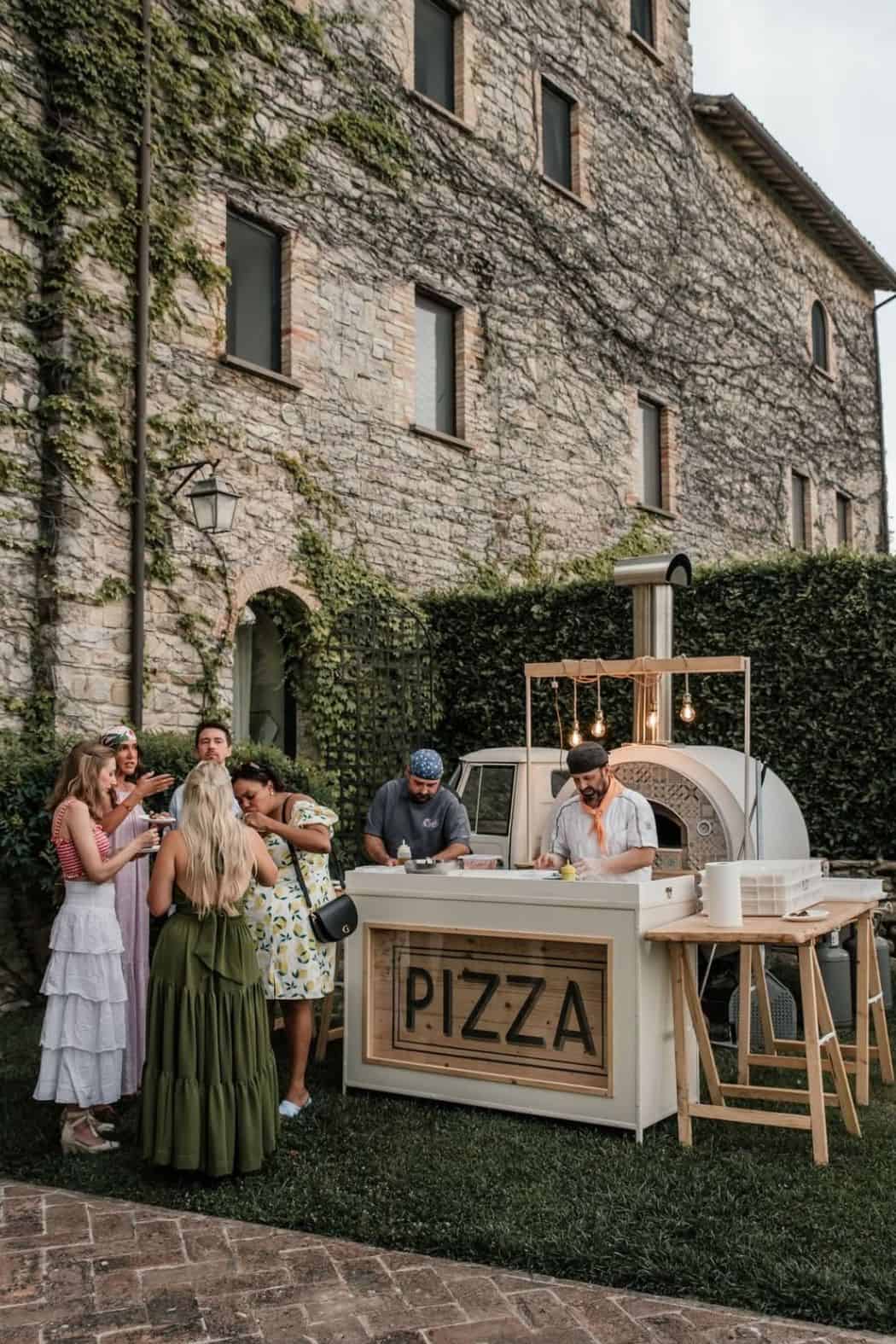
Rustic pizza stations bring a relaxed, crowd-pleasing option into a more intentional format. Instead of trays of sliced pizza, these stations usually focus on a smaller selection of well-chosen toppings served on individual or shareable pizzas. They’re easy to eat, familiar without feeling basic, and work well for couples who want comfort food that still feels considered and stylish.
22. Southern Comfort Food Stations
Southern comfort food stations centre on nostalgic dishes served in a relaxed, social format. Fried chicken and waffles, shrimp and grits, biscuits, and fried green tomatoes create a down-home feel while still fitting neatly into a station-style setup. This style suits couples who want hearty, recognisable food without a formal sit-down meal.
23. BBQ & Carving Stations
BBQ and carving stations combine comfort food with live service. Brisket, pulled pork, hamburgers, and BBQ chicken are served fresh, often with simple sides such as corn on the cob, mac & cheese, and coleslaw. This format works particularly well for outdoor or more informal venues and can also be adapted into a BBQ food truck for a relaxed wedding atmosphere.
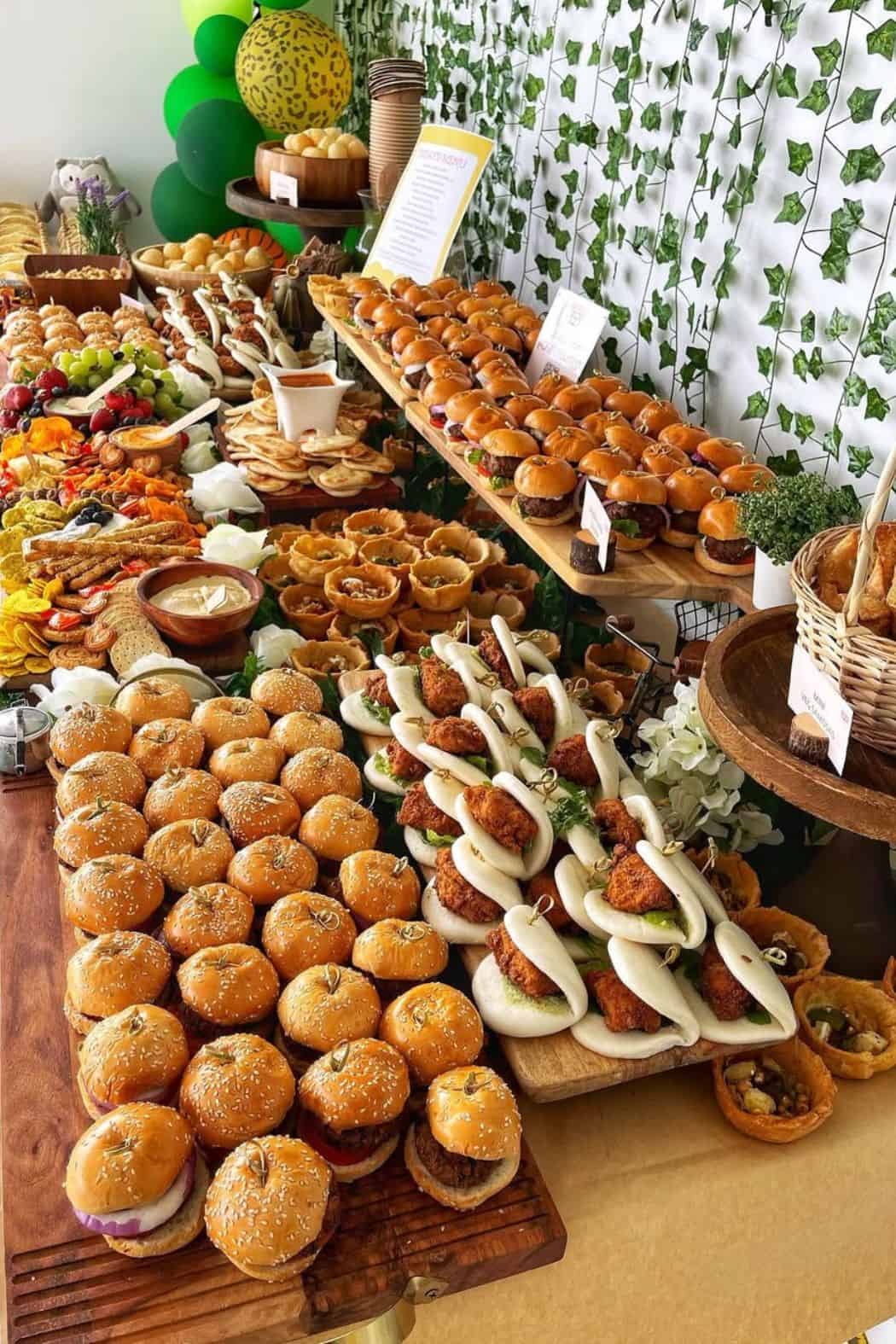
24. Slider Stations
Slider stations feature mini burgers, meatball sliders, or brisket sliders served in smaller portions. This keeps food easy to eat while standing and allows guests to grab something filling without committing to a full meal. Slider stations work well for social receptions where guests are moving between the dance floor and food areas.
Plant-Forward & International Food Stations
25. Plant-Forward Menus & Foraged Ingredient Stations
Plant-forward food stations are no longer a niche choice and are becoming a core part of modern wedding catering. These stations focus on vegetables, grains, mushrooms, herbs, and seasonal produce rather than centring meat, creating food that feels intentional and inclusive. The appeal is that these menus are designed for all guests, not just vegetarians, with flavour-led dishes that feel considered, modern, and aligned with how people actually eat now.
26. Bibimbap or Korean-Inspired Rice Bowl Stations
Bibimbap-style stations bring structure and bold flavour to international food stations. Guests build bowls using rice, sautéed vegetables, sauces, and optional proteins, creating something filling without feeling heavy. This style of station works especially well for modern weddings that want globally inspired food presented in a clean, organised, and guest-friendly way.
27. Açaí Bowl & Avocado Toast Stations
Açaí bowl and avocado toast stations are a popular choice for daytime, brunch, or recovery-style wedding events. Guests customise bowls or toast with fresh fruit, nuts, seeds, and savoury toppings, making this a lighter station that still feels interactive. These stations suit couples who want food to feel fresh, current, and aligned with wellness-forward trends without becoming overly themed.
28. Global Street-Food Inspired Stations
Global street-food stations reflect the growing popularity of international flavours served in relaxed, informal formats. Rather than focusing on one cuisine, these stations highlight familiar favourites from different cultures, allowing guests to build plates or grab small portions throughout the event. They’re ideal for couples who want food that feels energetic, social, and reflective of travel or shared experiences.
29. Mediterranean, Tapas & Mezze Stations
Mediterranean and tapas-style stations centre on small plates that encourage sharing and repeat visits. With cheeses, vegetables, breads, and flavour-led dishes, these stations feel generous without being heavy. Mezze stations in particular work well for longer receptions, offering guests flexibility to eat little and often while keeping the atmosphere relaxed and social.
Beverage Stations
30. Hot Chocolate & Coffee Bars
Hot chocolate and coffee bars give guests a dedicated drinks moment they can return to throughout the reception. Hot chocolate stations typically include classic toppings such as marshmallows, flavoured syrups, and candy canes, while coffee bars focus on espresso-style drinks. Adult add-ins like Baileys or Kahlúa can be offered for guests who want something a little stronger.
31. Spiked Toddies, Buttered Rum & Mulled Wine Stations
Warm cocktail stations featuring drinks such as hot toddies, buttered rum, mulled wine, or spiced cider add variety to the bar offering without replacing it. These drinks are served ready-made or assembled at a station, allowing guests to help themselves or sample something different from standard cocktails.
32. Chai Tea & Matcha Latte Stations
Chai tea and matcha latte stations offer an alternative to coffee that still feels considered and current. Guests can choose from spiced chai or matcha-based drinks prepared with milk or plant-based alternatives. This type of station appeals to guests who prefer non-coffee options while still fitting into a modern drinks setup.
33. Beer Flights or Cocktail Flight Stations
Beer and cocktail flight stations turn drinks into an interactive experience. Beer flights allow guests to sample multiple craft or local brews in smaller pours, while cocktail flight stations or Bloody Mary bars offer a similar build-your-own feel. These stations work well during cocktail hour or as a feature bar alongside standard drinks service.
Sweet Treat Stations
34. S’mores Stations
S’mores stations are a popular late-evening option that combines dessert with interaction. Guests roast marshmallows themselves and build their own combinations using graham crackers and a selection of chocolates. This type of station works well as an alternative to plated desserts and is often paired with other late-night sweet options such as churros or hot chocolate.
35. Fondue Stations
Fondue stations offer an unexpected twist on traditional wedding desserts. Cheese fondue can be served with bread and vegetables, while chocolate fondue allows guests to dip fruit, cake pieces, or pastries. This format feels social and encourages guests to gather and linger rather than quickly grabbing a single dessert.
36. Dessert Bars or Cupcake Tables
Dessert bars and cupcake tables give guests variety without replacing the main wedding cake. Mini cupcakes in different flavours and frostings are easy to serve and portion, while additional options such as berry tartlets add visual interest and choice. These stations often act as both dessert and décor.
37. Chocolate-Covered Candy Stations
Chocolate-covered candy stations focus on bite-sized treats presented in a visually striking way. Items like popcorn, pretzels, truffles, and assorted candies coated in white, milk, or dark chocolate allow guests to mix and match small portions. This type of station works well when couples want dessert available over a longer period rather than served all at once.
38. Gelato or Ice Cream Stations
Gelato or ice cream stations offer a fresh alternative to traditional desserts. Scooped-to-order service keeps the station feeling premium, and some caterers use roaming sundae carts to bring the dessert directly to guests. This option works particularly well for couples who want something playful but still polished.
39. Donut Walls and Pretzel Bars
Donut walls are a visually impactful way to serve a familiar dessert, doubling as a styling feature and food station. Pretzel bars offer a similar appeal, with large soft pretzels served alongside dips such as mustard, cheese, or Nutella. Both options are easy for guests to grab and enjoy throughout the evening.
40. Mini Desserts with Coffee or Espresso
Mini dessert stations paired with coffee or espresso create a more refined late-evening option. Small pastries such as mini éclairs served alongside miniature coffee cups encourage guests to slow down and enjoy a final sweet moment. This setup works well when couples want dessert to feel intentional rather than overly casual.
Tips for Executing Food Stations
Food stations work best when they’re planned with guest flow, timing, and presentation in mind. These practical considerations help ensure stations feel intentional and enjoyable rather than chaotic or crowded.
Strategic layout and flow
Place stations throughout the venue rather than grouping them together. This encourages guests to move around and helps prevent bottlenecks. Clear signage and visible allergen labels make it easier for guests to navigate the options without needing to ask staff.
Work with experienced caterers
Professional caterers play a key role in making food stations run smoothly. They manage food safety, keep items at the correct temperature, and maintain presentation as the event progresses. Caterers can also adapt menus for dietary requirements and advise on staffing levels.
Portion control matters
Smaller portions allow guests to sample multiple stations without feeling overwhelmed. Using bite-sized servings, small plates, or cups helps reduce waste and keeps food easy to eat while standing or moving around the venue.
Treat stations as part of the décor
Food stations should feel like a deliberate part of your wedding design. Incorporating florals, coordinated signage, and thoughtful props helps them blend seamlessly into the space. Creative presentation, such as tiered stands or simple garnishes, adds visual interest without overcomplicating things.
Use food to tell a story
Stations are an opportunity to reflect your background, travels, or shared experiences. Choosing dishes that have personal meaning and adding simple menu descriptions helps turn food into part of the overall story of the day, making the experience more memorable for guests.
More blogs you will love!
- 30 Unique Wedding Ideas Trending in 2026
- Alternative Wedding Towers (Beyond Champagne)
- Wedding Snack Bar Ideas You’ll Wish You’d Thought Of First
- Unique Wedding Food Ideas for 2026 Weddings!
- Late-Night Wedding Snack Ideas That Actually Keep the Party Going
- 35 Trending Wedding Cake Ideas for 2026

- Who Pays for What Now? Money Scripts for Modern Families

- Seating Plans When Your Family Isn’t “Traditional”

- 30 Unique Wedding Venues in Manchester for Modern Couples