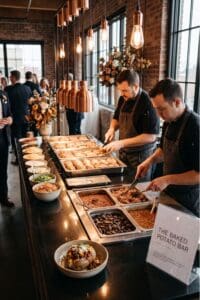
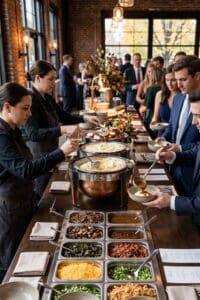
A mac and cheese bar can be the main meal at a relaxed wedding, one station within a larger reception menu or a late-night snack served once dancing starts. It also works well for rehearsal dinners, welcome parties, showers and smaller backyard events.
The idea is simple, but a successful station needs more planning than setting out a tray of mac and cheese with several bowls of toppings. The pasta has to stay creamy, hot ingredients need to be held and replenished properly, and the layout needs to let guests build a bowl without creating a slow, messy queue.
Below are plenty of mac and cheese bar ideas, followed by the practical details you need to turn the inspiration into a station that will actually work at your event.
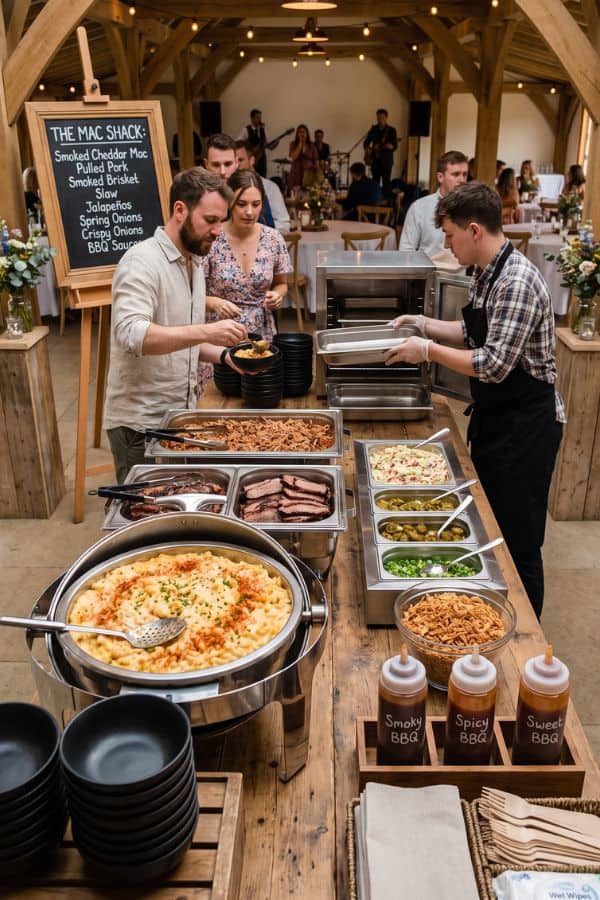
1. Decide How the Mac and Cheese Bar Will Fit Into Your Event
Decide where the bar sits within the wider menu before choosing flavours or toppings. Its purpose will determine how much food you need, how guests will eat it and whether self-service is realistic.
As the main meal
A mac and cheese bar can be the main reception meal, but it needs to feel like a complete dinner rather than a bowl of pasta with garnishes. Include at least two substantial proteins, a filling vegetarian option, vegetables and a fresh side such as slaw or salad.
For a full meal, serve the mac and cheese in proper dinner bowls or plates with a deep centre. You may also want two mac flavours: one familiar option, such as classic cheddar, and one more distinctive choice, such as smoked Gouda or white cheddar.
As one wedding food station
Mac and cheese works particularly well as one part of a multi-station menu alongside BBQ, sliders, tacos, roasted vegetables or salads. Guests take a smaller portion from each station, so the mac bar does not need a large number of meats and toppings to feel generous.
This is one of the easiest ways to include the idea at a larger wedding. It gives guests the fun of building their own bowl without asking one rich dish to carry the whole meal.
As a late-night snack
For late-night food, serve small portions in sturdy cups or compact bowls that guests can hold comfortably. Keep the menu tight: one mac and cheese, one protein, a vegetarian topping, something crunchy and two sauces will usually be enough.
Choose toppings that can be added quickly and eaten while standing. Pulled pork, chopped bacon, crispy onions, spring onions and hot sauce work better than large pieces of steak or toppings that require a knife.
During cocktail hour
Mini mac and cheese cups or tasting bowls can work during cocktail hour, especially at a fall or winter wedding. Portions need to be small, neat and easy to eat in a few bites.
A staffed station is usually the better choice here. A server can portion the mac and a main topping, then guests can add one sauce or garnish. This prevents people from trying to balance a drink while serving themselves from several dishes.
2. Mac and Cheese Bar Ideas for Weddings and Events
The best inspiration is not just a different sign or table style. Each of these ideas has its own mac and cheese base, toppings and serving format, so you can choose one that makes sense for your event and wider menu.
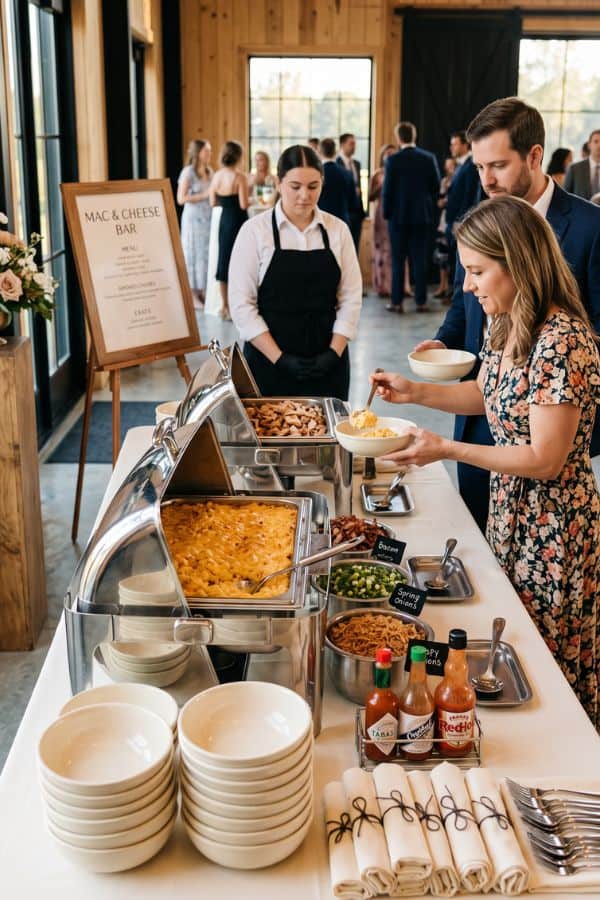
1. Classic Southern Mac and Cheese Bar
Start with rich baked cheddar mac and cheese and offer pulled chicken, chopped smoked bacon, spring onions, crispy onions, extra grated cheese and hot sauce. Add collard greens, smoky beans or roasted broccoli if the bar is serving as the main meal.
Instead of keeping a thick breadcrumb crust on the pasta, serve toasted crumbs separately so every batch stays easy to portion. For the setup, use a proper heated serving dish for the mac, smaller hot dishes for the meat and matching containers for the cold toppings.
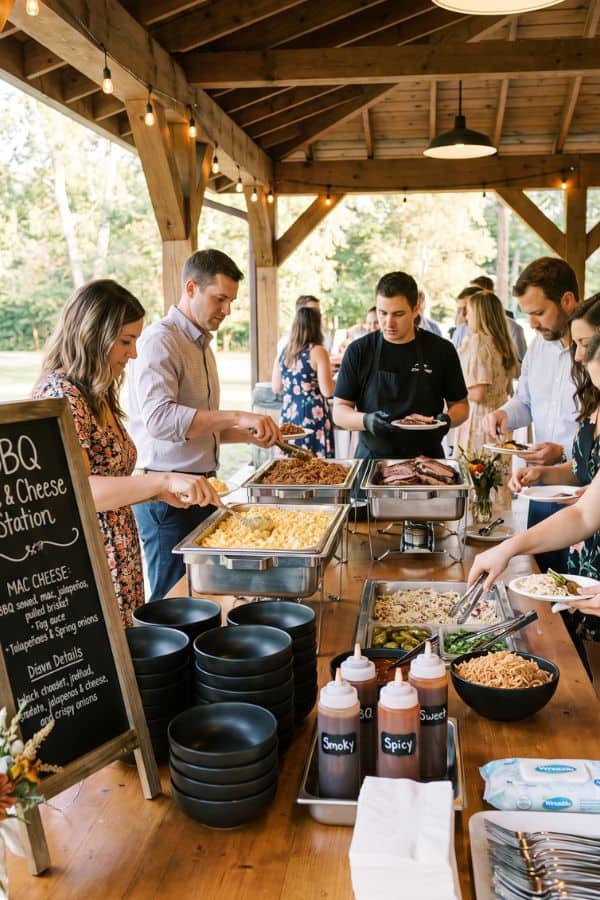
2. BBQ Mac and Cheese Bar
Pair classic cheddar or smoked Gouda mac with pulled pork, chopped brisket or BBQ chicken. Pickled jalapeños, slaw, crispy onions, sweetcorn and a choice of smoky, spicy and mustard-based BBQ sauces give guests enough variety without needing a huge topping selection.
If BBQ is already the main meal, choose one meat for the mac station rather than repeating every protein on the buffet. A server can add the meat after the mac, with guests adding the smaller toppings and sauces themselves. This controls portions and prevents the most expensive dish from disappearing first.
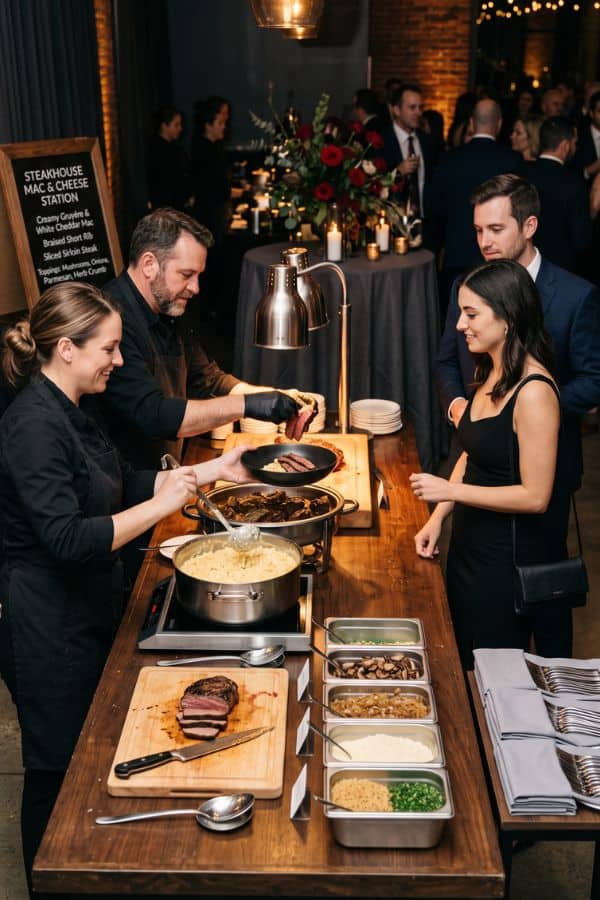
3. Elevated Steakhouse Mac and Cheese Station
Use white cheddar, Gruyère or Parmesan mac and cheese with braised short rib or thinly sliced steak. Add sautéed mushrooms, caramelised onions, herb breadcrumbs, chives and a peppercorn or garlic sauce.
This version suits a modern city wedding, industrial venue or formal evening reception. It works best as a staffed station with small ceramic bowls: the server portions the mac and beef, then guests choose two or three finishes. The result still feels interactive, but the station remains polished and the steak is divided fairly.
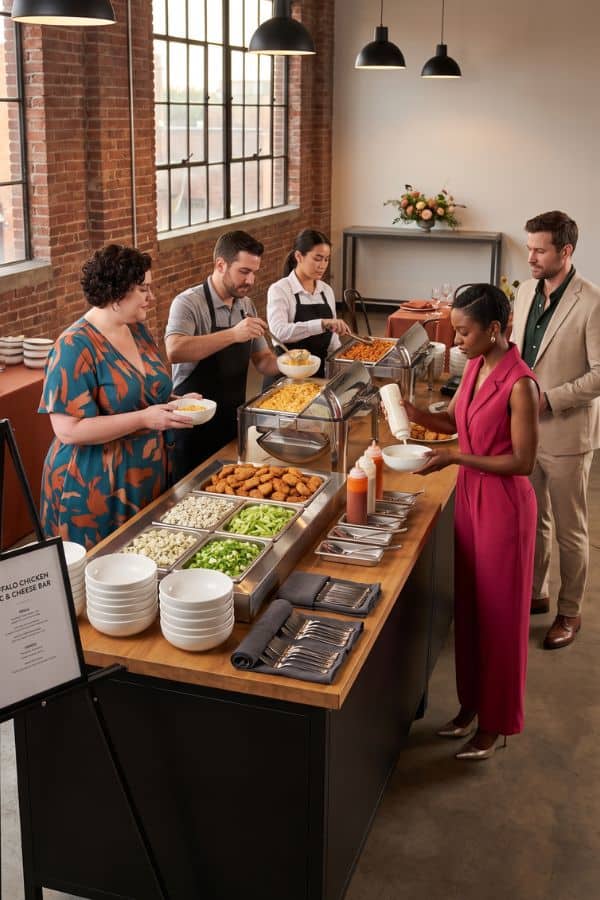
4. Buffalo Chicken Mac Bar
Keep the mac and cheese itself mild, then let guests add buffalo chicken, crumbled blue cheese, spring onions, finely chopped celery, ranch, buffalo sauce and crunchy chicken pieces. Offer plain roasted or crispy chicken as well if this is a main station, so guests who dislike spice still have a substantial option.
Put the sauces at the end of the line and use squeeze bottles or controlled dispensers rather than open bowls with ladles. Buffalo sauce can quickly spread across the table, while too much ranch can turn the pasta thin.
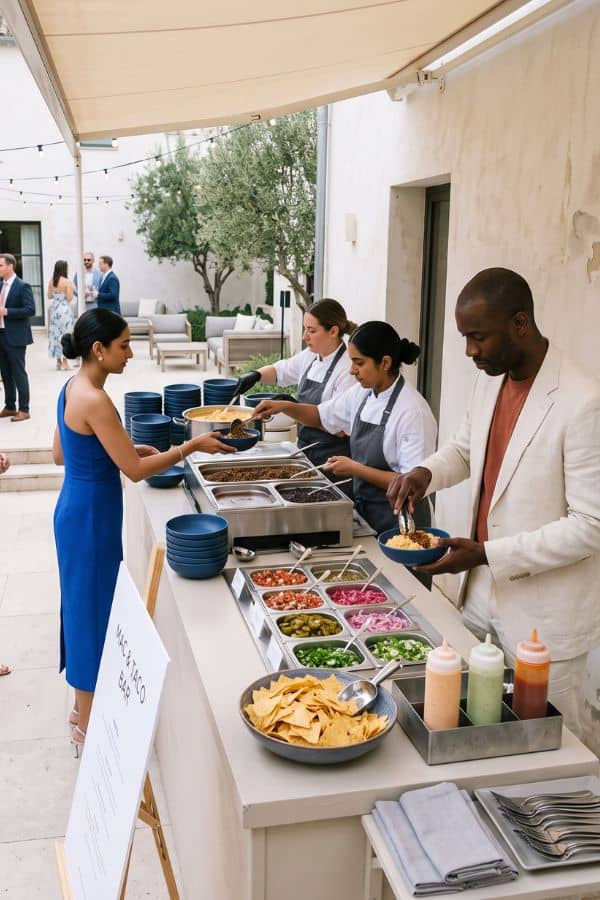
5. Taco-Inspired Mac and Cheese Bar
Use classic cheddar or a mild pepper Jack mac with seasoned beef, shredded chicken or smoky black beans. Add drained pico de gallo, pickled red onions, jalapeños, spring onions, crushed tortilla chips, coriander and chipotle sauce.
Avoid treating it like a full taco bar. Guacamole, salsa, sour cream and fresh tomatoes are all wet toppings; offering all of them can make the mac watery and the station messy. Choose one fresh topping, one creamy sauce and a few dry finishes instead.
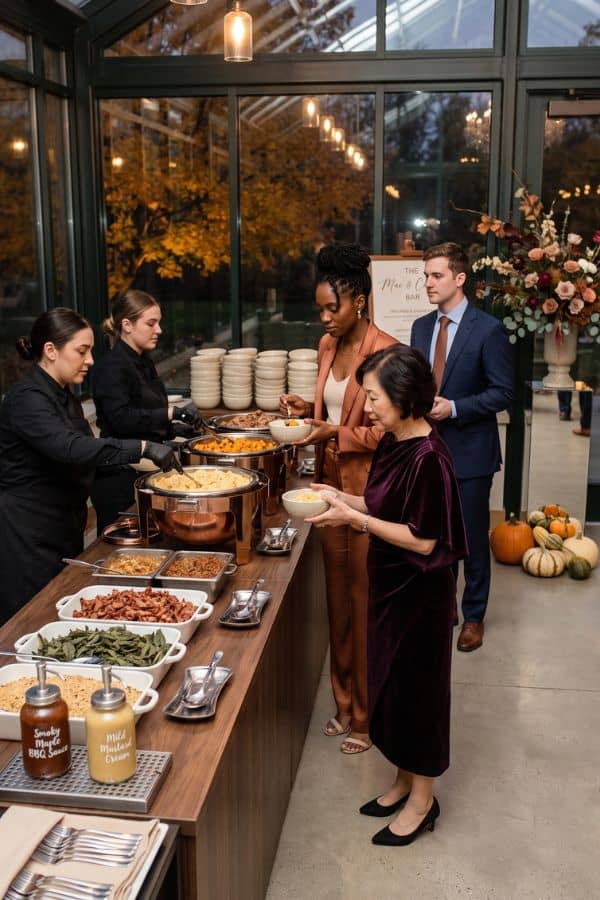
6. Fall Wedding Mac and Cheese Bar
Smoked Gouda mac and cheese makes a strong base for pulled pork, roasted squash, caramelised onions, bacon, crispy sage and toasted garlic crumbs. For a vegetarian version, use sautéed mushrooms or maple-spiced chickpeas in place of the pork and bacon.
Bring the season into the flavour rather than surrounding the food with miniature pumpkins. Warm-toned linen, dark ceramic serving bowls and a simple fall menu board will give the station a seasonal look without reducing the usable serving space.
7. Winter Wedding Comfort Food Bar
Serve extra-creamy white cheddar mac with braised beef, roasted mushrooms, crispy leeks, chives and herb breadcrumbs. It can sit alongside soup, warm bread and a sharp winter salad as part of an indoor comfort-food menu.
Plan this as a clearly defined hot station rather than a long mixed buffet. Keep cold garnishes at the end, away from the heated dishes, and replenish the pasta in smaller batches so the top does not dry while guests are eating dinner.
8. Gourmet Truffle Mac and Cheese Station
Choose a Gruyère, Parmesan or white cheddar base, then offer truffle mushrooms, crisp prosciutto, roasted tomatoes, garlic breadcrumbs and finely chopped herbs. Use truffle oil carefully as an optional finish rather than adding a strong amount to the entire batch.
This idea is better as a small tasting station than an unlimited main-meal bar. A server can portion the mac into low, wide bowls and add the guest’s chosen main topping. It feels more considered and stops one strong flavour from dominating the rest of the reception menu.
9. Vegetarian Mac and Cheese Bar
Build the menu around toppings that are genuinely satisfying: roasted broccoli, garlic mushrooms, caramelised onions, crispy chickpeas, roasted peppers and smoky beans. Add pesto, chilli oil, toasted breadcrumbs and Parmesan as finishes.
Do not make vegetarian guests combine several tiny garnishes to create a meal. Include at least one hot, filling protein and confirm whether the cheese used in the sauce and toppings is suitable for the guests you are catering for.
10. Vegan and Dairy-Free Mac Bar
A plant-based mac can have its own complete topping menu, with BBQ jackfruit, smoky mushrooms, crispy chickpeas, vegan bacon, roasted vegetables, spring onions and seasoned crumbs. Choose a sauce and pasta combination that has already been tested after hot holding, not only when freshly made.
If it is being served alongside dairy mac and cheese, place it in a separate covered warmer with its own utensils and labels. Ideally, position it on a different section of the station so spoons and toppings are not easily swapped.
11. DIY Backyard Mac and Cheese Bar
For a smaller backyard wedding, shower or birthday event, keep the menu manageable: one classic mac, pulled pork or chicken, smoky beans, bacon, jalapeños, spring onions, crispy onions and two sauces. Six well-chosen toppings will look more intentional than twelve partly filled bowls.
Use electric warmers or chafing dishes on a stable table with safe access to power or fuel. Keep backup batches in the kitchen and assign someone other than the hosts or immediate family to check the station, refill dishes and replace dropped utensils.
12. Modern Minimalist Mac and Cheese Station
Serve one excellent white cheddar mac with two clear topping routes: braised beef with mushrooms and herb crumbs, or roasted broccoli with caramelised onions and chilli oil. A short menu board can show both options while still allowing guests to mix their own.
Use a simple counter or long table with matching heated pans, plain ceramic topping containers and one floral arrangement placed behind or beside the food. Restraint is what makes this setup look modern; there is no need to fill every gap with signs or décor.
13. Mac and Cheese Cup Bar
Pre-portion mac and cheese into sturdy, heat-safe cups, then let guests add pulled chicken, bacon, crispy onions, spring onions or hot sauce. This is a practical option for cocktail hour, late-night food or a venue with limited seating.
Do not fill dozens of cups far in advance and leave them on display. The catering team should portion or release them in small batches so the pasta stays hot and creamy. Include forks that are long enough for the cup and place napkins at the collection point.
14. Mac and Cheese Flight
Offer three small portions, such as classic cheddar with bacon crumbs, smoked Gouda with pulled pork and white cheddar with garlic mushrooms. The toppings should be paired with each flavour rather than presented as one large self-serve selection.
A flight works best as a served course or staffed tasting station. Three separate warmers, clear labels and trays designed to hold the bowls are essential; otherwise, the idea becomes awkward for guests to carry and difficult for the kitchen to replenish.
15. Family-Friendly Mac and Cheese Bar
Use a mild cheddar mac with recognisable toppings such as chopped chicken, bacon, broccoli, grated cheese and breadcrumbs. Position hot sauces, blue cheese and stronger toppings at the far end so children do not have to reach around them.
You do not need to create a separate children’s display. Use the same well-planned station, provide smaller bowls and make sure at least one protein and vegetable are served without spicy seasoning.
3. Choose the Right Mac and Cheese Base
Toppings will not rescue a mac and cheese that has become thick, greasy or dry. Choose the base according to how it will be served, not only how it tastes straight from the oven.
Classic cheddar mac and cheese
Classic cheddar is the safest crowd-pleaser and works with BBQ, buffalo, taco-inspired and family-friendly toppings. A blend of cheeses usually gives a smoother result than relying on one strong mature cheddar.
Smoked cheese mac and cheese
Smoked Gouda or smoked cheddar works well with pulled meats, bacon, mushrooms and fall flavours. Use smoked cheese as part of the blend so the flavour is noticeable without becoming heavy after a few bites.
White cheese mac and cheese
White cheddar, Gruyère and Parmesan create a more polished base for steak, short rib, mushrooms, truffle and herb toppings. This is a good option when you want the station to feel modern rather than rustic.
Spicy mac and cheese
Pepper Jack, chilli or Cajun seasoning can work, but a spicy base limits what guests can do with it. Make it the second flavour or keep the main mac mild and place the heat in the toppings and sauces.
Vegan or gluten-free mac and cheese
Alternative mac and cheese needs to be tested under the same conditions as the main dish. Gluten-free pasta can soften or break during extended holding, while some plant-based sauces thicken considerably as they sit.
Keep separate dietary versions in smaller warmers and replenish as needed. One alternative dish may not cover every requirement: a vegan mac is not automatically gluten-free, and a gluten-free mac may still contain dairy.
Pick a pasta shape that is easy to serve
Elbows, cavatappi and small shells hold sauce well and are easy to spoon into bowls. Very large shapes are harder to portion neatly, while long pasta is completely impractical for a self-serve bar.
For most events, creamy stovetop-style mac holds better than a firm baked version. If you want the flavour and crunch of baked mac and cheese, add toasted crumbs as a topping instead of baking every tray until it has a thick crust.
4. The Best Mac and Cheese Bar Toppings
Choose toppings by category so the menu has substance, freshness, texture and acidity. A long list of similar rich ingredients will make every bowl taste heavy.
Protein toppings
Pulled pork, BBQ chicken, buffalo chicken, braised beef, short rib, chopped bacon, seasoned beef, smoky beans, crispy chickpeas and plant-based BBQ pieces all work well.
Use shredded, chopped or pulled proteins rather than large pieces. They are faster to serve, easier to spread through a bowl and less likely to require a knife.
Vegetable toppings
Roasted broccoli, sautéed mushrooms, caramelised onions, roasted peppers, sweetcorn, roasted squash, spring onions and jalapeños add colour and help balance the cheese sauce.
Cooked vegetables should be well drained. Ingredients that release water as they sit can dilute the sauce and leave liquid collecting at the bottom of the serving dish.
Crunchy toppings
Toasted breadcrumbs, crispy onions, garlic crumbs, crushed tortilla chips, crispy leeks, chopped bacon and crushed crackers add the texture that soft mac and cheese needs.
Keep crunchy toppings in shallow containers away from steam. Put them near the end of the bar and refill in small amounts so they stay crisp.
Cheese and creamy toppings
Grated cheddar, Parmesan, crumbled blue cheese, sour cream, ranch and garlic sauce can all work, but you do not need several on the same menu. Choose one extra cheese and one creamy sauce that fit the theme.
Sauces, pickles and finishing touches
Hot sauce, BBQ sauce, buffalo sauce, chilli oil, pesto, pickled red onions, jalapeños, chives and fresh herbs let guests adjust richness, heat and acidity.
Pickled toppings are particularly useful because mac and cheese is already rich. One sharp or spicy element can do more for the finished bowl than another cheese or meat.
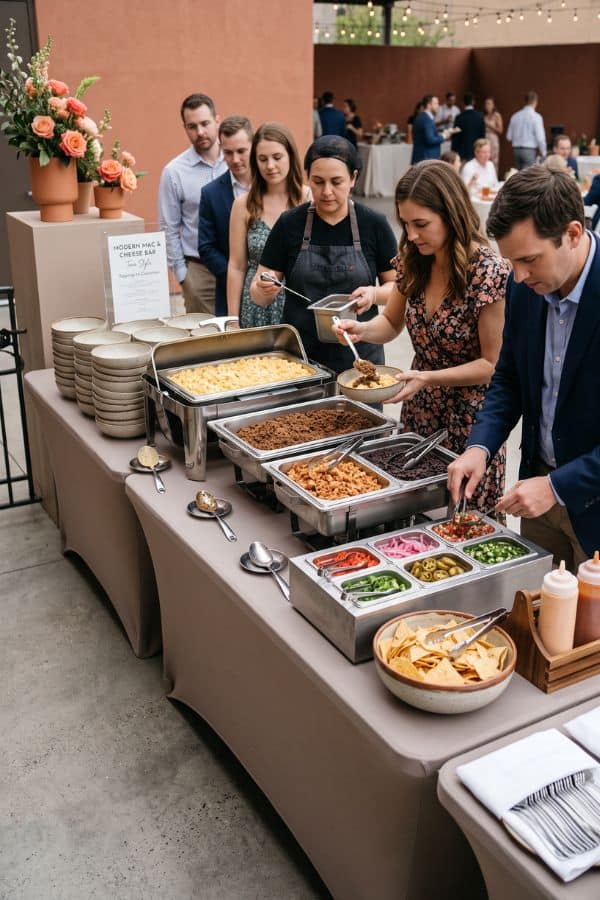
5. How Many Toppings Should You Offer?
More choice does not automatically make a better station. Too many toppings increase the cost, take up table space and slow the queue while guests work out what goes together.
For a smaller DIY bar, a good starting point is:
- One mac and cheese base
- One meat protein and one vegetarian protein
- Two vegetables or fresh toppings
- Two crunchy toppings
- Two sauces or finishing options
For a catered main-meal station, you could offer two mac flavours and eight to twelve toppings, but there should still be a clear reason for every item. If two toppings do the same job, keep the one that works with more of the menu.
A short menu board with two or three suggested builds will help guests decide without creating a separate section of the article or an overly complicated ordering system. For example, you might show a BBQ option, a spicy option and a vegetarian option using only the ingredients already on the bar.
6. What to Serve With a Mac and Cheese Bar
Mac and cheese is rich and filling, so the rest of the menu should add freshness and contrast rather than more heavy carbohydrates.
If it is the main meal
Add a fresh salad or vinegar-based slaw, roasted or grilled vegetables and a choice of proteins. Cornbread or dinner rolls can work with a Southern or BBQ menu, but they are optional rather than essential when pasta is already the main dish.
For a balanced full-meal bar, aim for one rich meat, one lighter protein, one substantial vegetarian topping and at least one fresh side. Pulled pork, herb chicken, smoky beans, broccoli and slaw would give guests far more range than serving pork, brisket, bacon and sausage together.
If it is one of several food stations
Pair it with stations that offer different flavours and textures. A salad or roasted vegetable station, carving station, taco bar or slider station can work. Avoid putting it beside several other cheese-heavy or fried stations unless the portions are intentionally small.
If it is late-night food
The mac bar can stand alone if dinner was served earlier. If you want a larger late-night spread, add one easy handheld item such as mini sliders or chicken tenders rather than building a second full meal.
7. How to Set Up a Mac and Cheese Bar That Actually Works
The physical layout matters as much as the menu. Walk through the station in the same order a guest will use it before deciding where anything goes.
Create one clear serving direction
Place bowls first, followed by mac and cheese, hot proteins, vegetables, crunchy toppings and sauces. Cutlery and napkins should be at the exit so guests are not carrying them while serving food.
Guests should serve themselves from one side of the table. Allowing people to approach from every direction creates crossed arms, misplaced utensils and no obvious queue.
Separate hot and cold parts of the station
Keep the mac and hot proteins together in proper heated equipment. Place cold toppings and sauces further along the table, with enough separation that they are not warmed by chafing dishes.
Do not scatter toppings between hot pans for the sake of symmetry. The setup may look attractive before service, but it becomes awkward as soon as several people use it.
Use two serving points for a larger guest list
For a larger wedding, duplicate the mac and the most popular toppings so two lines can move at once. The exact point at which you need a second line depends on the rest of the meal and how quickly guests are invited to eat, so ask the caterer or venue to assess the timing rather than choosing from guest count alone.
If the pasta is portioned by servers, each side needs its own hot pan and serving utensil. Two people serving from opposite sides of the same pan is not a practical solution.
Choose bowls that match the portion
Use deep plates or wide bowls for a main meal and sturdy heat-safe cups for small portions. Very narrow cups are difficult to top and eat from, while shallow plates allow sauce to spread and spill.
Test the bowl with the intended portion, toppings and fork before ordering the full quantity. This simple check will show whether the serving looks generous and whether guests can actually mix and eat it comfortably.
Plan the refill route
Staff need a clear way to remove an empty pan and bring in a fresh one without pushing through the guest queue. Keep replacement batches close enough to maintain service but out of sight and away from guest traffic.
Popular sauces, napkins and utensils also need backups. A mac and cheese station will look neglected quickly if nobody is responsible for wiping drips and replacing empty containers.
8. How to Keep Mac and Cheese Creamy During an Event
Mac and cheese continues to absorb sauce as it sits. A recipe that is perfect when first cooked may be too thick after being held for service, so test the full process in advance if you are doing it yourself.
Start with a slightly looser sauce
The sauce should be creamier than you want the final bowl to be, without becoming watery. The pasta will absorb some of that moisture while it is transported and held.
Cook the pasta just short of fully done
The pasta will continue to soften in the hot sauce. Cooking it completely before combining and holding it can leave the final batch soft and broken.
Hold and replace smaller batches
Do not put the entire quantity into one very deep pan and expect it to stay consistent throughout dinner. Smaller, more frequently replaced batches are easier to keep creamy and are less likely to develop a dry surface.
Keep extra sauce available
The catering team can fold a little warm sauce through a batch if it starts to tighten. Adding cold milk or cream directly at the station can lower the temperature and create an uneven texture, so any adjustment should be handled behind the scenes by the person responsible for the food.
Avoid repeated overheating and stirring
Very high heat can cause the sauce to split, while constant stirring breaks the pasta. Use suitable hot-holding equipment, keep pans covered when they are not being served and follow the venue or caterer’s food-safety procedure throughout service.
9. How Much Mac and Cheese Do You Need?
The amount depends on whether it is dinner or one of several foods, but these finished serving weights are a useful starting point:
- Main meal: approximately 8–10 oz per adult before toppings and sides
- One food station: approximately 4–6 oz per guest
- Late-night cup or cocktail-hour portion: approximately 3–4 oz per guest
For 100 guests, that works out at roughly 50–62.5 lb of finished mac for a main meal, 25–37.5 lb for a food station or 19–25 lb for small cups. These are planning estimates rather than a shopping list.
Adjust the quantity for the number of other dishes, the length of service, the number of children and whether every guest is likely to visit the station. For late-night food, also consider how many guests will still be at the venue when it opens.
Confirm the final quantity with the caterer or recipe provider. Dry pasta weight, finished sauce weight, tray depth and the size of the serving spoon all affect the number of portions you will actually get.
10. DIY Mac and Cheese Bar Planning
A DIY bar can work well for a smaller shower, rehearsal dinner, welcome party or backyard event. The main issue is not whether you can cook the food; it is whether you have the equipment, fridge space, transport and people needed to serve it safely while also hosting the event.
What can be prepared in advance
Cheese sauce, cooked proteins, chopped cold toppings, toasted crumbs, signs and labels can usually be prepared ahead according to the recipes you are using. Serving dishes, utensils and the full table layout should also be organised before the event day.
Measure every warmer and serving container during the planning stage. Knowing that a pan holds a particular volume is far more useful than discovering during setup that the recipe does not fit or the serving spoon cannot reach the bottom.
What should be finished close to service
Cook or reheat the pasta according to your tested plan, combine it with the hot sauce, heat meat toppings and add fresh herbs or crunchy garnishes close to serving. Fill only a small amount of each crunchy topping at first and keep the rest sealed for refills.
Do a trial run using the same recipe quantity per pan, holding equipment and timing you will use at the event. A small household batch eaten immediately does not show how the dish will behave after transport and hot holding.
Who will run the station?
Someone needs to monitor the food, change pans, refill toppings, wipe spills, replace utensils and deal with waste. This should not be the couple, parents or anybody who is expected to be in photographs or speeches.
For anything larger than a small gathering, hire event servers even if family is preparing the food. Confirm in advance whether the venue allows outside food, what kitchen access is available and who is legally responsible for storage, heating and service.
Equipment you may need
Plan for heated serving equipment, fuel or safe electrical access, serving spoons and tongs, food covers, backup pans, heat-safe mats, bowls or cups, forks, napkins, labels, bins and cleaning supplies. You may also need coolers, insulated transport boxes or access to refrigeration depending on when and where the ingredients are prepared.
Equipment hire and staffing can change the cost of DIY considerably, so price the complete setup before assuming it will be the cheaper option.
11. Catered Versus DIY Mac and Cheese Bars
| Consideration | DIY bar | Catered bar |
|---|---|---|
| Best suited to | Smaller showers, rehearsal dinners, welcome parties and backyard events | Wedding receptions, larger guest lists and venues with strict catering rules |
| Menu control | Complete control, but every ingredient and alternative must be planned | Caterer can develop flavours around the wider menu |
| Equipment | Must be bought, hired, transported and set up | Usually supplied or arranged by the catering team |
| Staffing | Friends or hired servers are still needed | Service, refilling and clearing can be included |
| Food handling | Storage, transport, heating and holding are your responsibility | Managed under the caterer’s agreed procedures |
| Cost | Ingredients may be lower, but equipment and labour can narrow the saving | Higher upfront price, with more service and equipment included |
| Event-day workload | High unless responsibilities are clearly delegated | Much lower for the couple and family |
DIY makes the most sense when the guest list is manageable, the venue permits it and at least one capable person is in charge of the food from preparation through cleanup. For a full wedding reception, professional hot holding and service are usually worth including even if the menu itself is simple.
12. How to Style a Mac and Cheese Bar Without Making It Impractical
A good food station should still look appealing once guests start using it. Design around the equipment and serving route rather than styling an empty table and trying to fit the food in afterwards.
Keep décor away from the serving path
Place flowers, candles and signs behind, above or beside the station. Do not put small arrangements between topping dishes where sleeves can catch them or fallen leaves can reach the food.
Use consistent serving containers
Matching ceramic or stainless-steel topping dishes will look more intentional than a collection of small household bowls. Choose containers large enough to last between sensible refills but not so deep that guests cannot see or reach the ingredients.
Label what guests actually need to know
Use one main menu board for the mac flavours and suggested combinations, then clear labels for toppings and dietary information. Multiple decorative signs repeating the same message take up serving space and can make the setup harder to read.
Let the event style come through in a few details
Linens, menu typography, serving bowls and one considered arrangement can connect the bar to the wider wedding design. A modern wedding might use a clean counter and simple ceramic dishes; a relaxed BBQ could use warm wood and enamel-style bowls with commercial chafers set into the display.
Whatever the style, the heating equipment should not be disguised in a way that blocks ventilation, controls or staff access.
13. Dietary Requirements and Allergen Planning
Ask about dietary requirements before finalising the menu, then discuss with the caterer or venue how each dish will be prepared, held and served. Labels are helpful, but they do not prevent cross-contact by themselves.
Keep alternative mac and cheese separate
Use a separate warmer and dedicated serving utensil for vegan, dairy-free or gluten-free mac. If it is placed directly beside the main pan, guests can easily swap spoons or drop toppings into the wrong dish.
Check every component
The pasta and cheese sauce are not the only ingredients that matter. Breadcrumbs, sauces, meat seasoning, stock, crispy toppings and plant-based products may contain allergens or ingredients guests are avoiding.
Position toppings carefully
Keep meat toppings away from vegetarian choices, and do not place bacon where pieces can fall into other containers. Separate high-risk toppings according to the caterer’s allergen plan and provide dedicated utensils.
Do not promise an option the setup cannot protect
For a guest with a serious allergy, a self-serve bar may not provide enough control. Ask the caterer whether a separately prepared and covered meal should be served directly to that guest instead.
14. Common Mac and Cheese Bar Mistakes
Offering too many toppings
An overloaded bar costs more, creates decision delays and rarely produces better bowls. A smaller selection built around one clear flavour direction will be easier to use and photograph.
Choosing toppings without balancing the menu
Bacon, brisket, pulled pork and extra cheese may all sound appealing, but together they create a very heavy station. Add vegetables, pickles, herbs and a vegetarian protein so guests can build something balanced.
Using one large tray for the whole service
The surface dries while the pasta underneath becomes softer. Smaller pans replaced more often give the kitchen much better control over texture and appearance.
Setting out lots of tiny bowls
Small bowls may suit a home dinner, but they empty quickly at an event and make the table look untidy. Use catering-sized containers based on how many guests will pass through before the next refill.
Forgetting the queue
One serving spoon and ten toppings can become a bottleneck. Use a clear order, duplicate the most popular items for a larger event and consider staff serving the mac and proteins.
Serving it on flat plates
Cheese sauce and loose toppings need a bowl or deep plate. If guests have to carry the food away from the station, test the weight and temperature of the chosen container too.
Leaving family to manage it informally
Somebody must be explicitly responsible for the station. If the plan is that a relative will “keep an eye on it,” it is likely to be unattended when that person is eating, taking photographs or speaking to guests.
Prioritising the display over food service
A station can be attractive without hiding warmers, wedging flowers between pans or making labels difficult to read. Start with safe heating, a practical flow and enough workspace, then style what remains.
15. Mac and Cheese Bar Planning Checklist
- Decide whether it is the main meal, one food station, cocktail-hour food or a late-night snack.
- Confirm the final guest count and estimate how many guests will use the bar.
- Choose the mac and cheese base or bases.
- Select a focused mix of proteins, vegetables, crunchy toppings and sauces.
- Check dietary requirements and create a cross-contact plan with the caterer or venue.
- Choose bowls or cups and test them with the intended serving.
- Confirm hot-holding, refrigeration, transport and kitchen access.
- Plan the table in serving order from bowls to cutlery.
- Add a second serving line if the caterer recommends it for the guest flow.
- Assign staff to portion, refill, clean and replace utensils.
- Prepare smaller backup batches rather than displaying everything at once.
- Create clear topping and allergen labels.
- Plan waste bins, used utensils and end-of-service cleanup.
- Run a complete test if the food is being prepared DIY.
16. Frequently Asked Questions
Is a mac and cheese bar suitable for a wedding dinner?
Yes, especially for a relaxed wedding, but it needs proteins, vegetables and fresh sides if it is the main meal. For a more formal reception, a staffed mac and cheese station can work as one part of a wider menu.
How many toppings should a mac and cheese bar have?
Around six to ten toppings is enough for most bars, depending on whether sauces and garnishes are counted separately. Focus on a useful mix rather than a large number: proteins, vegetables, crunch, something sharp or spicy and one or two sauces.
How do you keep mac and cheese warm without drying it out?
Use a sauce developed for holding, cook the pasta just short of done, keep it in suitable heated equipment and replace it in smaller batches. Have extra warm sauce available for the catering team if a batch starts to tighten.
Can a wedding mac and cheese bar be self-service?
It can, but serving the mac and expensive proteins is often faster and tidier. Guests can still customise their bowl with vegetables, crunchy toppings and sauces. Larger events usually need two serving points or a carefully timed release of tables.
Can mac and cheese be prepared the day before?
Some components can be made ahead, but the best method depends on the recipe, storage facilities and how it will be reheated. If you are doing it yourself, test the complete process in advance and follow the food-safety instructions agreed with the venue. Do not assume a recipe that works fresh will have the same texture after chilling and reheating.
What proteins work best with mac and cheese?
Pulled pork, BBQ chicken, buffalo chicken, braised beef, chopped bacon, smoky beans and crispy chickpeas all work because they can be portioned in small amounts and mixed through the pasta. Avoid large cuts that are slow to serve or difficult to eat from a bowl.
Is a mac and cheese bar cheaper than traditional catering?
It can be, particularly with one pasta base and a focused topping menu. Premium meats, multiple dietary versions, equipment hire and serving staff can increase the price quickly, so compare complete quotes rather than ingredient costs alone.
How do you serve vegan or gluten-free mac and cheese safely?
Use separate covered warmers, utensils and clearly identified toppings. Discuss preparation and cross-contact with the caterer, and consider serving a separately prepared meal directly to guests with serious allergies rather than relying on a shared self-serve station.
More blogs you will love!
- 30 Modern Bridal Shower Finger Food Ideas That Aren’t Boring
- Wedding Brunch Menu Ideas for Daytime Celebration
- Modern Fall in Love Bridal Shower Ideas That Feel Elevated
- 10 Modern Fall Bridal Shower Themes That Feel Fresh for 2026
- Pizza Bar for Weddings: Toppings, Setup and Menu Ideas
- Mac and Cheese Bar for Weddings and Events
- Indoor BBQ Wedding Ideas for Fall and Winter
- Mashed Potato Bar for Weddings and Parties: A Complete Planning Guide
- Baked Potato Bar Guide for Weddings and Parties