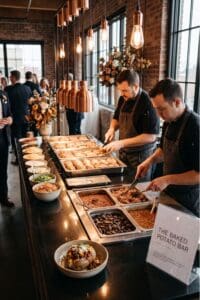
A wedding brunch can feel every bit as special as an evening reception. I love brunch so an invite to a wedding brunch would be a huge yes from me!
the menu needs to be substantial enough to replace a traditional wedding meal while still feeling fresh and suited to the earlier start.
That usually means combining a few familiar breakfast dishes with salads, vegetables, pastries, desserts and plenty of good drinks.
You do not need every brunch food imaginable. A smaller, well-planned menu will look better, stay fresher and be easier for guests to enjoy.
What Should a Wedding Brunch Menu Include?
A balanced wedding brunch menu normally includes:
- One substantial savory main
- One breakfast-style dish
- Two or three sides
- One fresh fruit, vegetable or salad option
- Bread or pastries
- Wedding cake or another dessert
- Coffee, cold drinks and optional cocktails
The timing of the reception should influence the food. An earlier brunch can lean more heavily into eggs, pancakes and pastries. If guests will be eating around noon or later, include at least one lunch-style dish such as chicken, smoked salmon, sandwiches, a savory tart or a substantial salad.
Wedding Brunch Menu Ideas
These menus can be used as starting points and adjusted around your venue, season and catering style.
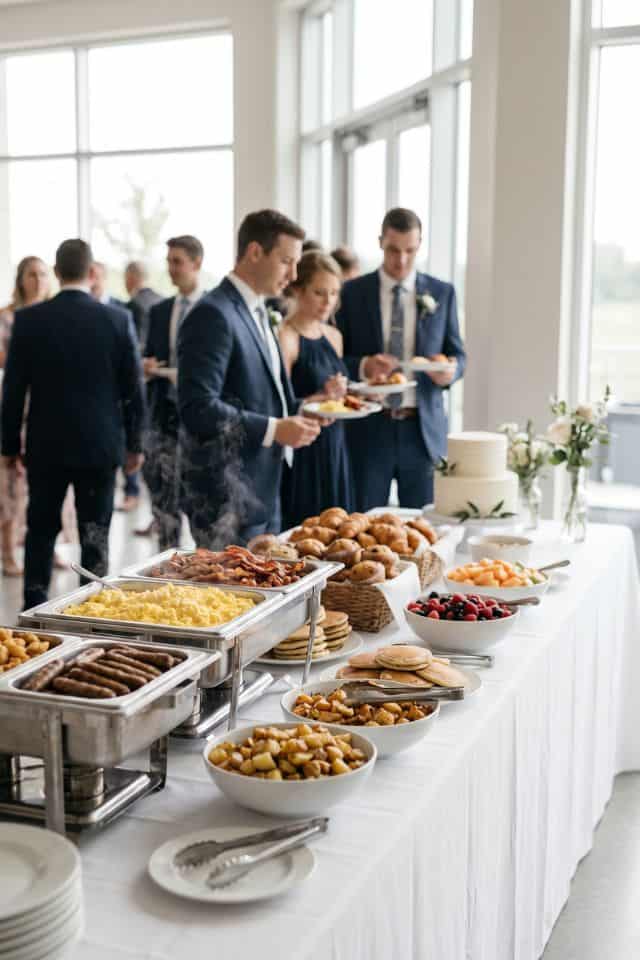
1. Classic Wedding Brunch Buffet
A familiar brunch buffet is easy for guests to understand and gives everyone a good mix of sweet and savory choices.
- Soft scrambled eggs replenished in small batches
- Bacon and breakfast sausages
- Crispy breakfast potatoes
- Buttermilk pancakes
- Seasonal fruit
- Croissants and muffins
- Wedding cake
This works particularly well for a relaxed hotel, barn or private dining venue. Keep the pancake toppings simple so the buffet does not become crowded with bowls and bottles.
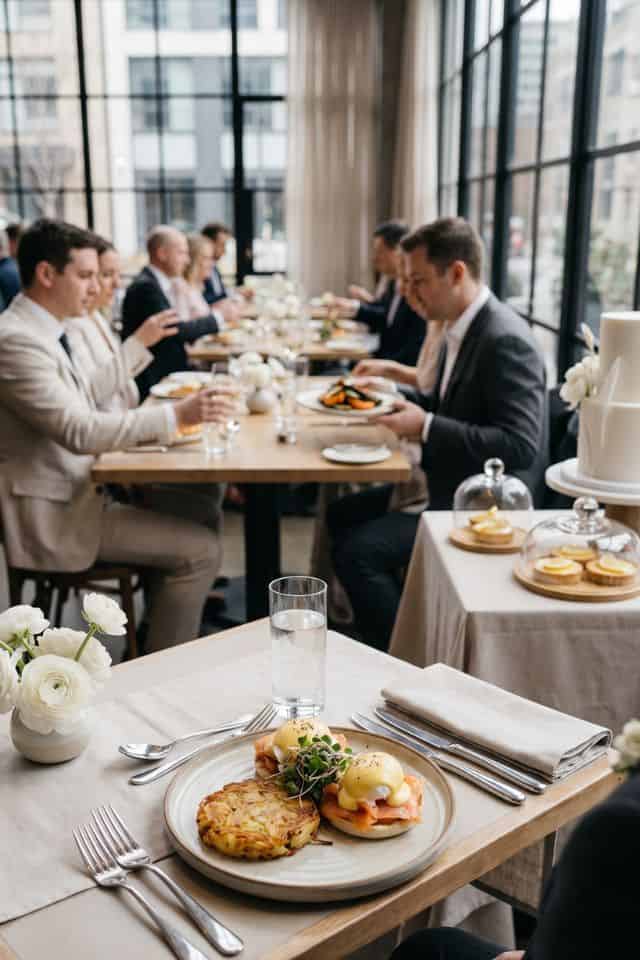
2. Elegant Plated Wedding Brunch
A plated menu makes brunch feel more formal and avoids queues at larger weddings.
Start with seasonal fruit, yogurt and granola or a small pastry plate. For the main course, serve Eggs Benedict, smoked salmon with potato rösti or a roasted vegetable tart with dressed leaves. Finish with an individual lemon tart before serving the wedding cake later in the reception.
Offer at least two main-course choices and include an option that does not rely on eggs.
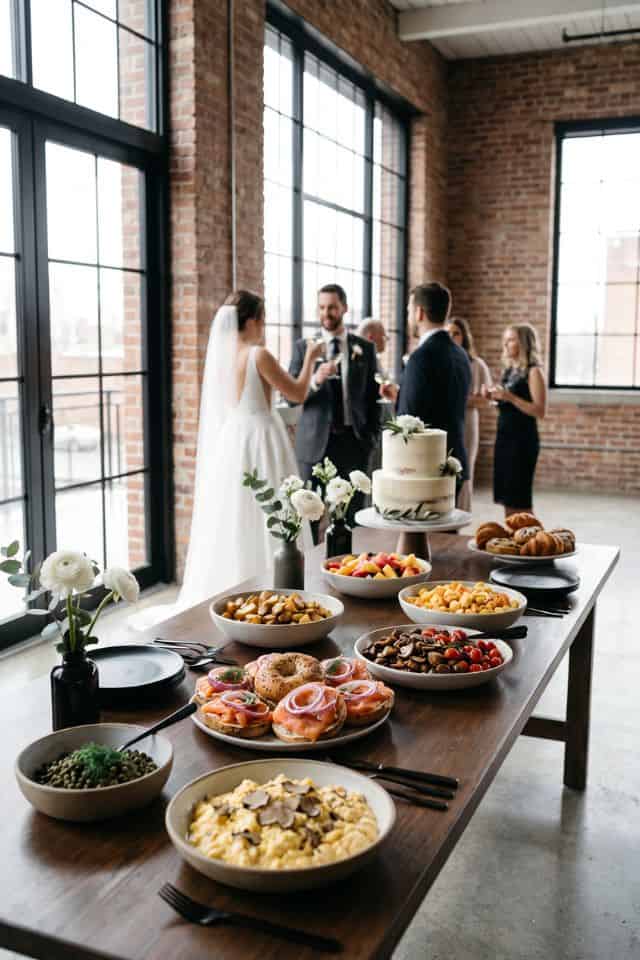
3. Modern City Wedding Brunch
For a restaurant, loft or rooftop wedding, keep the food simple but polished.
- Truffle scrambled eggs
- Smoked salmon bagels
- Roasted tomatoes and mushrooms
- Crispy breakfast potatoes
- Citrus salad
- Mini pastries
- Wedding cake
Specialty coffee and a short cocktail menu suit this style better than a large self-serve drinks table.
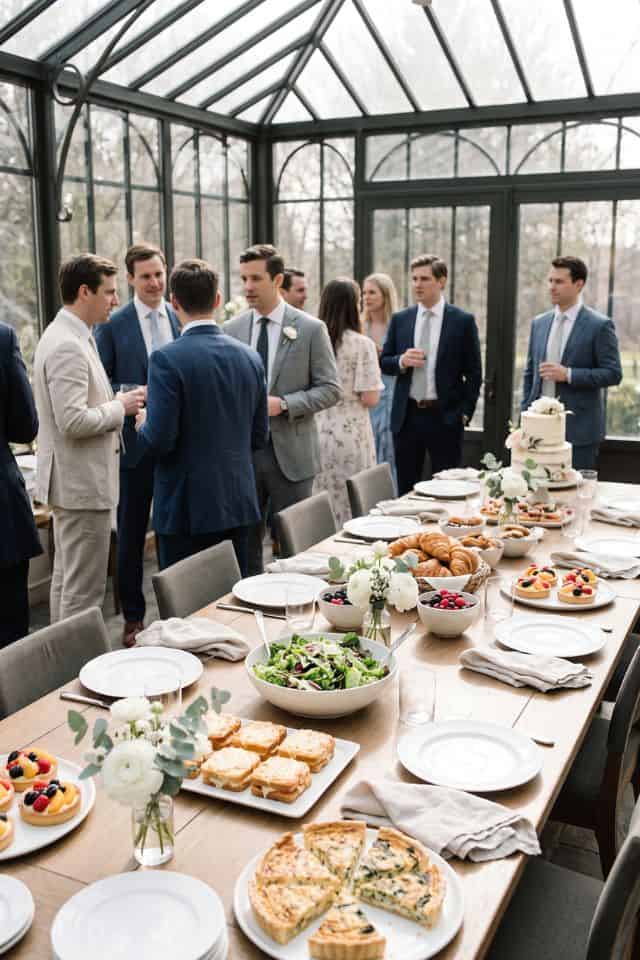
4. French-Inspired Wedding Brunch
A French-inspired menu feels elegant without requiring overly complicated food.
- Quiche Lorraine
- Vegetable and goat cheese quiche
- Mini croque monsieur
- Lightly dressed green salad
- Croissants
- Fresh berries
- Individual fruit tarts
Serve the quiches in smaller slices if guests will also have croque monsieur. This keeps the portions balanced and prevents the meal from becoming too heavy.
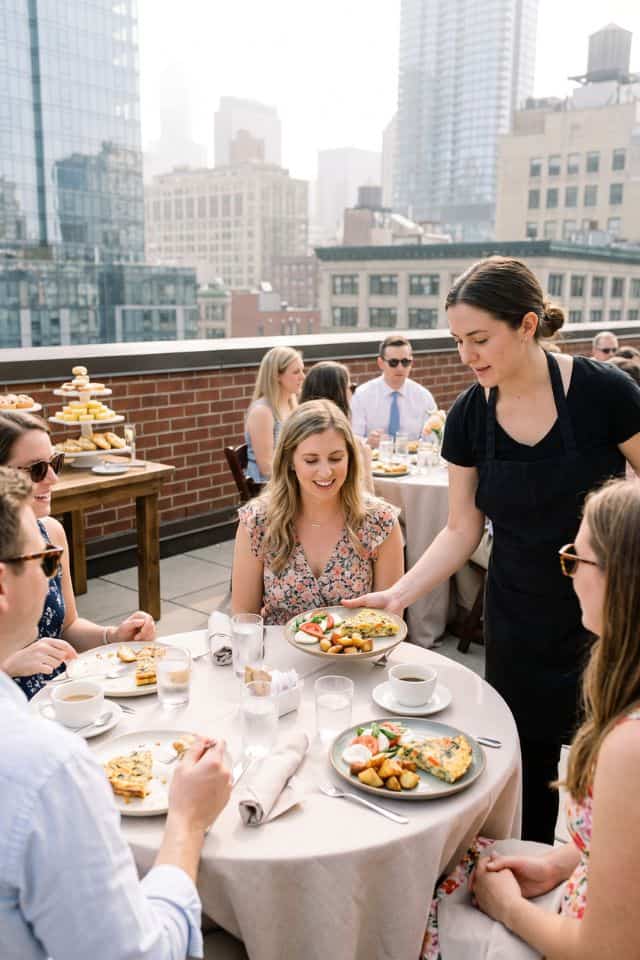
5. Italian-Inspired Wedding Brunch
An Italian-style brunch works well for a long, sociable meal served family-style.
- Prosciutto and melon
- Baked eggs with tomato and herbs
- Rosemary breakfast potatoes
- Focaccia
- Burrata and tomato salad
- Tiramisu cups
Bellinis and espresso fit naturally with the menu, but make sure there are equally appealing alcohol-free options.
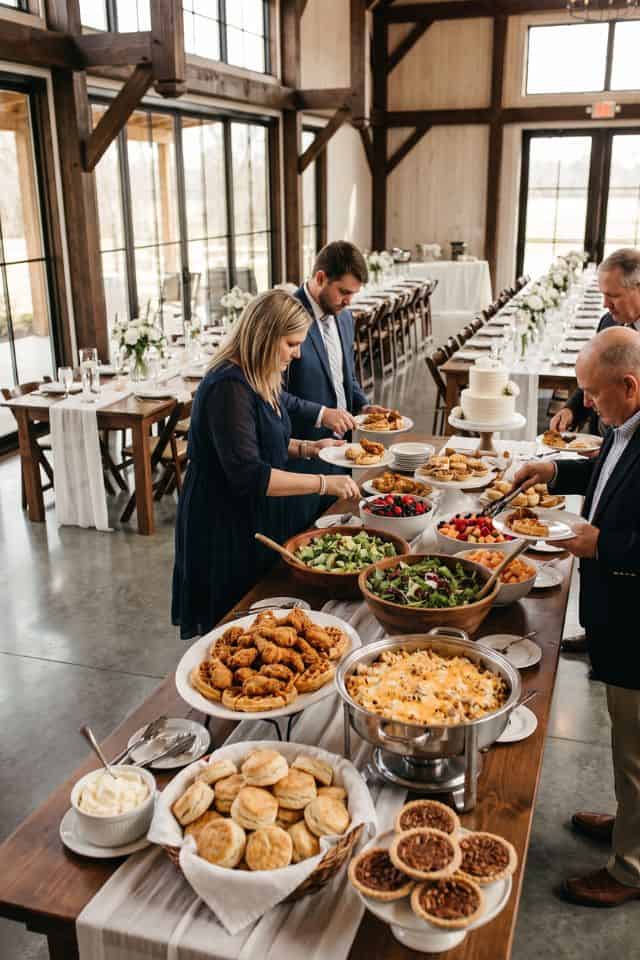
6. Southern-Style Wedding Brunch
A Southern-inspired menu is warm, generous and well suited to a relaxed wedding.
- Chicken and waffles
- Biscuits with whipped or flavored butter
- Cheesy breakfast potatoes
- Seasonal green salad
- Fresh fruit
- Mini pecan pies
Chicken and waffles should be served in manageable portions rather than piled high. This makes the dish easier to eat at a wedding and leaves room for the other sides.
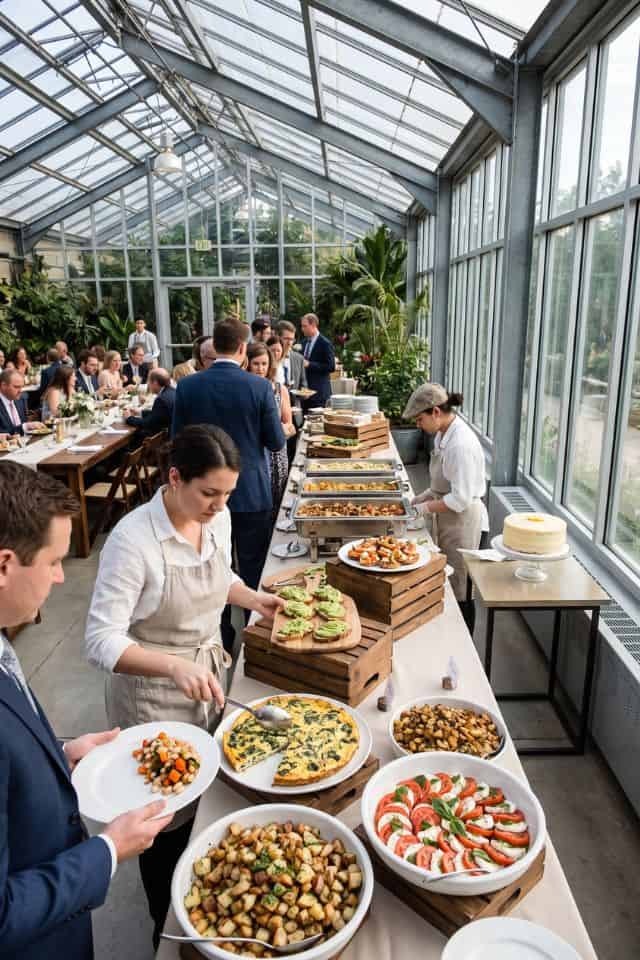
7. Vegetarian Wedding Brunch
A vegetarian menu can feel complete without building every dish around cheese or eggs.
- Spinach and mushroom frittata
- Roasted vegetable and white bean hash
- Avocado toast
- Herbed potatoes
- Tomato and mozzarella salad
- Yogurt and fruit pots
- Lemon wedding cake
The vegetable and bean hash can form the basis of a vegan main when served without dairy-based toppings. If you have vegan guests, make sure their meal includes a proper main rather than several side dishes.
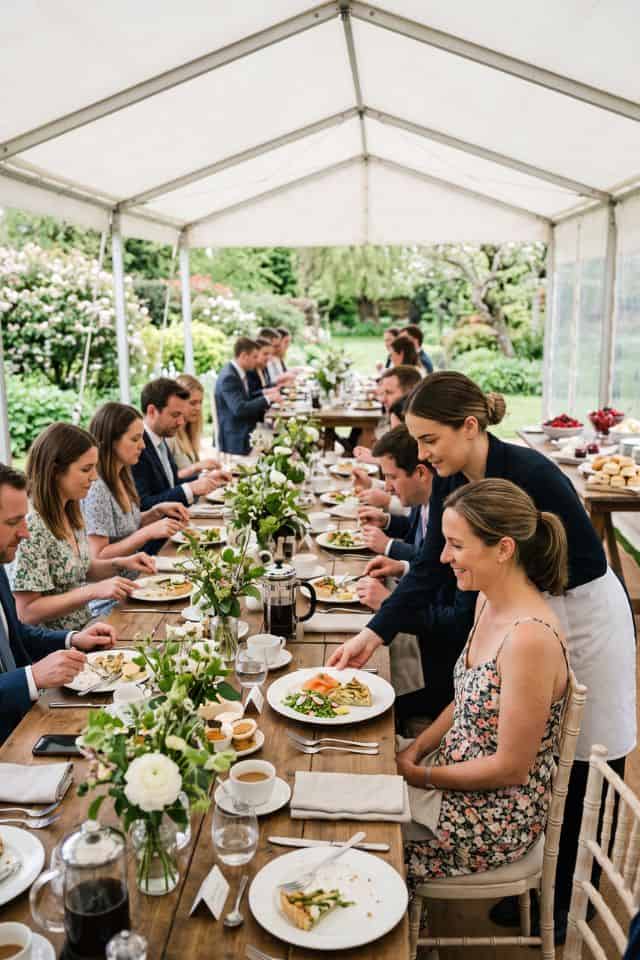
8. Spring Garden Wedding Brunch
Use lighter dishes and seasonal produce for a spring wedding.
- Smoked salmon and dill potato cakes
- Asparagus and goat cheese tart
- Pea, radish and lemon salad
- Fresh berries
- Lemon scones
- Mini pavlovas
This menu works well for an outdoor reception, greenhouse venue or garden room. Have a plan for keeping fish, cream and other chilled dishes at a safe temperature if food will be served outside.
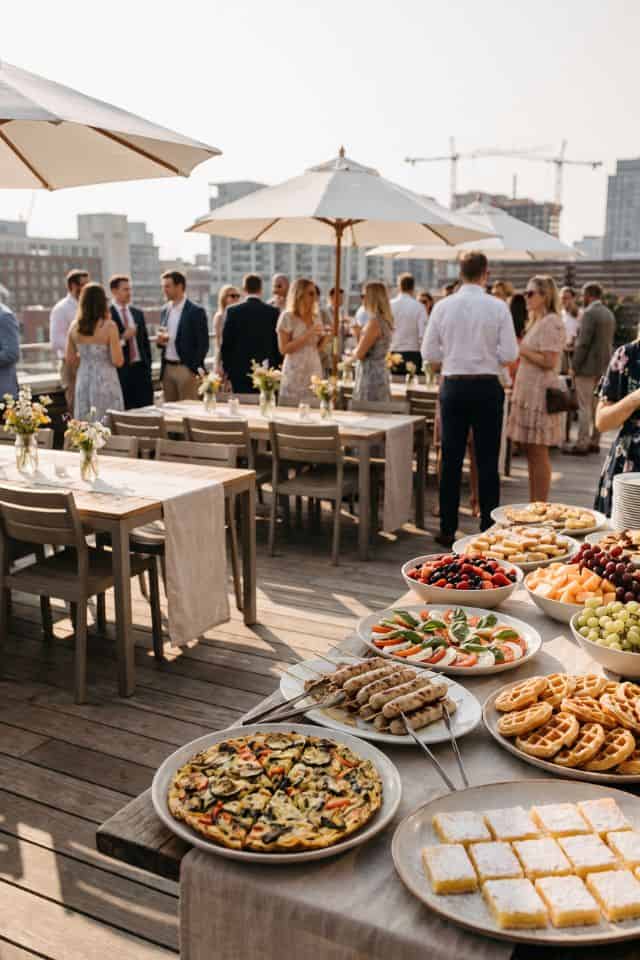
9. Summer Wedding Brunch
A summer menu should be filling without feeling too rich in warm weather.
- Grilled vegetable frittata
- Chicken sausage skewers
- Tomato and mozzarella salad
- Seasonal fruit
- Mini waffles
- Lemon bars
Iced coffee, cold water and fruit spritzes will often be more popular than hot drinks later in the meal, although coffee and tea should still be available.
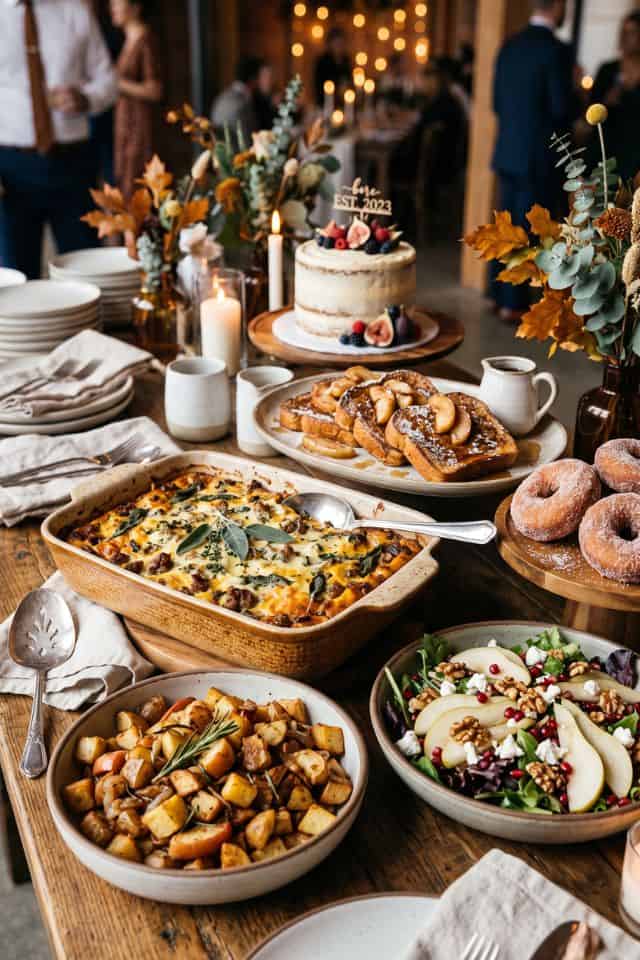
10. Fall Wedding Brunch
Warm spices, apples, pears and maple flavors create a seasonal menu without turning the wedding into a themed event.
- Sausage and sage breakfast casserole
- Apple and cinnamon French toast
- Maple-roasted potatoes
- Pear and walnut salad
- Apple cider doughnuts
- Spiced wedding cake
Serve the doughnuts as an arrival treat or choose them instead of an additional dessert. You do not need doughnuts, pastries and cake all competing on the same table.
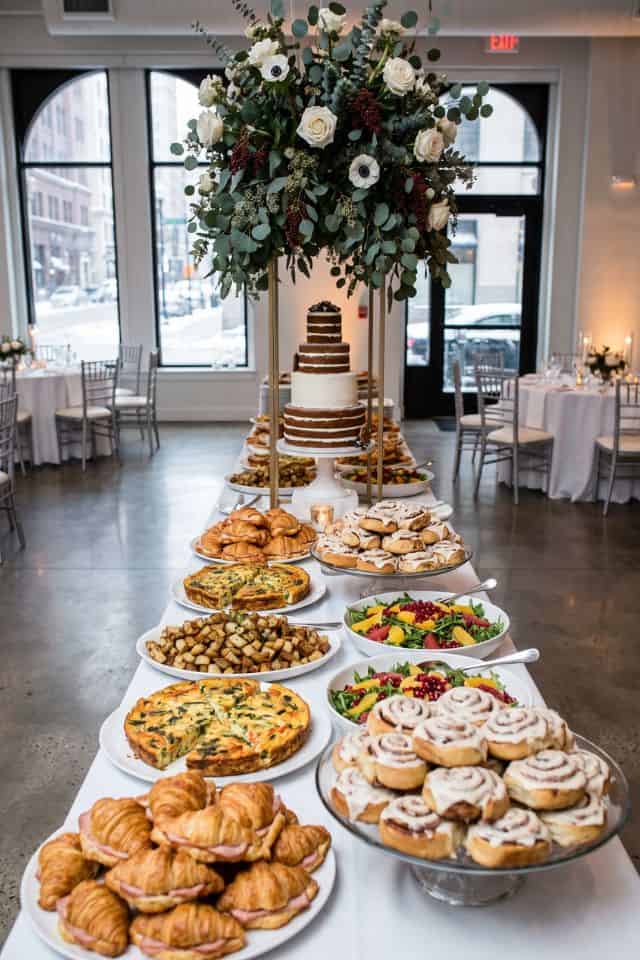
11. Christmas or Winter Wedding Brunch
A winter brunch can include richer dishes balanced by citrus and fresh seasonal flavors.
- Ham and cheese croissants
- Winter vegetable frittata
- Herb-roasted potatoes
- Citrus and pomegranate salad
- Cinnamon rolls
- Gingerbread or spiced wedding cake
Hot chocolate, cranberry mimosas and good coffee can make the drinks feel seasonal without adding numerous themed cocktails.
Wedding Brunch Food Station Ideas
Food stations can make a wedding brunch feel more interactive, but they need enough space and staff.
One good station alongside a buffet or plated menu will usually work better than several stations offering similar foods.
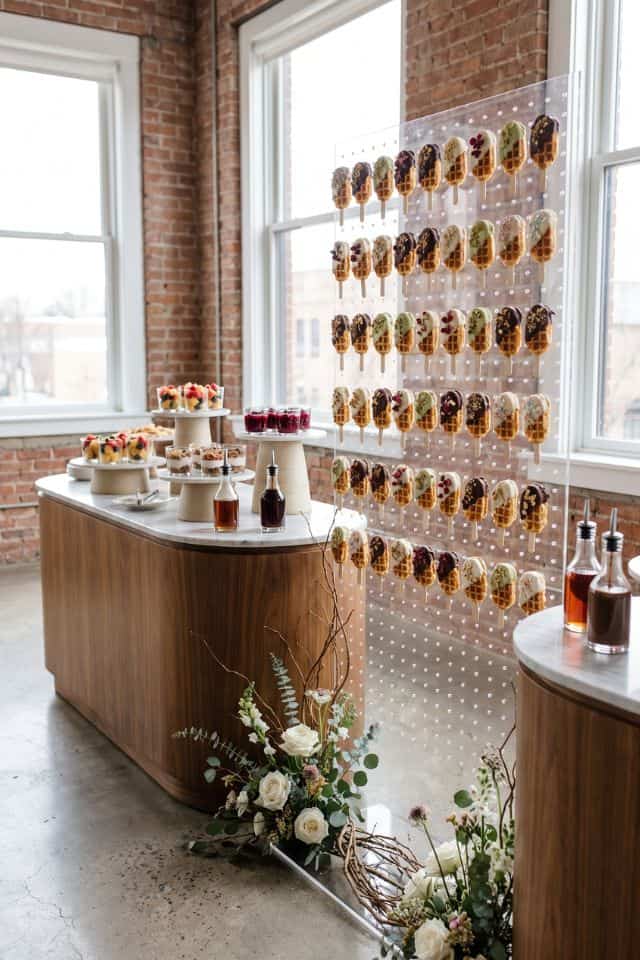
1. Pancake or Waffle Station
Choose pancakes or waffles rather than serving both. Add a short selection of toppings such as:
- Fresh berries
- Fruit compote
- Maple syrup
- Whipped cream
- Chocolate sauce
- Toasted nuts
Waffles are best cooked or replenished in small batches. If they sit for too long, they quickly lose their texture.
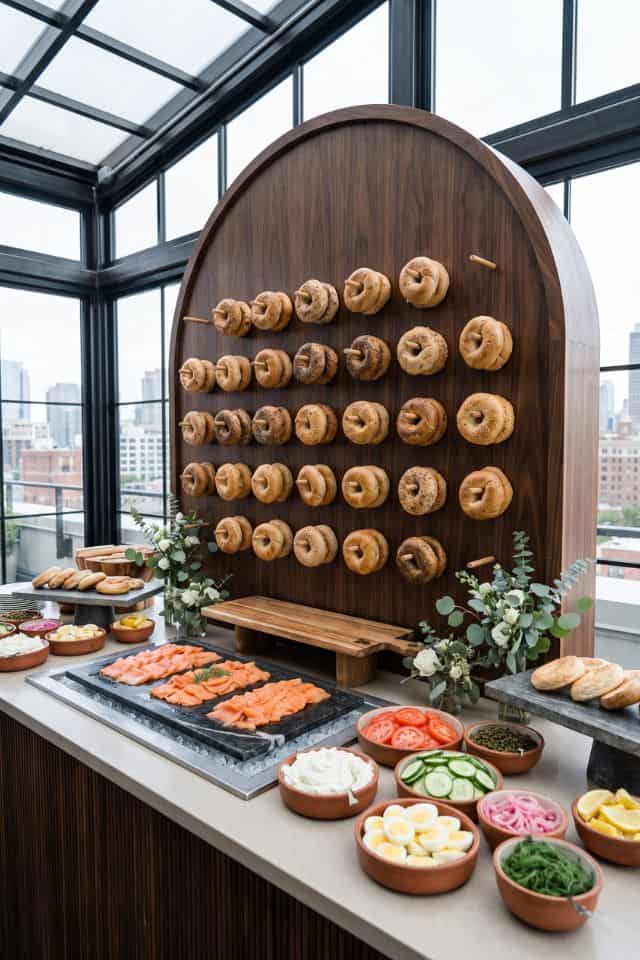
2. Bagel and Smoked Salmon Station
Offer a few types of bagel with:
- Smoked salmon
- Plain and flavored cream cheese
- Sliced tomatoes
- Cucumber
- Capers
- Pickled red onions
- Fresh herbs
Provide a separate knife or spreader for each cream cheese and clearly label any gluten-free choices.

3. Breakfast Sandwich Station
Guests can choose from eggs, cheese, bacon, sausages, roasted vegetables and sauces, served in biscuits, bagels or English muffins.
This station needs a clear ordering system and enough staff to assemble the sandwiches quickly. At a larger wedding, pre-made combinations will keep the line moving better than unlimited customization.
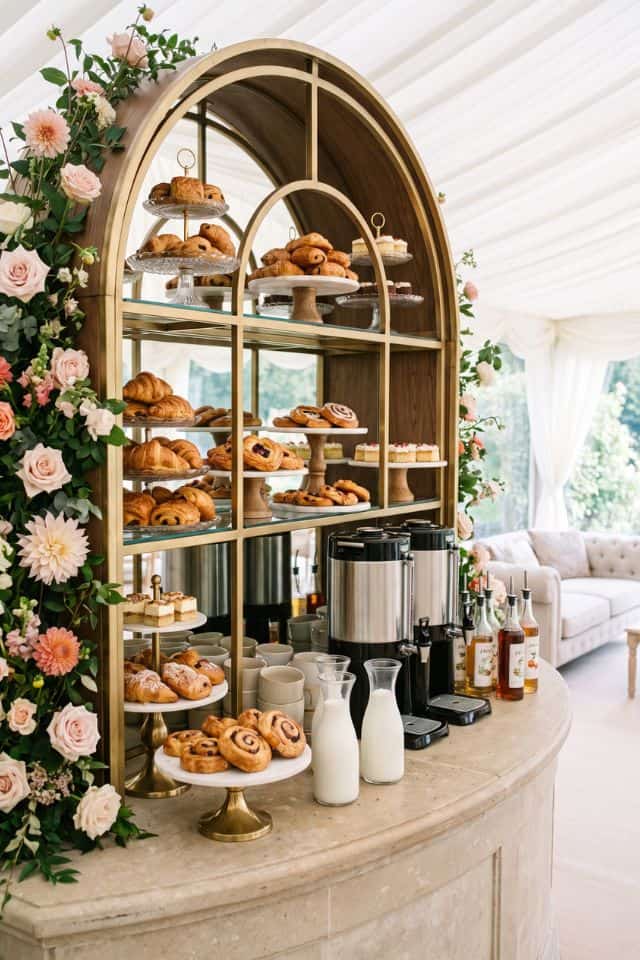
4. Pastry and Coffee Station
A pastry and coffee station works well while guests arrive or later in the reception.
Include a concise selection of croissants, muffins, cinnamon rolls or scones rather than multiple versions of each. Add regular and decaffeinated coffee, tea and dairy-free milk.
What to Serve to Drink
Coffee matters at a brunch wedding. It should be available early, served hot and replenished throughout the meal.
A complete drinks selection could include:
- Filter coffee
- Espresso drinks
- Decaffeinated coffee
- Tea
- Iced coffee
- Orange and apple juice
- Still and sparkling water
- Lemonade or iced tea
- Fruit spritzes
- Alcohol-free mimosas
If you want alcohol, choose one or two brunch cocktails instead of building a large bar menu. Mimosas, Bellinis, Bloody Marys, French 75s and espresso martinis are all suitable options.
Alcohol is not essential, particularly for an early reception. Interesting non-alcoholic drinks and good coffee are more important than trying to make the bar feel like an evening wedding.
Wedding Cake and Brunch Desserts
You can still serve a traditional wedding cake at brunch. Lighter flavors such as lemon, almond, vanilla, berry, carrot or coffee work particularly well with a daytime menu, but there are no rules about which cake you choose.
Alternatives include:
- Cinnamon roll cake
- Crepe cake
- Doughnut tower
- Fruit tart display
- Mini cheesecakes
- Pastry table
If the menu already includes pancakes, waffles or sweet pastries, you may only need wedding cake for dessert. Too many sweet dishes can make the menu feel repetitive and leave a lot of food untouched.
Choosing the Right Service Style
The same menu can feel completely different depending on how it is served.
1. Plated Brunch
A plated brunch suits a more formal daytime wedding. It gives the meal a clear structure and ensures everyone is served at roughly the same time.
Guests will normally need to select their main course in advance. Include a non-egg option and collect dietary requirements with the RSVP.
2. Brunch Buffet
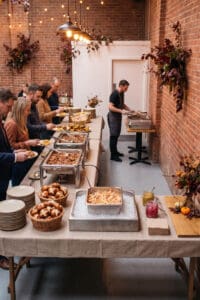
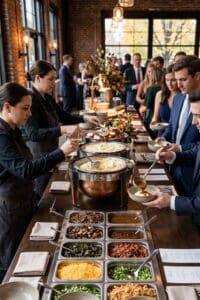
A buffet gives guests more choice and makes it easier to offer several dietary options. It also needs careful management.
Ask how frequently hot dishes will be replenished, how food will be kept fresh and whether the buffet can be accessed from both sides. Separate the drinks from the food so guests waiting for coffee do not block the main line.
3. Family-Style Brunch
Family-style service creates a relaxed, sociable meal and works especially well for smaller weddings.
Check that the tables are wide enough for serving dishes alongside flowers, candles, glassware and place settings. Large centerpieces can make passing food difficult.
4. Food Stations
Stations are useful when you want food to be part of the experience. However, made-to-order eggs, waffles and sandwiches require chefs, equipment and space.
Ask the caterer how many portions can be produced at once and how long a guest is likely to wait. A station that looks impressive but creates a 20-minute queue will quickly become frustrating.
How Much Food Do You Need?
For a full wedding reception, plan enough food to replace a traditional meal. A few pastries, fruit and coffee will not be sufficient.
As a simple starting point, include:
- One complete main serving per guest
- Two or three sides
- One fresh or lighter dish
- Bread or pastries
- One dessert or wedding cake
The final quantities should be calculated by the caterer based on the service style, menu and length of the reception. Buffets may need different quantities from plated meals because guests serve themselves and portions are less predictable.
If suppliers require meals under their contracts, include those in the final catering count. Also confirm whether children will receive smaller portions or a separate menu.
Catering for Dietary Requirements
Brunch menus often rely heavily on eggs, dairy, wheat and meat, so dietary choices need to be planned from the beginning.
Collect requirements with the RSVPs and give each guest a complete meal. A vegan guest should not be expected to combine fruit, toast and potatoes while everyone else receives a substantial main course.
Useful options include:
- Vegetable and white bean hash
- Tofu scramble
- Vegan breakfast sausages
- Avocado toast
- Dairy-free yogurt pots
- Gluten-free breakfast potatoes
- Flourless cakes or suitable individual desserts
For guests with celiac disease or serious allergies, ask the caterer how cross-contact will be avoided. Placing gluten-free bread beside regular bread is not enough if they share utensils, preparation areas or toasters.
Planning a Wedding Brunch Around Your Budget
Brunch food can be less expensive than an evening menu, but it is not automatically a budget option. Staffing, equipment, drinks and rentals can quickly increase the total.
To keep the menu focused:
- Choose one feature dish or food station
- Limit food that must be cooked to order
- Use seasonal fruit and vegetables
- Avoid serving several similar pastries, breads or potato dishes
- Choose a buffet or family-style menu if it produces a genuine saving
- Compare quotes using the full cost, including staff and equipment
Ask whether coffee service, cake cutting, tableware, linens and drink refills are included. A lower menu price may not be cheaper once these extras are added.
Questions to Ask Your Caterer
Before confirming the menu, ask:
- Which dishes will stay fresh throughout service?
- What will be cooked to order?
- How will hot dishes be held and replenished?
- How many staff will each food station need?
- Can the venue support the required cooking equipment?
- How will dietary meals be prepared and identified?
- When will coffee and pastries be served?
- Is coffee refilled at the table or collected from a station?
- Can the wedding cake be included in dessert service?
- Are cake cutting, tableware and linens included?
- What happens to safe, unused food after the reception?
These answers will tell you more about how the brunch will actually work than the menu description alone.
Wedding Brunch Menu FAQs
What time should a brunch wedding begin?
Aim for guests to eat between late morning and early afternoon. Work backward from the meal time when planning the ceremony, drinks and photographs. If the ceremony starts very early, consider offering coffee and a small pastry on arrival.
Can brunch replace a traditional wedding reception meal?
Yes. The portions and variety simply need to be substantial enough to count as a complete meal. Include a main dish, sides, something fresh and dessert rather than relying on light breakfast food.
How many dishes should a wedding brunch buffet include?
One main, two or three sides, a fresh dish, bread or pastries and dessert are enough for a balanced buffet. Adding more dishes does not necessarily make the menu better, particularly if several are very similar.
What wedding brunch foods can be prepared ahead?
Quiches, frittatas, breakfast casseroles, muffins, pastries, fruit compotes and many desserts can be prepared or partly prepared ahead. Poached eggs, waffles and delicate toast dishes generally need to be finished close to serving.
What can you serve guests who do not eat eggs?
Options include smoked salmon bagels, chicken and waffles, breakfast sandwiches, vegetable hash, avocado toast, biscuits, salads and lunch-style dishes. Make sure there is at least one substantial egg-free main.
Do you need to serve alcohol?
No. Coffee, juices, water and a well-made alcohol-free spritz are enough. If you do serve alcohol, one or two signature brunch cocktails will usually cover what you need.
How is a post-wedding brunch menu different?
A post-wedding brunch can be simpler and more flexible because guests may arrive and leave at different times. Breakfast sandwiches, pastries, fruit cups and yogurt pots are easier to manage than a formal plated meal or several made-to-order stations.
A good wedding brunch does not need to include every breakfast favorite. Start with one substantial main, add a few sides, something fresh and something sweet, then choose drinks that suit the time of day. The result will feel considered, generous and entirely appropriate for a wedding.
More blogs you will love!
- 30 Winter Wedding Appetizer Ideas for a Cozy Seasonal Menu
- 15 Winter Wedding Food Station Ideas

- 30 Modern Bridal Shower Finger Food Ideas That Aren’t Boring
- Wedding Brunch Menu Ideas for Daytime Celebration
- Pizza Bar for Weddings: Toppings, Setup and Menu Ideas
- Mac and Cheese Bar for Weddings and Events
- Indoor BBQ Wedding Ideas for Fall and Winter
- Mashed Potato Bar for Weddings and Parties: A Complete Planning Guide
- Baked Potato Bar Guide for Weddings and Parties