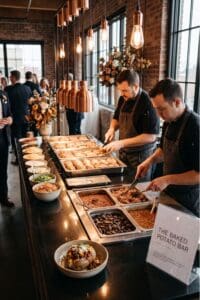
Pizza can work as the main wedding meal, relaxed welcome-party food or an easy late-night option. However, each version needs a different setup.
Hiring a pizza van to cook individual orders is very different from arranging a large delivery from a local pizzeria.
Before choosing toppings or styling the station, decide who will make the pizzas, how guests will receive them and how quickly fresh pizza can be served.
Ways to Have Pizza at Your Wedding
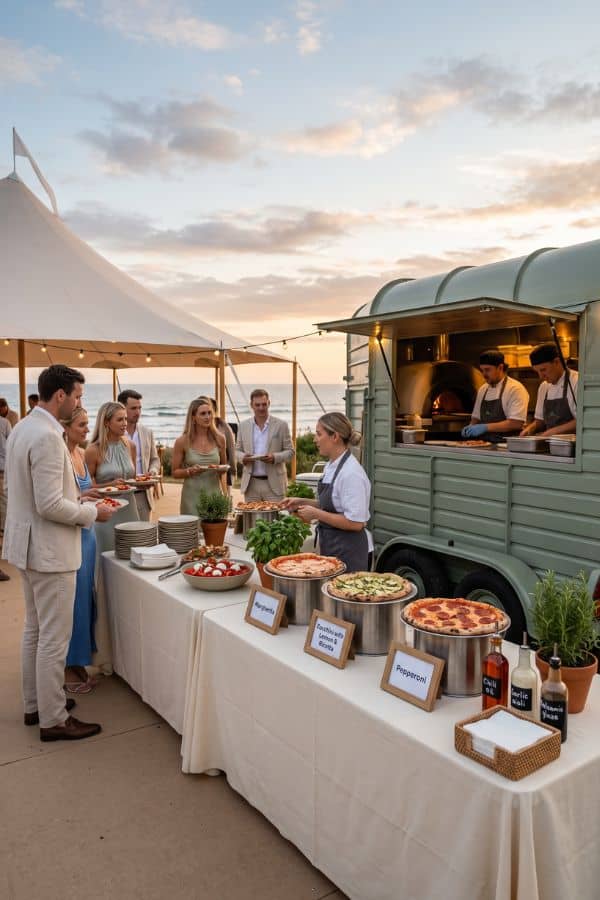
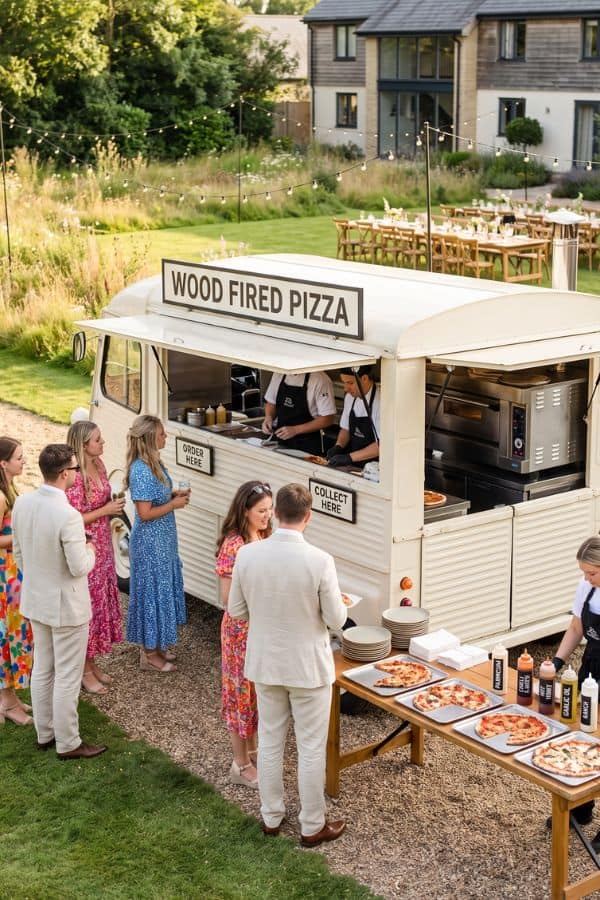
Hire a Pizza Van or Food Truck
A pizza van is usually fitted with its own ovens and preparation area, making it one of the simplest ways to bring freshly cooked pizza to a venue without using its kitchen.
Depending on the supplier, guests may order individual pizzas directly from the van or the team may cook a continuous selection for a nearby buffet. The second option is generally faster for a larger wedding because guests can collect slices as soon as they are ready.
Pizza vans need suitable vehicle access and a safe, level place to park. Some also require an external power supply, water connection, additional lighting or shelter for the serving area. Check that the van can remain in position for the full service without blocking venue access or guest walkways.
The most important figure is how many guests the van can serve within your chosen mealtime. A beautiful van will not solve the problem if its oven can only produce a small number of pizzas at once.
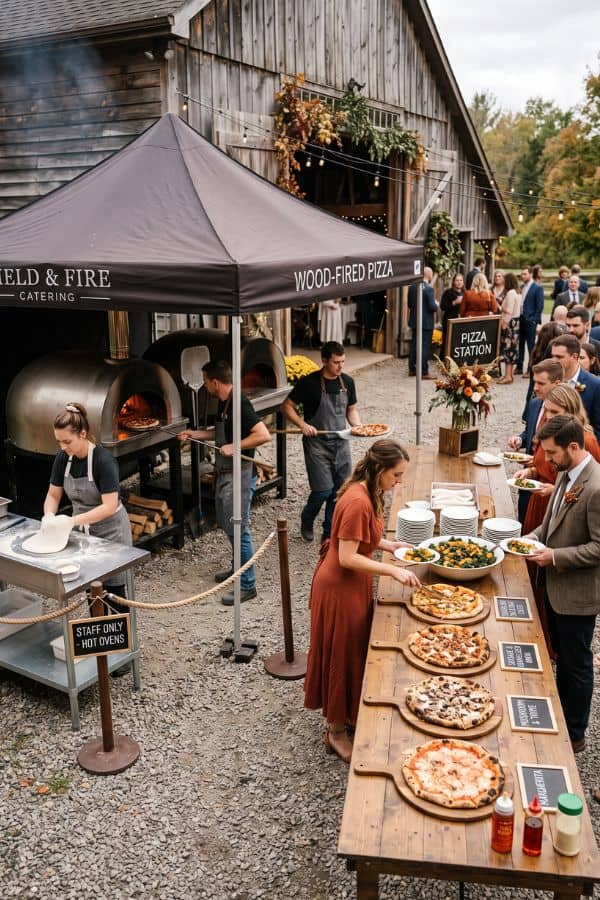
Book a Mobile Wood-Fired Pizza Caterer
A mobile pizza caterer brings portable ovens, preparation tables and a cooking team rather than serving directly from a fitted vehicle.
This can work particularly well at barns, marquees, private properties and outdoor venues. The cooking station can often be positioned closer to the reception than a large vehicle, and the caterer may have more flexibility when creating a buffet or family-style service.
The caterer will need a suitable preparation area, a safe surface for the ovens and enough room for staff to work without guests walking through the cooking zone. Confirm who supplies the gazebo or weather cover, lighting, power and preparation tables.
Use Your Venue or Wedding Caterer
If the venue restricts outside suppliers, ask whether its own kitchen team can provide a pizza menu.
Pizza can be served from a buffet, placed on sharing boards at the tables or brought out by the slice. This option keeps food preparation within the venue’s existing service plan and can make clearing, table service and dietary meals easier to manage.
Do not assume that a professional venue kitchen can automatically produce large quantities of pizza. It still needs suitable ovens, preparation space and enough staff to keep fresh pizzas coming throughout the meal.
Order From a Local Pizzeria
Ordering from a local restaurant can be a practical option for smaller weddings, casual receptions and late-night food.
Speak directly to the manager rather than placing a large online order. Confirm that the kitchen can prepare the required quantity at a precise time and ask whether staggered deliveries are possible. Receiving two or three smaller deliveries will usually keep the pizza fresher than receiving the entire order at once.
Someone at the wedding must be responsible for meeting the driver, checking the order, separating dietary pizzas and transferring the food to the serving area. This should be handled by venue staff, a coordinator or another nominated person—not the couple.
For a more polished setup, move the pizzas from delivery boxes onto food-safe boards or trays as they arrive. Keep the labelled boxes nearby so staff can identify each flavour correctly.
Create a DIY Pizza Bar
A DIY pizza bar is most realistic for a small backyard wedding, rehearsal dinner or welcome party.
You will need suitable ovens, refrigerated ingredient storage, preparation tables and a dedicated cooking team. Test the ovens before the wedding so you know how long each pizza takes and how many can be cooked simultaneously.
Prepare dough portions, sauces and toppings in advance, but leave safe storage, cooking and replenishment to people who are not also expected to enjoy the wedding as guests. Renting ovens does not automatically make this an easy DIY meal; the work comes from preparing ingredients, cooking continuously and clearing the station afterwards.
For larger guest lists, hiring a caterer or ordering ready-made pizzas is usually more manageable.
Decide How the Pizza Will Be Served
The serving format will affect queue length, staffing and the number of pizzas the supplier must produce at once.
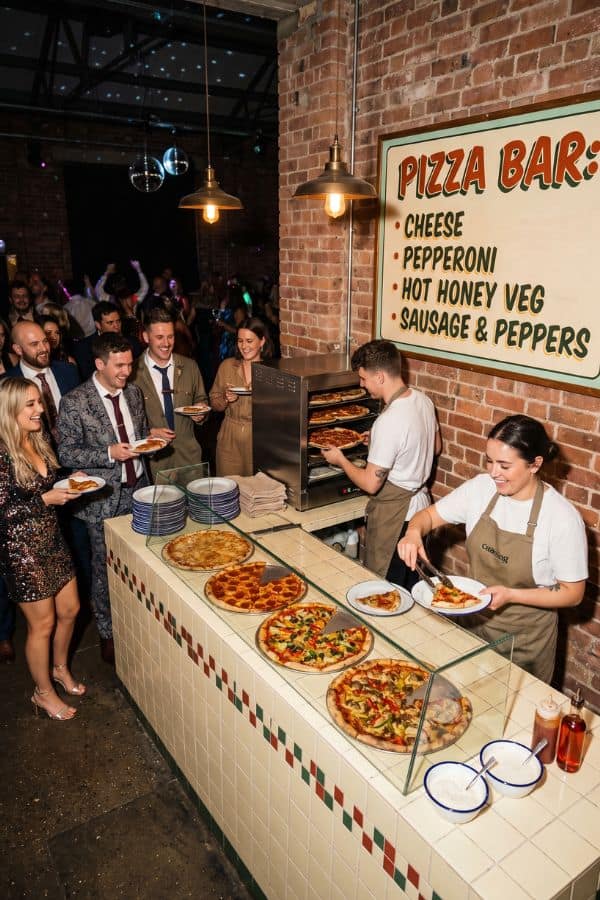
Continuously Replenished Pizza Buffet
Fresh pizzas are sliced and added to the buffet in small batches. Guests can take different flavours without waiting for an individual order.
This is usually the most efficient option for a larger wedding, provided staff can replenish the display from behind the serving table.
Made-to-Order Pizza Station
Guests choose a pizza from a fixed menu before it is cooked for them. This creates a more personal experience, but every order takes oven space and preparation time.
Keep the menu short and avoid allowing unlimited customisation. The supplier should explain how orders will be taken, how guests will know their food is ready and how many individual pizzas can be completed during the service period.
Family-Style Pizza at the Tables
Staff deliver a mixed selection of pizzas to each table on boards or stands. Empty boards are replaced as the meal continues.
This avoids one large buffet queue and gives the meal a relaxed, shared feel. It does require enough serving staff to monitor each table and distribute dietary meals separately.
Build-Your-Own Pizza Bar
Guests choose their preferred sauce and toppings before the pizza is assembled and cooked by staff.
This works best for intimate weddings because individual combinations slow down preparation. A printed order card or simple checklist is easier to manage than asking guests to explain their choices at a busy counter.
Keep uncooked ingredients behind the catering area. Guests can select their toppings, but staff should handle the food and assemble each pizza.
Pizza by the Slice
Pre-cut slices can be served from a staffed counter, passed around on trays or displayed on a continuously replenished table.
It is the simplest format for cocktail hour or late-night food because guests do not need to place individual orders.
Plan the Pizza Menu
For most weddings, three to five pizza flavours will provide enough choice without making the service unnecessarily complicated.
A balanced menu could include:
- One cheese or Margherita pizza
- One familiar meat pizza
- One vegetarian pizza
- One more distinctive signature flavour
- Any confirmed vegan or gluten-free requirements
Avoid creating a menu made entirely from unusual combinations. Even when the wedding style is modern, guests usually appreciate having at least one familiar option.
Classic Pizza Ideas
- Margherita
- Pepperoni
- Ham and mushroom
- Four cheese
- Chicken and roasted pepper
- Sausage and onion
- Barbecue chicken
- Mushroom and mozzarella
Modern Pizza Ideas
- Hot honey pepperoni
- Prosciutto, burrata and arugula
- Mushroom, truffle and Parmesan
- Fig, goat cheese and caramelised onion
- Sausage, fennel and chilli
- Whipped ricotta, chilli and honey
- Pesto chicken, mozzarella and sun-dried tomato
- Mortadella, pistachio and burrata
Seasonal Pizza Ideas
Spring
- Asparagus, ricotta and lemon
- Pea, mint and goat cheese
- Artichoke, spinach and mozzarella
Summer
- Fresh tomato, basil and burrata
- Zucchini, lemon and ricotta
- Pesto chicken and roasted peppers
Fall
- Squash, sage and goat cheese
- Sausage, apple and caramelised onion
- Mushroom, thyme and fontina
Winter
- Mushroom, caramelised onion and thyme
- Potato, rosemary and Parmesan
- Pear, gorgonzola and walnut
Vegetarian and Vegan Pizza Ideas
- Roasted vegetables and pesto
- Potato, rosemary and red onion
- Artichoke, olive and sun-dried tomato
- Spinach, mushroom and garlic
- Roasted pepper, chilli and vegan cheese
- Tomato, basil and dairy-free mozzarella
Check whether pesto, Parmesan and similar ingredients are genuinely vegetarian or vegan before adding the appropriate label.
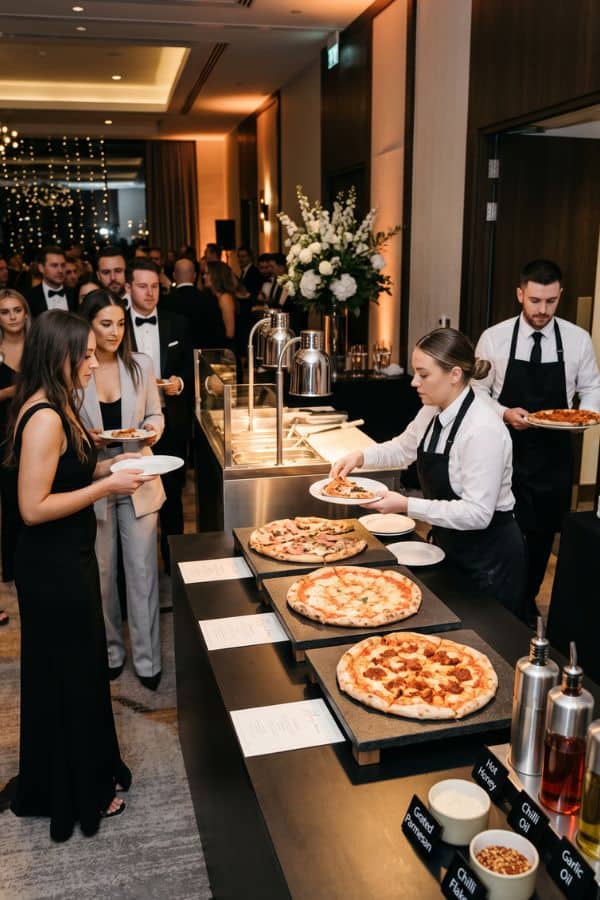
Pizza Topping Bar Ideas
There are two ways to offer additional toppings: a controlled selection for build-your-own pizzas or a finishing station for cooked slices.
Build-Your-Own Toppings
Keep the selection focused so staff can assemble orders quickly.
Sauces
- Tomato sauce
- White garlic sauce
- Pesto
- Spicy tomato sauce
- Barbecue sauce
Two or three sauces are normally enough.
Cheeses
- Mozzarella
- Ricotta
- Goat cheese
- Parmesan
- Vegan mozzarella
Meat Toppings
- Pepperoni
- Italian sausage
- Chicken
- Bacon
- Spicy salami
- Prosciutto added after cooking
Vegetable Toppings
- Mushrooms
- Roasted peppers
- Red onion
- Olives
- Artichokes
- Zucchini
- Jalapeños
- Sun-dried tomatoes
The cooking team should store and handle these ingredients behind the service counter rather than placing uncooked meat and cheese on a guest-facing table.
Finishing Toppings and Sauces
A finishing station gives guests extra choice without slowing down the ovens.
Useful options include:
- Grated Parmesan
- Fresh basil
- Arugula
- Chilli flakes
- Hot honey
- Garlic oil
- Chilli oil
- Balsamic glaze
- Garlic dip
- Ranch
- Marinara sauce
Use food-safe containers, a separate serving utensil for each topping and clearly labelled bottles for oils and sauces. You do not need every option; five or six well-chosen additions will look neater and keep guests moving.
What to Serve With a Wedding Pizza Bar
Pizza is already filling, so the rest of the menu can be simple.
When Pizza Is the Main Meal
Add one substantial salad and one lighter vegetable-based side. Good options include:
- Chopped Italian salad
- Caesar salad
- Tomato and mozzarella salad
- Arugula and Parmesan salad
- Roasted seasonal vegetables
- Antipasti with olives, artichokes and roasted peppers
Garlic bread or focaccia can be included, but avoid filling the menu with several additional bread-based sides.
For dessert, gelato, cannoli, tiramisu cups or lemon sorbet continue the Italian theme without requiring another heavy course.
For a Welcome Party or Cocktail Hour
Serve smaller slices alongside a limited selection of olives, marinated vegetables or antipasti.
If a full wedding meal follows shortly afterwards, keep the pizza portions deliberately small. Otherwise, guests may treat the station as dinner rather than an appetiser.
For Late-Night Food
Pizza can be served on its own. Offer two or three familiar flavours, plenty of napkins and a small selection of dips.
Additional sides are rarely necessary and can create a second queue just as guests want something quick to eat.
How Much Pizza Do You Need for a Wedding?
Start by finding out the diameter of each pizza, its crust style and how many slices the supplier plans to cut. A thin 12-inch pizza cut into eight pieces is not equivalent to a deep-pan pizza or an individual wood-fired pizza.
As a general starting point:
- Allow approximately three to four standard slices per adult when pizza is the main meal
- Allow two to three slices for children, depending on their ages
- Allow one to two slices per guest when pizza is served late at night
- Add approximately 10% as a buffer
For example, 80 adults eating an average of 3.5 slices would require 280 slices. If each pizza provides eight suitable slices, that is 35 pizzas. Adding a 10% buffer brings the order to approximately 39 pizzas.
Do not use this calculation for individually sized pizzas. In that case, the caterer should calculate the number of whole pizzas required based on their usual portion size.
Also consider how many guests will still be present when late-night food is served. It may not be necessary to cater for the full original guest count, but avoid assuming that only a small number will want pizza.
Check Production Speed
Ordering enough pizza does not guarantee a smooth meal. The supplier must also be able to cook and serve it within a reasonable period.
Ask how many pizzas can be cooked at once, how long each batch takes and how many guests can be fed during your planned service window. If 100 guests will arrive at the station within 20 minutes, a caterer who can only complete a few individual orders at a time will quickly create a long queue.
Create a Practical Pizza Bar Setup
For a buffet, arrange the table in this order:
- Plates and napkins
- Salads and sides
- Hot pizza
- Finishing toppings and dips
- Cutlery, if required
Keep drinks on a different table so guests collecting food do not cross the bar queue.
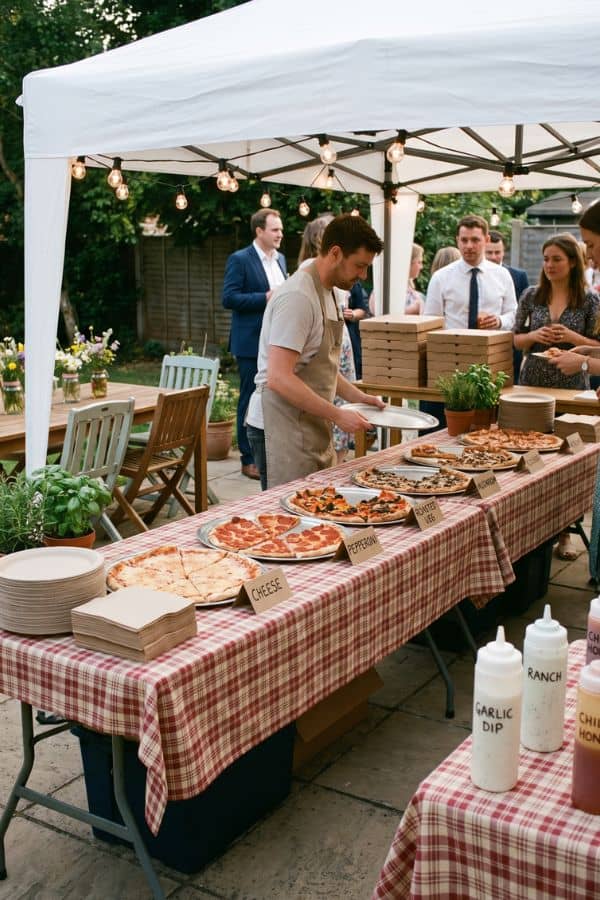
Every pizza should be sliced before reaching the buffet. Use sturdy food-safe boards or trays and position the flavour labels where guests can read them before deciding what to take.
Leave the back of the table clear so staff can remove empty boards and replace them without entering the guest queue.
For Larger Weddings
Use two identical serving lines if the supplier can replenish both effectively. Duplicating only part of the buffet can cause guests to cross between the lines looking for particular flavours.
Place the menu where guests can read it while waiting, not directly beside the food. This allows them to choose before they reach the serving point.
For Pizza Vans and Made-to-Order Stations
Create separate ordering and collection points. Guests waiting for completed pizzas should not block those trying to place an order.
Use a clear numbering or name system and provide a nearby waiting space away from vehicle access and hot cooking equipment.
Plan the Staff Route
The route from the oven, kitchen or delivery point to the pizza bar should be short and unobstructed. Staff should not need to carry hot boards through the guest queue.
Position rubbish bins and used-plate stations away from the fresh food, but make sure guests can find them easily.
Keep Pizza Hot and Fresh
The best approach is to serve smaller batches frequently rather than trying to display every pizza at once.
For live catering, the cooking team should stagger different flavours so the buffet maintains a balanced selection. Empty boards need to be removed promptly rather than left taking up space.
For delivered pizza, arrange multiple delivery times where possible. Avoid stacking large numbers of closed boxes for an extended period because trapped steam will soften the bases.
Professional warming shelves, cabinets or heat lamps may help during short holding periods, but use equipment recommended by the caterer. Excessive heat can dry out toppings while enclosed heat can make the crust soggy.
Pizza should move from the oven or delivery point to guests quickly. Styling the station should never take priority over getting fresh batches onto the table.
Manage Allergies and Dietary Requirements
Collect dietary requirements before confirming the final menu and ask the supplier how each special pizza will be prepared.
A gluten-free base cooked in a shared kitchen or wood-fired oven may still be exposed to flour, shared surfaces and cooking tools. This can make it unsuitable for someone with coeliac disease or a serious allergy.
Depending on the requirements, use:
- Separate cutters and serving tools
- Clearly labelled trays
- Individually boxed pizzas
- Staff-delivered dietary meals
- A separate preparation and cooking area where possible
Keep dietary pizzas away from the main self-service buffet so other guests do not accidentally take them or contaminate them with shared utensils.
Do not combine every dietary requirement into one pizza unless it genuinely suits the guests who need it. A vegan guest does not necessarily need gluten-free food, and a guest avoiding gluten may still want dairy.
Never label an option as allergen-safe unless the supplier can confidently explain how cross-contact is controlled.
Pizza Bar Styling Ideas
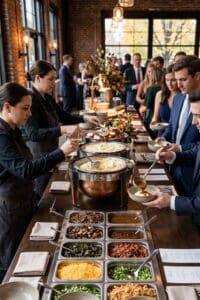
A pizza station can suit far more than rustic weddings. The styling should reflect the event while leaving the food easy to reach and replenish.
Modern Italian Pizza Bar
Use white or cream linens, clean black menu cards, stainless-steel stands and small pots of herbs. Keep candles and decorative pieces at the back of the station.
Relaxed Pizzeria Setup
Add striped fabric, warm red accents and one bold menu board. Serve slices on simple wooden boards or metal pizza trays for an informal restaurant feel.
Rustic Wood-Fired Station
Pair the visible ovens with natural wood, neutral linens and restrained greenery. Keep the working preparation area tidy rather than surrounding the ovens with unnecessary props.
Modern Black-Tie Pizza Station
Use dark linens, minimal labels and marble-effect serving boards. Staff can serve individual slices onto guest plates to make the station feel more polished.
Colourful Retro Pizza Bar
Use checkerboard details, bold typography and red or green café-style accents. Choose one or two statement details rather than covering the entire table in themed decorations.
Backyard Pizza Party
Use gingham table coverings, sturdy paper food trays and neatly stacked pizza boxes. String lighting can define the serving area once it becomes dark.
Whichever style you choose, place decorations behind or above the food. Avoid filling the serving surface with flowers, signs or small domestic bowls that make it difficult to replace hot pizzas.
Questions to Ask Before Booking a Pizza Caterer
- How many guests can you serve per hour?
- How many pizzas can your ovens cook simultaneously?
- How long will the full service take?
- Will guests order individually or collect from a buffet?
- How many pizza flavours can we choose?
- How many staff members are included?
- What space, vehicle access, power, water and lighting do you require?
- Who provides weather cover for the cooking and serving areas?
- What is the backup plan for heavy rain or strong wind?
- Are buffet tables, boards, plates, napkins and serving utensils included?
- Will every pizza arrive pre-sliced?
- How are vegan, gluten-free and allergy-sensitive meals prepared?
- Who manages the queue, replenishes the buffet and clears empty boards?
- Is travel included in the quote?
- Is there a minimum guest number or minimum spend?
- How long is the service period included in the price?
- Who removes rubbish and leftover food?
- Can any remaining pizza be boxed for guests?
A successful wedding pizza bar is mainly about logistics: fresh pizza, a sensible service method and a supplier who can feed the guest list quickly. Once those details are covered, you can focus on the menu, toppings and styling that make the station feel right for your wedding.
More blogs you will love!
- 30 Modern Bridal Shower Finger Food Ideas That Aren’t Boring
- Wedding Brunch Menu Ideas for Daytime Celebration
- Modern Fall in Love Bridal Shower Ideas That Feel Elevated

- 10 Modern Fall Bridal Shower Themes That Feel Fresh for 2026

- Pizza Bar for Weddings: Toppings, Setup and Menu Ideas
- Mac and Cheese Bar for Weddings and Events
- Indoor BBQ Wedding Ideas for Fall and Winter
- Mashed Potato Bar for Weddings and Parties: A Complete Planning Guide
- Baked Potato Bar Guide for Weddings and Parties