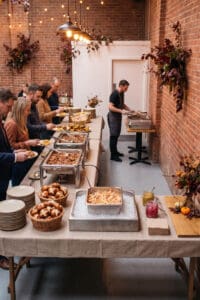
Fall wedding food stations can be far more interesting than a standard buffet. Think bubbling mac and cheese, loaded baked potatoes, freshly carved meat and warm desserts guests can choose and customize as they go.
Depending on what you serve, they can replace the main meal, add something substantial to cocktail hour or provide late-night food.
The season gives you plenty to work with beyond pumpkin-flavored everything. Slow-cooked meats, roasted vegetables, warm breads, rich cheeses, apples, pears, mushrooms and smoky sauces can all make a menu feel right for fall without becoming overly themed.
The important part is choosing stations that work together.
If mac and cheese, mashed potatoes and sliders are all on the menu, you will need something fresher alongside them. If the stations are replacing dinner, they must provide enough food, variety and protein to form a complete meal.
Here are 15 fall wedding food station ideas, including what to serve, when each one works best and the practical details to plan before adding it to your menu.
Check out our Unique food station ideas for 2026, for lots of ideas.
Fall Wedding Food Station Ideas
1. Baked Potato Bar
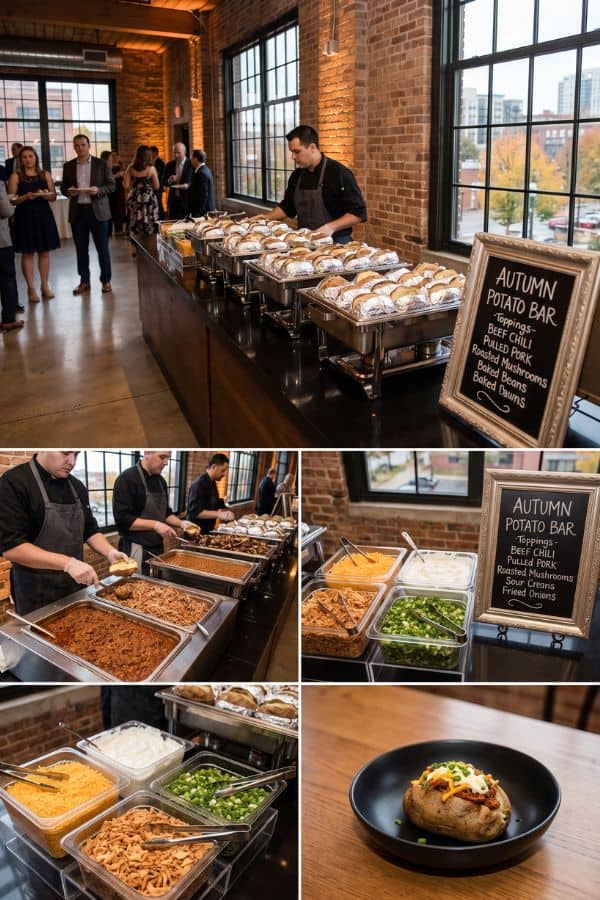
A baked potato bar is filling, affordable and easy to adapt for different dietary requirements. It can form part of the main meal, provide substantial late-night food or sit alongside soup, BBQ or carved meat.
The simplest setup uses one type of potato with a good selection of fillings. Chilli, shredded cheese, sour cream, bacon, baked beans and scallions cover the familiar options. Pulled pork, roasted mushrooms, caramelized onions, whipped feta, broccoli, roasted vegetables and herby butter can make the menu feel more considered.
Decide whether you want to serve full-sized potatoes or smaller portions. A whole baked potato makes sense if this is the main food, but it can be too much when guests are also trying several other stations. Small potatoes or half portions let people sample more fillings without wasting food.
Bowls are easier to manage than flat plates because they contain the potato and its toppings. For faster service, have staff split the potatoes and add the main filling before handing them over. Guests can then finish their bowls with cheese, herbs, sauces and crunchy toppings.
The potatoes need to remain hot without being wrapped in foil for too long, which can make the skins soft. Ask the caterer how they will be cooked, held and replenished during service.
Keep vegetarian and vegan fillings away from loose bacon, meat chilli and dairy toppings. Separate utensils and clear labels are essential if you are advertising the station as suitable for different diets.
2. Fall Grazing and Charcuterie Station
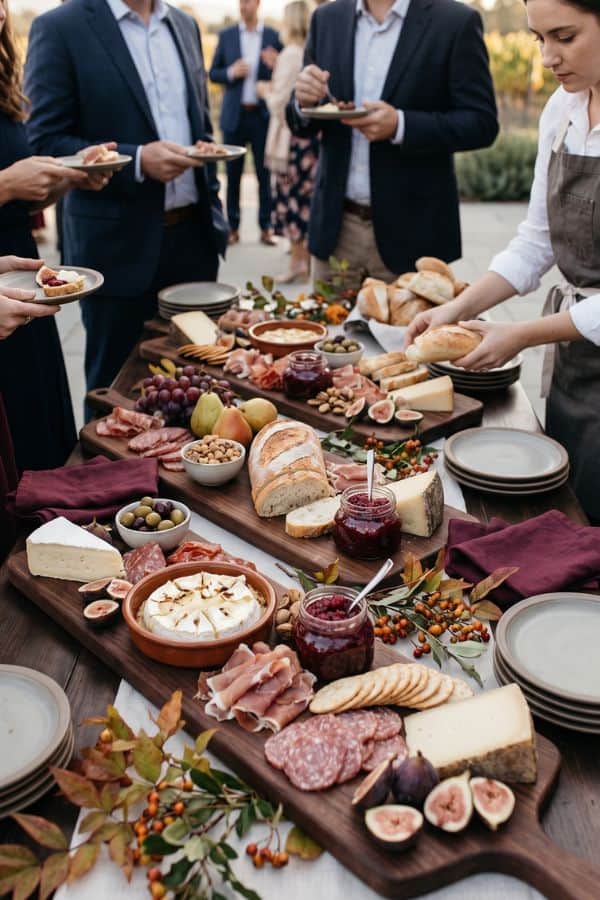
A fall grazing station is a natural choice for cocktail hour. Guests can start eating as soon as they arrive at the reception, and there is no need to wait for everyone to sit down or for individual plates to be served.
Build the main display around cheeses, cured meats, warm bread, crackers, nuts, olives and preserves. Apples, pears, figs, grapes, dried fruit and cranberry chutney bring in seasonal flavor without making the table look like fall-themed decor.
Warm elements make the station more suitable for cooler weather. Baked brie, roasted vegetables, sausage rolls, savory pastries and warm focaccia can sit alongside the traditional cold ingredients.
One enormous grazing table may look impressive when it opens, but it can quickly become untidy. Smaller sections that staff can replenish are easier to manage and prevent the most popular cheeses and meats from disappearing before every guest has visited the station.
A grazing table is best treated as cocktail-hour food rather than a complete dinner. If it is included in the main meal, pair it with at least one hot station and a more substantial source of protein.
Vegetarian food should have its own section instead of being placed between cured meats. You will also need to consider how long cheese, meat and dips can remain on display. An indoor venue can become warm once it fills with guests, even when the weather outside is cool.
3. Mac and Cheese Bar
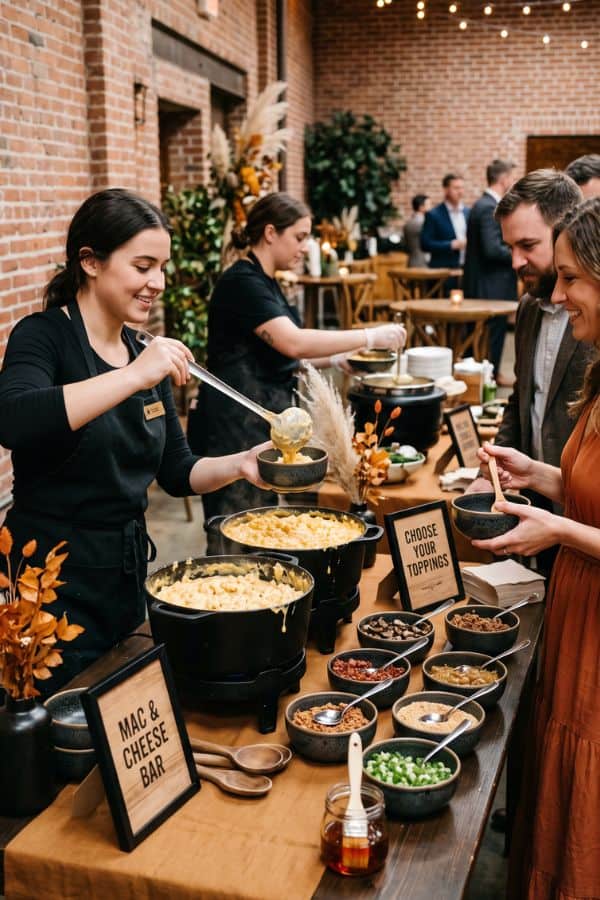
Mac and cheese is an obvious fall comfort food, but the station does not need dozens of toppings to be successful. A really good base, served hot and in small batches, matters far more than an oversized selection.
Offer one classic mac and cheese and, if you want more variety, one alternative flavor. Smoked gouda, roasted garlic, jalapeño, truffle and mushroom or lobster mac and cheese can provide enough contrast without complicating the service.
Toppings could include:
- Crispy bacon
- Pulled pork
- Roasted mushrooms
- Caramelized onions
- Jalapeños
- Toasted breadcrumbs
- Scallions
- Extra cheese
- Hot honey or chilli oil
Choose around six toppings that add noticeably different flavors or textures. Too many choices slow the line and make the station look messy once service begins.
Small bowls, cups or ramekins are better than full dinner portions if guests will be visiting several stations. If the mac and cheese is intended as late-night food, slightly larger cups can be served with forks so guests can take them back to the dance floor or seating area.
Mac and cheese thickens as it sits and can quickly become dry under direct heat. Ask the caterer to prepare or refresh it in smaller batches rather than leaving one large tray out for the entire service.
On its own, mac and cheese is better treated as a side or evening snack. If it is part of the main meal, include vegetables and a protein at this station or elsewhere on the menu. A mushroom or plant-based topping should also be available for guests who do not eat meat.
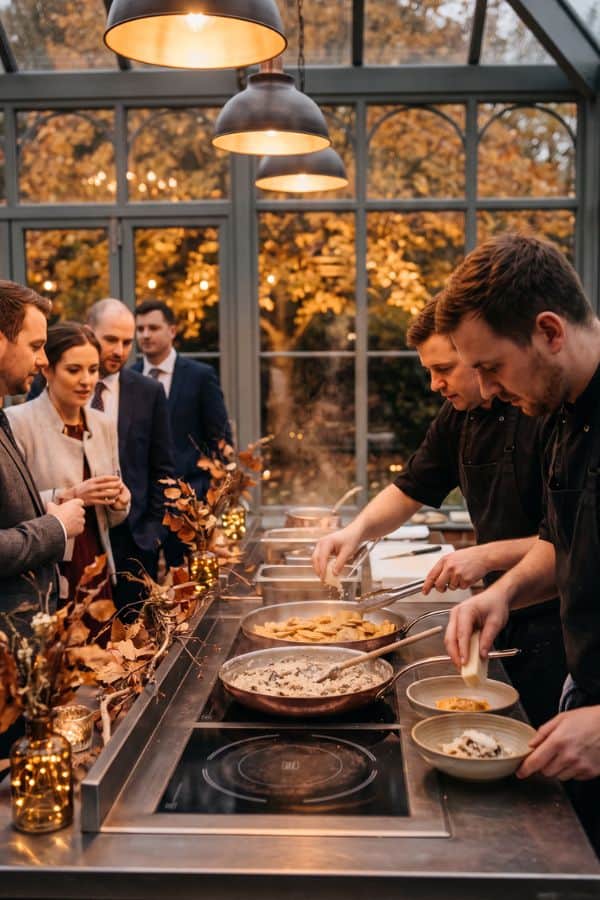
4. Live Pasta and Risotto Station
A live pasta and risotto station gives guests food that has been freshly finished rather than held in serving trays. It also adds some activity to the room as chefs toss pasta, finish sauces and plate each portion.
Fall menu ideas include wild mushroom risotto, pumpkin ravioli with brown butter and sage, short-rib ragù, sausage and fennel pasta, roasted squash pasta or creamy mushroom tagliatelle.
Keep the selection controlled. One pasta dish and one risotto will usually move more efficiently than a long menu of individually customized dishes. Chefs can still add garnishes or finish sauces in front of guests without cooking every element from scratch.
Serve tasting-sized portions if there are several other stations. Pasta and risotto are both filling, and large bowls can stop guests from trying the rest of the menu.
This type of station needs more planning than a standard buffet table. Pasta continues to absorb sauce after it is cooked, while risotto can become heavy when held. The caterer needs enough staff and cooking capacity to keep portions moving without allowing a queue to build.
Check what the venue can provide in terms of power, extraction, preparation space and fire safety. Cooking inside the reception room can create heat, steam and strong food smells. Ask whether the caterer has used the proposed equipment at a wedding of a similar size.
At least one dish should be vegetarian, and gluten-free pasta can be offered if the caterer can cook it safely without cross-contact. If every portion requires an individual substitution, allow extra service time.
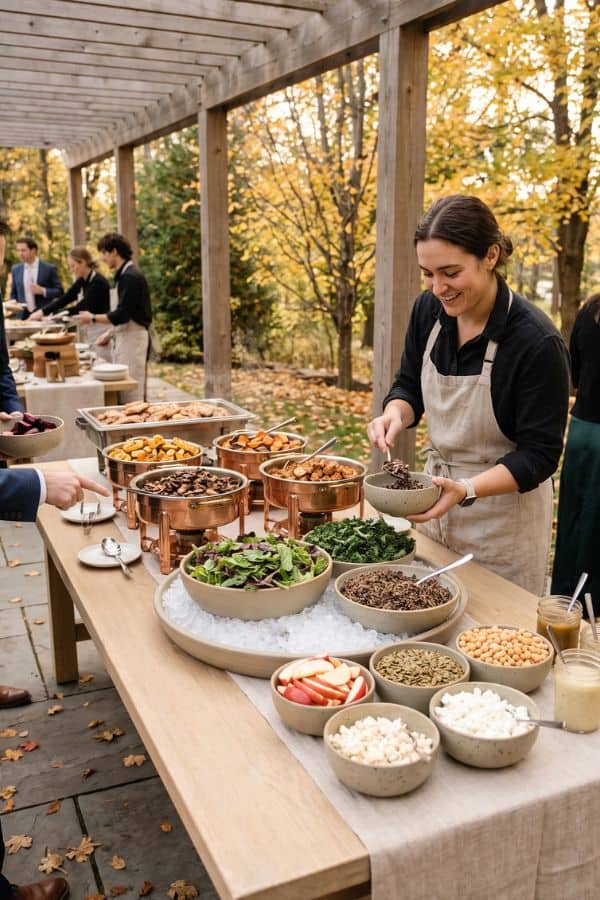
5. Fall Harvest Bowl Station
A harvest bowl station balances a menu filled with potatoes, cheese and slow-cooked meat. It can still feel substantial, but it gives guests the option to build a plate around vegetables, grains and lighter seasonal flavors.
Start with one or two bases such as wild rice, quinoa, greens, roasted potatoes or brown rice. Add roasted squash, beets, mushrooms, cauliflower, kale, apples, chickpeas, lentils, toasted seeds and crumbled cheese.
Chicken, salmon, shredded beef or spiced tofu can be offered separately. Maple mustard, tahini dressing and apple cider vinaigrette all work with fall ingredients, although two dressing choices are generally enough.
A completely unrestricted build-your-own station can become slow. Arrange the ingredients in the order guests will use them and consider having staff add the base before handing over the bowl. Guests can then choose their vegetables, protein, dressing and final toppings.
Hot and cold ingredients need different handling. Roasted vegetables, grains and proteins should remain warm, while greens, cheese and dressings need to stay chilled. Avoid placing everything along one table simply because it looks easier.
A well-planned harvest bowl can provide a complete meal for vegan and gluten-free guests instead of leaving them to combine several side dishes. Just make sure there is a suitable protein, dressing and base available to them and that the ingredients are kept separate from meat and dairy.
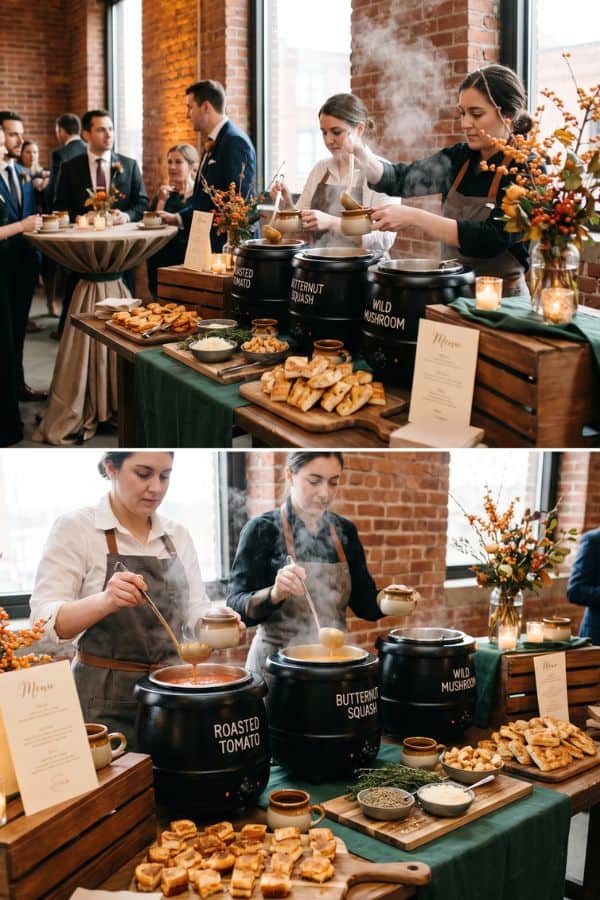
6. Soup Station
Soup is one of the easiest ways to add a warm seasonal element to a fall wedding menu. It works during cocktail hour, in place of a plated starter or as part of an early-evening meal.
Offer two or three soups with clearly different flavors. Good fall options include:
- Butternut squash
- Roasted tomato
- Wild mushroom
- French onion
- Loaded baked potato
- Roasted cauliflower
- Chicken and wild rice
Include at least one dairy-free or vegan soup where possible. A smooth soup is easier to serve in a mug, while chunky soups are better in small bowls with a proper spoon.
Handled mugs allow guests to carry soup while standing and are less likely to spill than wide bowls. Do not fill them to the top, and provide a saucer or small plate underneath if guests are wearing formal outfits.
Bread rolls, focaccia, grilled cheese bites and toasted sandwiches make the station more substantial. Toppings such as croutons, grated cheese, crispy onions, herbs and chilli oil give guests some choice without overwhelming the setup.
Soup must be held at the correct temperature and stirred regularly. Creamy varieties can develop a skin, while thicker soups may settle or catch at the bottom. A staffed station with smaller containers that can be replaced throughout service will usually maintain the quality better than a single large pot.
Think carefully about where the station is positioned. Place it close to tables or a standing area where guests can set down their drinks rather than expecting them to balance a mug, bread and a glass at once.
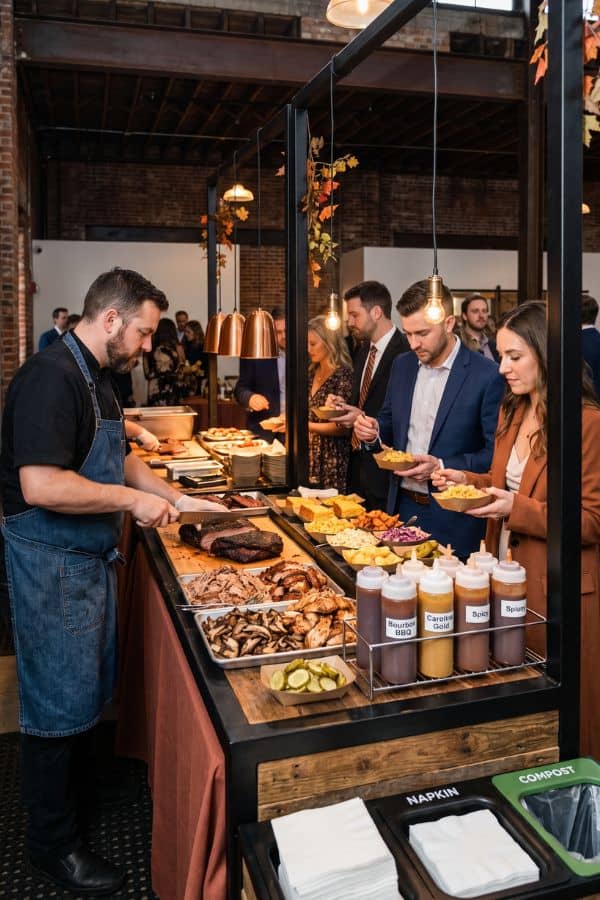
7. BBQ and Smoked-Meat Station
BBQ is often presented as a summer wedding idea, but smoked and slow-cooked food arguably makes even more sense in fall. It can be served indoors and paired with warm, filling sides rather than relying on outdoor weather.
Brisket, pulled pork, smoked chicken and ribs can form the main selection. Add a proper vegetarian choice such as BBQ jackfruit, pulled oyster mushrooms, smoked cauliflower or a bean-based dish.
For the sides, choose three or four rather than creating an enormous buffet. Mac and cheese, cornbread, slaw, roasted sweet potatoes, baked beans, pickles and seasonal vegetables all suit the menu.
If guests are visiting other stations, serve small portions in bowls or on trays. Full BBQ platters are better when this is the main meal and guests have somewhere to sit. Sauces should be added by staff or served in squeeze bottles to avoid sticky utensils and spills across the table.
Most indoor and urban venues will not allow smokers, open flames or charcoal cooking inside. The meat may need to be cooked elsewhere and then carved, pulled or finished at the station. Confirm where cooking will happen, how the food will be transported and how it will be kept moist.
BBQ also produces more waste and mess than many other stations. Provide sturdy napkins, clearly positioned waste bins and enough table space. Avoid ribs or heavily sauced meat if most guests will be eating while standing.
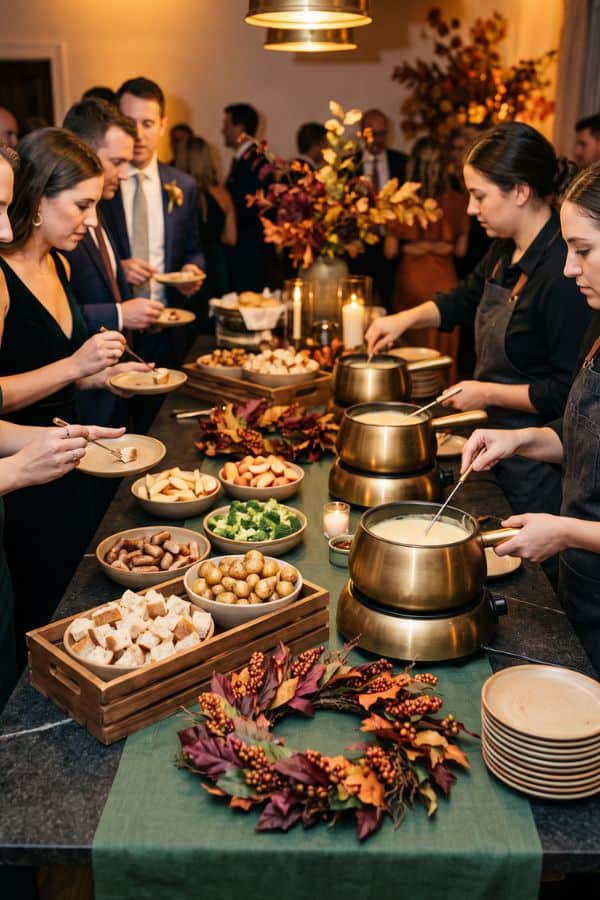
8. Sweet or Savory Fondue Station
Fondue offers an interactive element without requiring guests to assemble a full meal. It can be served as a savory cocktail-hour station or brought out as dessert later in the evening.
For cheese fondue, provide bread, roasted baby potatoes, apples, vegetables and small pieces of sausage. Chocolate fondue can be served with brownies, marshmallows, banana, strawberries, mini doughnuts and pieces of cake.
Shared fondue pots are manageable for a small gathering but can become slow and untidy at a larger wedding. Small pots supervised by staff, individual portions or ready-dipped items are easier to control and reduce the number of people sharing utensils.
Temperature is important. Cheese fondue can separate or become too thick, while chocolate can burn if it is left over direct heat. This station needs someone monitoring and stirring it throughout service.
Check whether the venue permits tabletop flames or heated pots. Electric equipment may be required indoors, and cables must be secured away from guest walkways.
If the rest of the menu is already rich, choose either cheese or chocolate rather than serving both. Savory fondue can replace some of the cocktail-hour canapés, while chocolate fondue works as a smaller alternative to a large mixed dessert display.
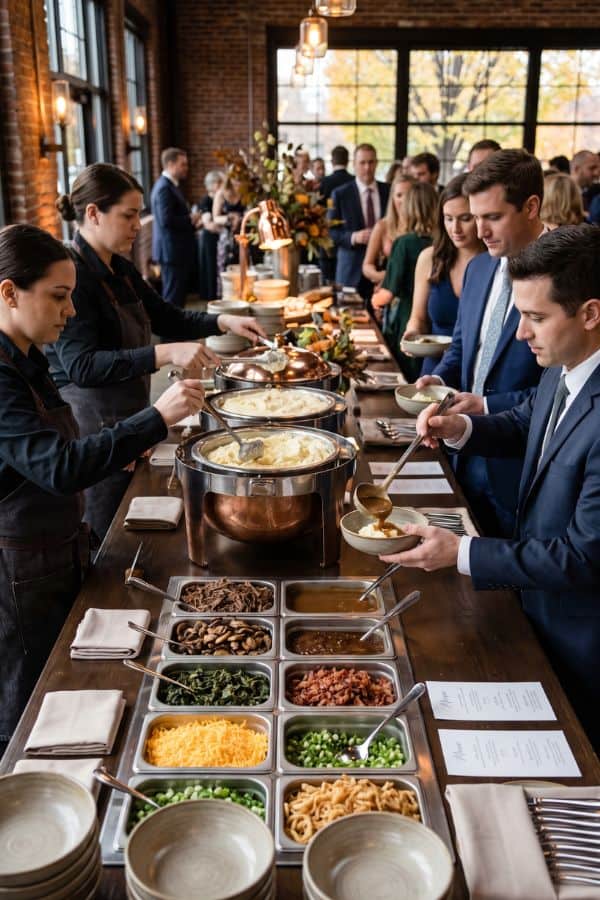
9. Mashed Potato Bar
A mashed potato bar takes a familiar fall side and lets guests turn it into their own bowl. It pairs naturally with carved meat, BBQ and roasted vegetables, or it can be served later in the evening as comfort food.
Classic mashed potato is the most versatile base. A second option could be sweet potato mash, roasted garlic mash or a dairy-free version, but one or two bases are enough.
Toppings might include gravy, shredded cheese, bacon, crispy onions, roasted mushrooms, herbs, pulled meat and sautéed greens. For sweet potato mash, crumbled feta, maple butter or toasted pecans can add contrast without making it overly sweet.
Mashed potato is sometimes served in martini glasses, but small bowls or cups are more practical. They are easier to fill, carry and eat from, and there is less glassware to collect throughout the reception.
The main challenge is keeping the potato smooth. It can dry out, form a skin or become gluey when held incorrectly. Smaller batches should be brought out throughout service rather than leaving one deep container under heat.
Unless the toppings include sufficient vegetables and protein, treat mashed potato as a side rather than a full meal. Use smaller portions when it accompanies other stations so guests do not fill up before trying anything else.
10. Rustic Fall Pizza Station
A pizza station suits a relaxed fall wedding, but freshness makes the difference between a proper food experience and slices that feel like they have been sitting on a buffet.
Combine familiar pizzas with one or two seasonal choices. Margherita and pepperoni keep the menu accessible, while mushroom and caramelized onion, squash and sage, sausage and fennel or pear and blue cheese introduce more distinctive fall flavors.
Four varieties are usually enough. Cut each pizza into smaller slices so guests can try more than one, and label the options clearly so people are not inspecting every piece.
If a mobile pizza oven is being used, check where it can be positioned and whether the venue has restrictions around flames, smoke or vehicle access. Outdoor cooking also needs cover from rain and wind. The caterer should have a workable backup plan rather than relying on a dry evening.
Ask how many pizzas the team can cook at once and how long it will take to feed the full guest list. One small oven may create a long wait at a large wedding, particularly if every guest arrives at the station together.
Pizza can replace the main meal when service is continuous and there are salads, vegetables or antipasti alongside it. It is also an easy late-night option because guests can take one or two small slices without needing a full plate.
Avoid cooking large quantities in advance. Stacked pizza softens, and slices left under heat quickly dry out. The station should be replenished regularly with freshly cut pizzas.
11. Fall Carving Station
A carving station provides the substance of a traditional roast without requiring a formal plated dinner. Meat is sliced as guests order, which also helps it stay fresher than trays of pre-cut portions.
Roast beef, glazed ham, turkey, pork loin and slow-roasted lamb all suit a fall menu. Serve the meat with roast potatoes, seasonal vegetables, gravy and a few appropriate sauces. Horseradish, mustard, cranberry relish, apple sauce and herb sauces can be matched to the chosen meat.
For a less formal version, turn the station into a sandwich bar. Small rolls filled with freshly carved meat, slaw, pickles and sauce are easier to eat during a standing reception and also work as late-night food.
The station should be staffed. A chef can control portions, keep the serving area clean and prevent the meat from being carved too far in advance. For a larger wedding, provide two carving points or have more than one joint ready at a time.
One main meat and one alternative are generally enough. A mushroom Wellington, roasted squash dish or plant-based pie will provide vegetarians with something equally substantial rather than another plate of side vegetables.
Carving takes longer than collecting a pre-portioned dish. Give guests room to queue and keep the sides arranged so they can be collected quickly. Do not place the entire setup in a narrow corner or directly beside another busy station.
12. S’mores Station
A s’mores station combines dessert with an activity, making it particularly suited to outdoor, barn and industrial fall weddings. Guests can roast marshmallows and build their own s’mores using graham crackers and chocolate.
Start with the traditional ingredients, then include a few alternatives such as dark chocolate, salted caramel chocolate, flavored marshmallows or chocolate cookies. Too many variations are unnecessary and can make a simple station surprisingly complicated.
Before committing to the idea, check whether the venue allows fire pits, tabletop flames or any form of indoor roasting. Flameless roasting equipment or pre-toasted marshmallows may be needed where open flames are prohibited.
Individual ingredient kits can reduce handling and make the station easier to keep stocked. Provide long roasting sticks, heat-resistant containers for used sticks, plenty of napkins and somewhere for guests to set down their drinks.
Children will need supervision around any open flame, and the station should be positioned away from loose fabric, dried decor and busy walkways. A member of staff can help manage the fire and keep the ingredients tidy.
S’mores are sticky, so this is best served after formal photographs and speeches. Pair the station with coffee, hot chocolate or spiced cider for a complete late-evening setup.
13. Fall Taco Station
A fall taco station uses the relaxed, customizable format of a taco bar with warmer, richer fillings. Braised beef, pulled pork, smoky chicken, roasted squash, sweet potato and spiced mushrooms are all better suited to the season than a menu built entirely around fresh summer flavors.
Add toppings such as charred corn, black beans, queso, pickled onions, slaw, salsa, avocado crema and roasted peppers. Choose ingredients that create different flavors and textures rather than offering ten versions of the same sauce.
Fully build-your-own tacos can be slow and messy. A more efficient option is to have staff assemble the tortilla and main filling, then let guests add two or three toppings. This also helps control portions and keeps the hot ingredients warm.
Serve two small tacos per plate rather than one oversized taco that falls apart. Corn tortillas provide a gluten-free option, but they need to be kept separate from flour tortillas if the station is intended to be suitable for guests with allergies or celiac disease.
Hot fillings, cold toppings and tortillas each require different storage. Ask how the caterer will keep meat moist, tortillas soft and dairy-based toppings chilled.
Tacos can form the main meal when paired with rice, beans, salad or another substantial side. For late-night food, pre-assembled tacos will be quicker and easier than reopening a full toppings bar.
14. Fall Mini Dessert Station
A mini dessert station lets you use several fall flavors without asking guests to eat full portions of each one. It can replace a traditional plated dessert or be opened later with coffee.
Possible choices include mini apple pies, pumpkin cheesecakes, maple pecan tarts, cider doughnuts, cinnamon rolls, caramel brownies and small chocolate desserts. Include at least one fruit-based option and one chocolate option so the entire table does not taste too similar.
Three or four desserts are usually enough. Guests are more likely to try several when the portions are genuinely small, so avoid cutting standard-sized cakes into awkward pieces and calling them miniatures.
Use trays at different heights to make the display easy to see, but keep the food within comfortable reach. Staff should replenish the table in smaller batches instead of setting out every dessert at once.
Some fall desserts are best served warm, while cheesecakes, cream-based fillings and chocolate may need to remain cool. If you want warm apple pie or doughnuts, ask how they will be heated and served without affecting the chilled desserts beside them.
Label nuts, dairy, gluten and other common allergens clearly. Gluten-free or vegan desserts should have their own serving utensils and preferably their own section.
Consider opening the station later in the evening rather than immediately after dinner. Guests may be more interested in dessert once they have had time to move around, and serving it with coffee can create a natural second food moment.
15. Slider Station
Sliders are easy to serve, familiar and substantial enough for cocktail hour or late-night food. They can also form part of a station-style dinner when served with sides.
Brisket, pulled pork, fried chicken and meatball sliders all suit a fall menu. Mushroom, crispy cauliflower or plant-based patties provide vegetarian alternatives. Seasonal additions such as apple slaw, cranberry relish, caramelized onions and smoked cheese can make each option more distinctive.
Keep the menu to two or three varieties. A large selection creates extra trays to keep warm and makes it more difficult for guests to identify what is inside each slider.
Pre-assembled sliders are usually more practical than a fully build-your-own setup. They move guests through the station quickly and prevent sauces, fillings and loose toppings from spreading across the table.
The bread is the main issue to watch. Sliders can become soggy if they are assembled too early or dry if they sit under heat. Ask for them to be prepared in small batches and replenished regularly.
For cocktail hour, serve one slider per person at a time. For late-night food, guests may want two. If sliders are part of the main meal, add fries, roasted potatoes, salad, slaw or vegetables so the station provides more than bread and meat.
Wrap the bottom half of each slider or serve it in a small tray. This makes it easier to eat while standing and limits the risk of sauce ending up on formal clothing.
How to Plan Fall Wedding Food Stations
Decide What the Stations Are Replacing
First, decide whether the stations are providing cocktail-hour food, the main meal, dessert or late-night food. This changes the portion sizes, number of choices and amount of service time required.
One grazing table may be enough during cocktail hour, but it is not a substitute for dinner. If stations are replacing a full meal, guests need sufficient protein, vegetables, carbohydrates and overall food quantity.
A typical station-style dinner might combine one substantial main station, one warm comfort-food station and one lighter vegetable-based option. The exact number will depend on the menu, guest count and whether every guest is expected to try every station.
Balance the Menu
Mac and cheese, mashed potatoes, baked potatoes and sliders are all appealing, but serving them together would create a very heavy meal. Pair rich stations with soup, roasted vegetables, salads or harvest bowls.
Also look for repeated ingredients. If three stations use pulled pork, caramelized onions and smoked cheese, they may appear varied while tasting very similar.
Try to include:
- A substantial protein or plant-based main
- At least one vegetable-led option
- A familiar choice for less adventurous guests
- A complete vegetarian or vegan dish
- Something fresh or acidic to balance richer food
Plan for Queues
Food stations spread guests around the room, but only if each station can serve people quickly. A live pasta chef or single carving point can easily become a bottleneck.
Popular stations may need duplicate serving points. Staff can also pre-portion bases, carve meat in advance of the immediate rush or assemble part of each dish before guests add toppings.
Avoid placing several stations along one wall. Spread them around the reception space while keeping enough distance between each queue.
Opening every station simultaneously can create a large initial rush. Your caterer may recommend inviting tables in stages or opening lighter cocktail-hour stations before the main food.
Use Smaller Portions
Tasting-sized portions allow guests to visit more than one station and reduce the amount of unfinished food left around the venue.
Small does not mean inadequate. If the stations are replacing dinner, the caterer still needs to prepare enough total food for each person to have a full meal. The aim is to divide that meal across several smaller dishes.
Choose bowls and plates that suit the food. Soup needs handled cups, loaded potatoes need bowls, sliders benefit from small trays and saucy dishes need more than a cocktail napkin.
Keep Hot Food Fresh
Fall food stations often rely on dishes that are less forgiving when held for long periods. Mac and cheese can dry out, mashed potato can become gluey, meat can lose moisture and pizza can soften.
Ask how frequently each station will be replenished and whether food will be cooked, finished or assembled in smaller batches. A station that looks abundant at the beginning but sits untouched under heat for an hour will not serve the food well.
There also needs to be enough staff to stir, carve, assemble, replenish and clean the stations throughout the service.
Include Complete Dietary Options
Do not rely on removing one ingredient from a dish at the last minute. A vegan guest needs a complete bowl, taco or main dish rather than a potato with no suitable toppings.
Ask guests about allergies and dietary requirements before finalizing the menu. Then work with the caterer to decide which stations can safely accommodate them.
Clear labels are useful, but separate utensils, preparation areas and serving sections are what make those labels meaningful. If cross-contact cannot be avoided, the caterer should prepare an individual meal separately.
Prepare for Fall Weather
Any station positioned outside needs cover, lighting and stable flooring. Mobile pizza ovens, BBQ setups and s’mores stations also need enough ventilation and safe clearance from the venue.
Have a confirmed indoor alternative rather than a vague plan to “move things inside” if it rains. The indoor space must have suitable power, ventilation and room for equipment as well as guests.
Cool weather does not automatically make outdoor food safe to display for longer. Meat, cheese, dairy-based toppings and desserts still need proper temperature control.
Keep the Styling Practical
Seasonal ingredients, warm colors, wood, stoneware, dark ceramics and simple menu signs can make the stations feel appropriate for fall. There is no need to add artificial leaves and miniature pumpkins to every surface.
Leave room for serving dishes, utensils and guests’ plates. Decorations should not make it harder to reach the food or prevent staff from replacing trays.
Use clear menu signs at the start of each queue so guests can decide what they want before reaching the food. Include dietary and allergen information without making people ask staff about every dish.
Ask the Caterer the Right Questions
Before confirming a food station, ask:
- How many guests can it serve within the available time?
- How many staff members will manage it?
- Will food be cooked, finished or simply displayed at the station?
- How will hot and cold ingredients be held safely?
- Does the venue have the required power, ventilation and preparation space?
- Will popular stations need two serving points?
- How will dietary meals be kept separate?
- What happens if an outdoor station has to move inside?
- Who provides the bowls, plates, utensils, napkins and waste bins?
- How often will the station be replenished and cleaned?
Food stations should make the meal feel more relaxed for guests, but they require just as much planning behind the scenes as a plated dinner. The best fall wedding food stations are warm, easy to navigate and varied enough that guests can build a complete meal without spending the evening standing in line.
If you didn’t find the perfect one we have lots more ideas on our unique wedding food station ideas post.
More blogs you will love!
- 30 Winter Wedding Appetizer Ideas for a Cozy Seasonal Menu
- 15 Winter Wedding Food Station Ideas

- 30 Modern Bridal Shower Finger Food Ideas That Aren’t Boring
- Wedding Brunch Menu Ideas for Daytime Celebration
- Modern Fall in Love Bridal Shower Ideas That Feel Elevated

- 10 Modern Fall Bridal Shower Themes That Feel Fresh for 2026
- Pizza Bar for Weddings: Toppings, Setup and Menu Ideas
- Mac and Cheese Bar for Weddings and Events
- Indoor BBQ Wedding Ideas for Fall and Winter